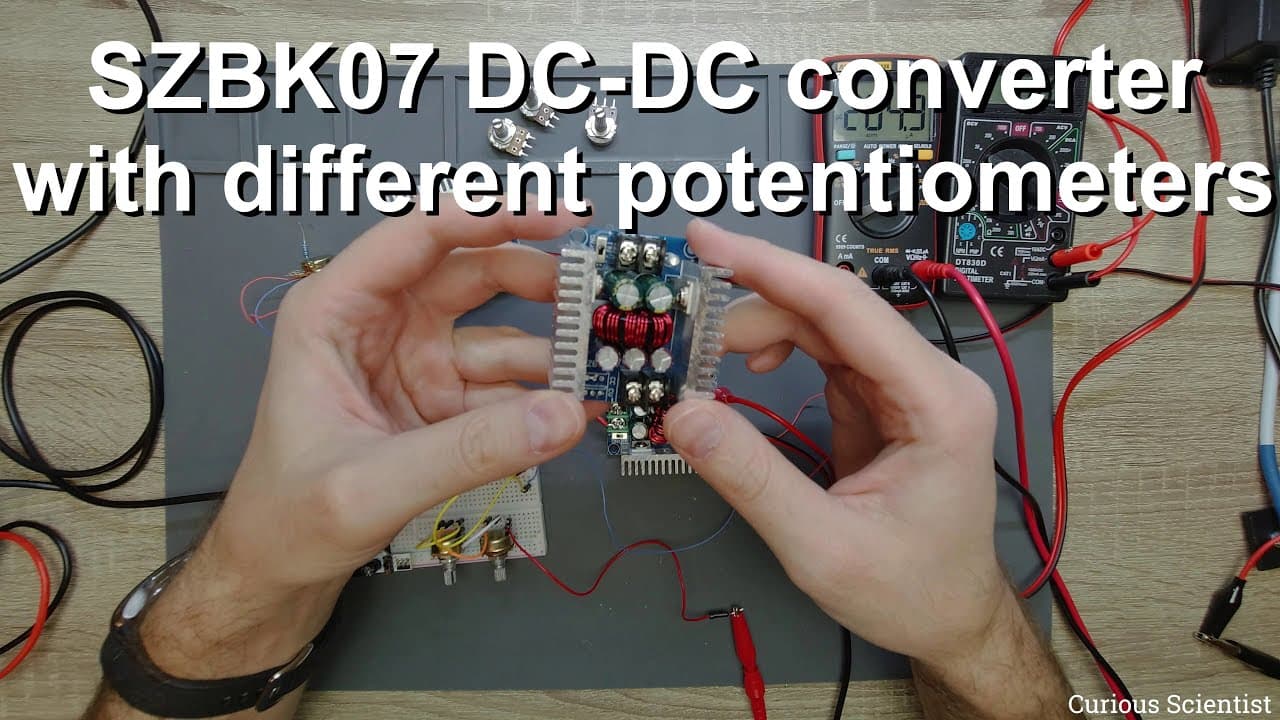
Some additional ideas for the SZBK07 DC-DC converter
TL;DR
Video explains how to optimize and control a DC-DC converter’s output voltage and current.
Transcript
welcome everyone in this video i would like to return to this dc-dc converter again so this is the szbk07 dc-dc converter 300 watts and it's a very nice compact sized dc-dc converter so it has the two mosfets here and this is the back controller here and our main components are the two potentiometers here which are missing but i have it here so the... Read More
Key Insights
- ❓ The SZBK07 DC-DC converter can output 300 watts and is highly customizable with potentiometers.
- ⚡ Digital potentiometers must be used carefully to avoid voltage damage, as they typically operate safely at low voltages.
- ⚡ Feedback voltage manipulation is critical for controlling a DC-DC converter's output; adjustments can result in significant changes in performance.
- 😘 Potentiometer selection directly affects circuit stability; too low a value can destabilize the feedback mechanism and prevent proper operation.
- 🧡 Methodical adjustment of potentiometers can help establish specific voltage ranges beneficial for different electronic devices.
- 🦮 Resistor-value formulas can guide the selection of appropriate potentiometers to achieve desired circuit behavior.
- 😎 Iterative tuning of potentiometers can help optimize the converter for specific applications like Peltier cooling systems or LED lighting.
Install to Summarize YouTube Videos and Get Transcripts
Explore YouTube Video Summarizer or Get YouTube Transcript Extractor
Questions & Answers
Q: What is the primary function of the SZBK07 DC-DC converter?
The SZBK07 DC-DC converter is designed to step down or step up DC voltage to a specified output level. It can handle up to 300 watts and allows for voltage and current control through external components, specifically potentiometers. This versatility makes it ideal for various applications such as powering electronic devices or experiments involving temperature control with Peltier coolers.
Q: Why are digital potentiometers preferred over standard ones in this context?
Digital potentiometers are useful for applications requiring precise control over voltage and current. However, most have a maximum operating voltage of around five volts. Thus, using them directly with higher voltages—like those seen in the converter's operation—could damage them. The video illustrates a trick to safely interface digital potentiometers with higher voltage DC-DC converters, broadening their usability in electronics projects.
Q: What is the significance of adjusting the feedback pin voltage in the DC-DC converter?
Adjusting the feedback pin voltage is crucial for stabilizing and setting the desired output voltage of the DC-DC converter. By manipulating the input to the feedback circuit, you can effectively regulate the output voltage, ensuring it stays within a specified range. This control is vital for applications such as LED dimming or Peltier cooler adjustment where precise voltage and current levels are required for optimal performance.
Q: How can you set a specific output voltage range using this converter?
Setting a specific output voltage range involves using potentiometers to create a voltage divider that feeds the feedback pin of the controller in the DC-DC converter. By adjusting these potentiometers, you can establish upper and lower limits for the output voltage, allowing you to restrict it to a desired range, such as 6 to 12 volts, as demonstrated in the video.
Q: What problems arise from using low-value potentiometers in the circuit?
Using low-value potentiometers can destabilize the feedback loop within the DC-DC converter. If the resistance is too low, it leads to inadequate feedback voltage relative to the output, making it difficult for the circuit to maintain stable output levels. This can result in fluctuating voltage outputs and potential malfunction.
Q: Why is it recommended to use higher-value potentiometers for control in this converter?
Higher-value potentiometers help create a more stable feedback loop, ensuring the circuit can adjust the voltage output more effectively without becoming unstable. They allow for a wider range of output control and reduce the risk of inadvertently suppressing the feedback voltage, which can occur with lower values.
Summary & Key Takeaways
-
The video demonstrates methods to control the output voltage of the SZBK07 DC-DC converter, emphasizing the importance of digital potentiometers and feedback mechanisms.
-
It details the iterative process of adjusting potentiometers to set a specific output voltage range, including practical applications like operating a Peltier cooler or LED dimming.
-
The creator discusses common mistakes in selecting potentiometer values, highlighting the effects on circuit stability and voltage regulation, while sharing useful formulas for effective resistor and potentiometer integration.
Read in Other Languages (beta)
Share This Summary 📚
Summarize YouTube Videos and Get Video Transcripts with 1-Click
Try YouTube Summary with ChatGPT & Claude or YouTube Transcript Generator
Explore More Summaries from Curious Scientist 📚
![Building a coil winder [Part 6] - A few improvements thumbnail](/_next/image?url=https%3A%2F%2Fi.ytimg.com%2Fvi%2F3eyxG_g2iUA%2Fhqdefault.jpg&w=750&q=75)
![Building a Peltier cooler-based cooling box - First iteration, improvements [Part 2/6] thumbnail](/_next/image?url=https%3A%2F%2Fi.ytimg.com%2Fvi%2F0YlNw0EGnzI%2Fhqdefault.jpg&w=750&q=75)
Summarize YouTube Videos and Get Video Transcripts with 1-Click
Try YouTube Summary with ChatGPT & Claude or YouTube Transcript Generator