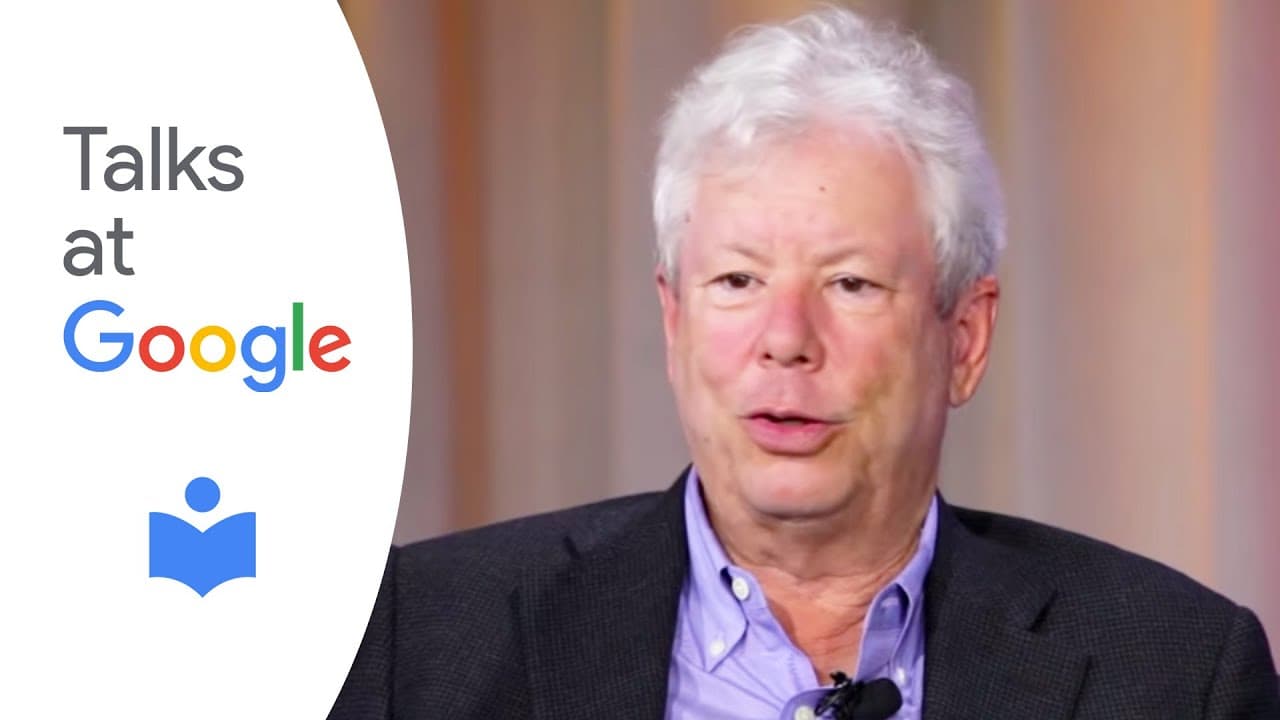
Misbehaving: The Making of Behavioral Economics | Richard Thaler | Talks at Google
TL;DR
Richard Thaler explores the field of behavioral economics, challenging the traditional view of human behavior and economics.
Transcript
HAL VARIAN: Welcome, you all, to this session, where Richard Thaler is going to tell us about his new book. And I should tell you, both Richard and I were on a panel in San Francisco last night. So this is kind of a lot of instant replay, deja vu for us. RICHARD THALER: I'm going to change the answers, so-- HAL VARIAN: It's kind of like the distinc... Read More
Key Insights
- 🧑🏭 Traditional economics assumes that individuals act rationally, but behavioral economics challenges this assumption by studying real-world behavior and anomalies.
- ❓ Behavioral economics highlights the importance of social norms and fairness in decision-making.
- 🫡 Prompted choice, rather than opt-out policies, can effectively address issues like organ donation by respecting individuals' autonomy and informing family members of the donor's wishes.
Install to Summarize YouTube Videos and Get Transcripts
Explore YouTube Video Summarizer or Get YouTube Transcript Extractor
Questions & Answers
Q: Why is the title of Richard Thaler's book "Misbehaving"?
The title reflects three aspects of the book: the misbehavior of people in economics, Thaler's deviation from traditional economics, and the unconventional structure of the book itself.
Q: How does the endowment effect demonstrate irrational behavior?
The endowment effect refers to the tendency for individuals to value something more once they own it. This deviates from traditional economic theory, which assumes that individuals make rational decisions based on utility maximization.
Q: Why do economists justify scalping and surge pricing in services like Uber?
Economists often support scalping and surge pricing because they argue that it reflects market dynamics and efficient allocation of resources. However, this viewpoint may not consider fairness norms and the impact on consumer perceptions.
Q: How can behavioral economics help improve savings rates?
Behavioral economics has had a significant impact on retirement saving by introducing automatic enrollment and escalation in retirement plans. By making it easier for people to save, these interventions overcome cognitive and willpower barriers to increase savings rates.
Summary & Key Takeaways
-
Richard Thaler introduces his book "Misbehaving" and explains its three meanings: the misbehavior of people in economics, his deviation from traditional economics, and his unconventional writing style.
-
Thaler discusses irrational behavior and anomalies in economics, such as the endowment effect and the influence of social norms on fairness.
-
Thaler explains the impact of behavioral economics on retirement saving and suggests making it easy for people to save more by implementing automatic enrollment and escalation in retirement plans.
Read in Other Languages (beta)
Share This Summary 📚
Summarize YouTube Videos and Get Video Transcripts with 1-Click
Try YouTube Summary with ChatGPT & Claude or YouTube Transcript Generator
Explore More Summaries from Talks at Google 📚

Summarize YouTube Videos and Get Video Transcripts with 1-Click
Try YouTube Summary with ChatGPT & Claude or YouTube Transcript Generator