How Tamara Mellon Built a Luxury Shoe Brand
TL;DR
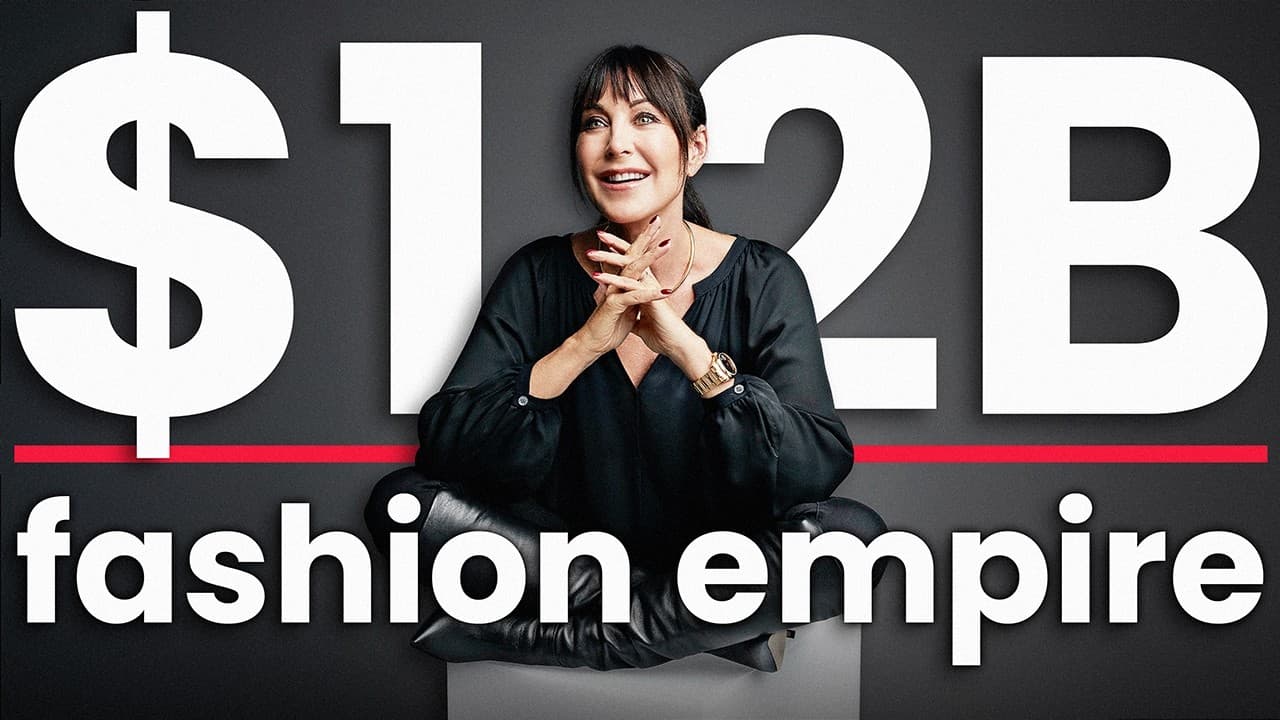
A desirable product must come before clever marketing when building a premium fashion brand. Tamara Mellon identified an underserved market for distinctive luxury women’s shoes, launched Jimmy Choo with about $150,000, and combined Italian production, editorial credibility, direct retail, celebrity placements, and persistent customer-focused experimentation to create demand and expand the business.
Transcript
I realized that nobody was doing interesting luxury women's shoes so I found a cobbler in the East End of London called Jimmy Chu he'd make it I'd photograph it and I'd give him a credit in both so the name became known what I quickly realized was Jimmy's Talent was in making the pictures but the Creative Vision was mine people always ask me that q... Read More
Key Insights
- Product desirability is the foundation of a fashion brand because customers must first want and dream about the item. Mellon argues that inventive marketing can amplify a compelling product, but promotional tactics cannot substitute for footwear that people genuinely want to wear.
- Market insight can emerge from repeated professional frustration. As British Vogue’s accessories editor, Mellon became tired of photographing the same dominant shoe brand and recognized that the market lacked a broader selection of interesting luxury women’s footwear.
- Jimmy Choo’s early visibility grew through editorial collaboration. Mellon commissioned bespoke shoes for Vogue stories, specified concepts such as a metallic silver gladiator sandal with studs, photographed the results, and credited Jimmy Choo, making the name familiar before the company launched.
- The founding partnership divided responsibilities around complementary capabilities. Mellon proposed raising funds, finding Italian factories, securing wholesale accounts, and managing public relations and marketing, while Jimmy Choo brought technical shoemaking expertise. Mellon says the collection’s creative vision and design direction came from her.
- The initial seed funding was about $150,000 and financed the first production effort. Mellon describes raising capital without proof of product or concept as difficult, so the money came through a family and provided a comparatively small foundation for launching the company.
- The first wholesale collection included about 60 styles with three colorways offered for each. Mellon explains that wholesale buyers subsequently edited the range through their selections, meaning the company did not ultimately produce or stock every possible style and color combination.
- The first Jimmy Choo store created a physical brand presence before wholesale distribution began. Although it was tiny, inexpensive, and just off the main luxury shopping street, it gave visitors a dedicated place to experience the brand and view the complete collection.
- Celebrity placement worked through resourcefulness as well as access. Mellon took white satin shoes to the Oscars and dyed them in a hotel bathtub after learning actresses’ dress colors, while later appearances in Sex and the City followed Candace Bushnell’s visit to the first London store.
Install to Summarize YouTube Videos and Get Transcripts
Explore YouTube Video Summarizer or Get YouTube Transcript Extractor
Questions & Answers
Q: How did Tamara Mellon identify the opportunity for Jimmy Choo?
Tamara Mellon identified the opportunity while working as the accessories editor at British Vogue. She saw that editors repeatedly photographed the same leading shoe designer because few brands offered interesting luxury women’s footwear. Her frustration revealed an underserved market. She then worked with East London cobbler Jimmy Choo on bespoke designs for editorial shoots, testing both the product concept and the name’s appeal.
Q: How did Tamara Mellon begin working with Jimmy Choo?
Mellon found Jimmy Choo working from a modest studio in a disused garage in East London. For Vogue shoots, she brought him specific creative briefs, including the desired silhouette, materials, colors, and decorative details. He made the shoes, she photographed them, and Vogue credited his name. This collaboration continued for five years and built recognition before the commercial brand was established.
Q: How much money did Tamara Mellon use to launch Jimmy Choo?
Mellon says the initial seed investment was about $150,000, raised through a family because obtaining capital without proof of a concept or product was difficult. The funding supported the first production effort, including manufacturing in Italy. After the business demonstrated that the concept worked, private equity entered, although Mellon notes that the company continued growing from cash flow rather than receiving operating investment at that stage.
Q: Why was product quality more important than marketing for Jimmy Choo?
Mellon’s central argument is that a fashion product must be desirable before marketing can make the brand successful. Customers need to want the shoes and imagine owning them. Jimmy Choo used inventive promotion and was early to tactics such as Oscars placements, but Mellon says those efforts worked because the underlying product was compelling. Marketing surrounded and amplified demand rather than creating value from an unappealing product.
Q: How did celebrity marketing help Jimmy Choo grow?
Mellon introduced Jimmy Choo shoes to actresses attending the Oscars by setting up a suite and supplying footwear for the awards. Because dress colors were secret, she brought white satin shoes and dyed them in a hotel bathtub to match each outfit. The brand also appeared repeatedly in Sex and the City after Candace Bushnell visited its first London store, liked the shoes, and wrote them into the script.
Q: Why did Jimmy Choo open a store before entering wholesale?
Mellon opened a small Jimmy Choo store before presenting the collection to wholesale buyers, an unusually bold sequence by her account. The store was inexpensive, tiny, and located just around the corner from established luxury brands rather than on the main shopping street. It still gave the company a visible home where invited visitors could experience the brand and see all of its products displayed together.
Q: How did Jimmy Choo manage its first large collection?
The company took about 60 styles to market and offered three colorways for each, creating many potential stock-keeping combinations. Mellon explains that wholesale selling naturally edited this broad assortment because buyers selected some options and rejected others. Consequently, the company did not order or place every proposed version in its store. This process differs from her later direct-to-consumer business, where the collection is edited before release.
Q: How does Tamara Mellon’s shoe closet retail model work?
The shoe closet model organizes products around the customer’s shoe size and displays complete pairs rather than half-pairs. Every available size is placed on the sales floor in repeating miniature closet sections. A shopper can go directly to the relevant size, take a pair from the shelf, try it on, purchase it, and leave. The design reduces waiting for staff to retrieve boxes and alternative sizes.
Summary & Key Takeaways
-
Tamara Mellon entered fashion without attending college, progressing from a clothing shop floor to public relations, Mirabella magazine, and British Vogue. As Vogue’s accessories editor, she repeatedly encountered the same limited selection of luxury footwear, which helped her recognize an opportunity for more distinctive women’s shoes.
-
Mellon collaborated with East London cobbler Jimmy Choo on bespoke shoes for editorial shoots. She supplied the creative concepts, photographed the finished designs, and credited his name in Vogue. After five years of exposure, she saw an opportunity to turn that recognized name and unavailable bespoke product into a scalable company.
-
Jimmy Choo began with roughly $150,000, Italian manufacturing, about 60 styles, three possible colorways, and a tiny London store. Mellon supplemented product appeal with unconventional promotion, including Oscars placements and television exposure. Her later Tamara Mellon brand adopted direct-to-consumer distribution and shoe closets designed to simplify fitting and purchasing.
Read in Other Languages (beta)
Share This Summary 📚
Summarize YouTube Videos and Get Video Transcripts with 1-Click
Try YouTube Summary with ChatGPT & Claude or YouTube Transcript Generator
Explore More Summaries from Foundr 📚

Summarize YouTube Videos and Get Video Transcripts with 1-Click
Try YouTube Summary with ChatGPT & Claude or YouTube Transcript Generator