What Did NASA Learn from the Artemis I Mission Success?
TL;DR
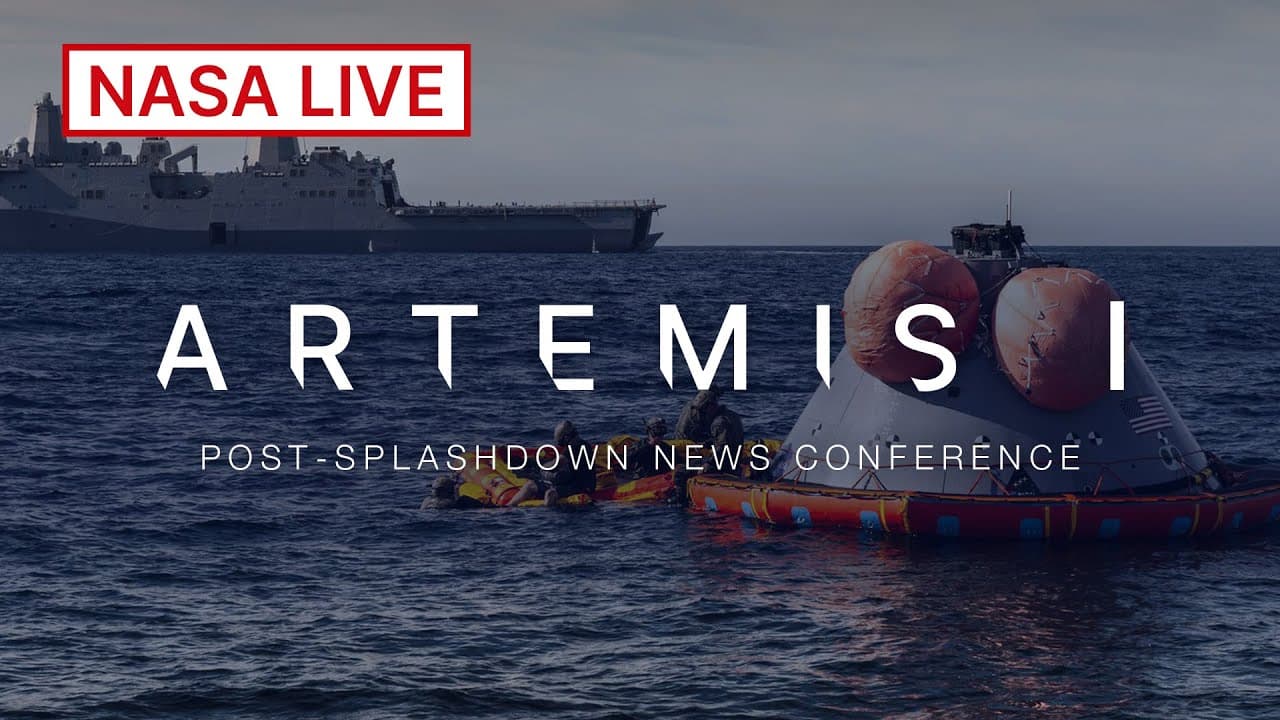
The Artemis I mission successfully tested the Orion spacecraft, proving its capabilities for future human exploration of the Moon and Mars. This mission, characterized by international and commercial partnerships, showcased effective recovery operations and paves the way for Artemis II, which aims to carry astronauts. Key challenges include optimizing vehicle processing timelines and re-testing components for reuse.
Transcript
a successful Mission so much so that these folks will tell you about all the additional tests that they were able to run what is the significance of this after a half century that we were last on the moon there we did The Impossible making it possible now we are doing that again but for a different purpose because this time we go back to the Moon t... Read More
Key Insights
- 🥮 The Artemis mission represents a significant step towards NASA's goal of exploring the moon and eventually Mars.
- 👾 The collaboration between international partners and commercial companies demonstrates a shift in the approach to space exploration.
- 🚙 The successful splashdown and recovery of the Orion spacecraft highlights the capabilities of the vehicle for future manned missions.
- 🚙 Challenges ahead include optimizing the timeline for vehicle processing and assembly and ensuring the successful re-testing of components for reuse.
Install to Summarize YouTube Videos and Get Transcripts
Explore YouTube Video Summarizer or Get YouTube Transcript Extractor
Questions & Answers
Q: What were some unexpected events during the Artemis mission?
The mission went smoothly without any major unexpected events. The vehicle performed better than expected during re-entry, and all systems operated as planned.
Q: What are the main challenges NASA faces in meeting the 2024 launch date for Artemis II?
Some of the challenges include the processing and assembly of the Orion spacecraft and the ground systems. The goal is to optimize the timeline for getting the vehicles ready for launch and improve efficiency in the overall process.
Q: What types of components from Artemis I will be reused for Artemis II?
Eight types of components will be reused, including inertial measurement units, GPS receivers, and phase array antennas. If any components fail re-testing, alternatives will be used to ensure the timely completion of Artemis II.
Summary & Key Takeaways
-
The Artemis mission successfully tested the Orion spacecraft, showcasing its capabilities for future human missions to the moon and Mars.
-
The mission involved international partners and commercial companies, reflecting a shift in the way space exploration is conducted.
-
The successful splashdown and recovery of the spacecraft paves the way for the next phase of the Artemis program, including the Artemis II mission with humans on board.
Read in Other Languages (beta)
Share This Summary 📚
Summarize YouTube Videos and Get Video Transcripts with 1-Click
Try YouTube Summary with ChatGPT & Claude or YouTube Transcript Generator
Explore More Summaries from NASA 📚

Summarize YouTube Videos and Get Video Transcripts with 1-Click
Try YouTube Summary with ChatGPT & Claude or YouTube Transcript Generator