4 Awesome Future Space Missions
TL;DR
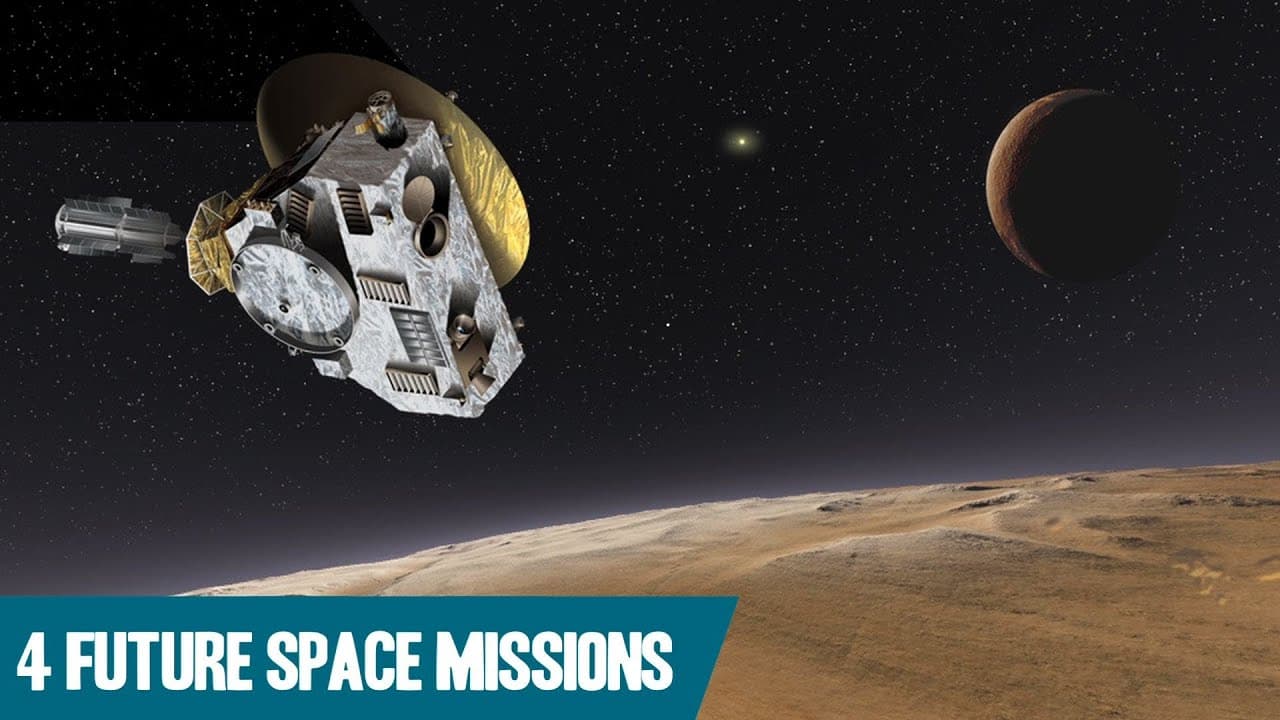
Four upcoming space missions to Pluto, Jupiter, asteroid Ceres, and a comet are expected to provide valuable insights into the solar system.
Transcript
[Intro music] Hello! This is Hank Green and welcome to this SciShow dose. And we've talked a lot about interplanetary missions new and old from 35 year old expeditions of Voyager 1 and 2 to the amazing things currently happening on Mars with Curiosity rover, but the great thing about our space agencies is there is always a new mission en rout to a ... Read More
Key Insights
- 👾 Four exciting space missions are currently underway: New Horizons to Pluto, Juno to Jupiter, Dawn to Vesta and Ceres, and Rosetta to a comet.
- 🎟️ These missions will provide valuable data on the specific celestial bodies they are studying.
- 🪐 By studying Pluto, scientists will gain insights into a planet that was once considered a planet.
- 💈 Jupiter's poles and magnetic field will be explored in detail for the first time.
- 🏷️ Comparing Vesta and Ceres will help us understand the differences in composition within the asteroid belt.
- ☄️ Rosetta's landing on a comet will provide insights into the formation of comets and the origins of the solar system.
Install to Summarize YouTube Videos and Get Transcripts
Explore YouTube Video Summarizer or Get YouTube Transcript Extractor
Questions & Answers
Q: What is the primary objective of the New Horizons mission?
The New Horizons mission aims to conduct the first in-depth study of Pluto and its moons, providing valuable insights into this distant world.
Q: Why are scientists interested in studying Jupiter's poles?
Scientists are intrigued by Jupiter's poles because they produce the most intense auroras in the solar system. Understanding their formation and behavior will help us gain a deeper understanding of this gas giant.
Q: What is the significance of Dawn's mission to study Vesta and Ceres?
By studying Vesta and Ceres, scientists hope to gain insights into the formation of the solar system. These two bodies have different compositions, with Vesta resembling the rocky bodies of the inner solar system and Ceres resembling the icy moons of the outer solar system.
Q: What will Rosetta do during its mission to a comet?
Rosetta will release a lander onto the icy surface of the comet and gather data to shed light on the origin of comets. Instruments like the UV spectrograph ALICE will provide valuable information about the temperature at the time of the comet's creation.
Summary & Key Takeaways
-
New Horizons is currently on a journey to Pluto and will conduct an in-depth study of the dwarf planet and its moons.
-
Juno will orbit Jupiter and collect data on its structure, magnetic field, and poles.
-
Dawn is orbiting Vesta and will soon study Ceres, providing understanding of the formation of the solar system.
-
Rosetta will land on a comet and send data back to Earth to uncover the origin of comets.
Read in Other Languages (beta)
Share This Summary 📚
Summarize YouTube Videos and Get Video Transcripts with 1-Click
Try YouTube Summary with ChatGPT & Claude or YouTube Transcript Generator
Explore More Summaries from SciShow 📚


Summarize YouTube Videos and Get Video Transcripts with 1-Click
Try YouTube Summary with ChatGPT & Claude or YouTube Transcript Generator