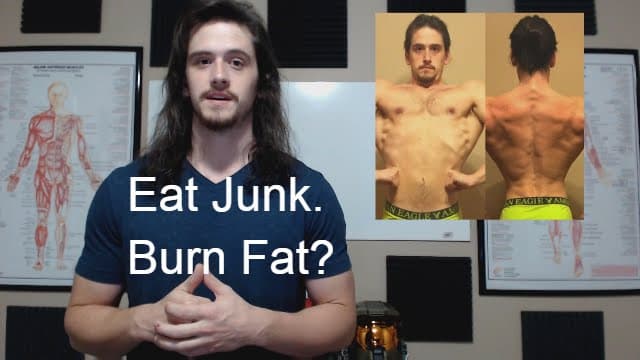
Eat More Junk. Increase Weight Loss? | Science and Shenanigans | Episode 4
TL;DR
You can include some junk food while pursuing weight loss if it stays within your daily calorie limit and you consume enough fiber. Ryan of Treadway Training argues that body composition depends on whether you are in a caloric deficit or surplus, while lasting success also requires a diet you can follow. He suggests eating micronutrient-dense foods 80–90% of the time and “fun foods” 10–20%, so read on for the conditions and reasoning behind this flexible approach.
Transcript
do you like junk food do you want to burn more fat what if I told you you could have your cake and eat it too stick around and I'll tell you how what's up guys Ryan here with tradeway training now if I had a dollar for every time somebody told me that they were trying to eat cleaner um I would have enough money to retire tomorrow here's a picture o... Read More
Key Insights
- 😋 Adhering to a diet is more important than the specific foods consumed.
- ⚖️ Body composition is primarily determined by energy balance.
- 😋 Junk food can be incorporated into a diet as long as calorie and fiber goals are met.
- 👻 A sustainable diet allows for occasional indulgences.
- ❓ Following a strict diet without any flexibility may result in giving up on the diet completely.
- ❓ Understanding calorie and fiber requirements is essential for effective diet planning.
- 😫 Engaging a professional may alleviate the intimidation of setting personalized diet goals.
Install to Summarize YouTube Videos and Get Transcripts
Explore YouTube Video Summarizer or Get YouTube Transcript Extractor
Questions & Answers
Q: Can you eat junk food and still lose weight?
Yes, according to Ryan, provided the junk food fits within your set calorie intake for the day and you consume enough fiber. Weight loss still requires burning more calories than you consume.
Q: What determines body composition?
Ryan says body composition is determined by energy balance. The key distinction is whether you are in a caloric deficit, burning more calories than you consume, or a caloric surplus, consuming more than you burn.
Q: What conditions must junk food meet within a diet?
First, it must fit within your calorie allowance for that day without taking you over the limit. Second, you must still consume enough fiber for the day.
Q: Why is diet adherence important for weight loss?
A diet cannot work over the long term if you cannot stick to it. Ryan advises changing any diet that you cannot honestly follow for the foreseeable future.
Q: How much junk food does Ryan suggest including?
Ryan favors eating clean or micronutrient-dense foods 80–90% of the time. The remaining 10–20% can include “fun foods,” his term for junk food or items not normally considered diet food.
Q: Does Ryan claim that pizza and salad are nutritionally equal?
No. He explicitly says that pizza and salad, or an ice cream cone and chicken with broccoli, are not equal; his point is specifically about calories and energy balance in relation to body composition.
Q: Why do calorie and fiber limits naturally encourage nutrient-dense foods?
Ryan explains that meeting both conditions leaves much of the diet composed of clean or micronutrient-dense foods by default. A small amount of junk food can then round out the remaining calories without exceeding the daily limit.
Q: Why might a flexible diet be easier to sustain than eating clean foods all the time?
Ryan contrasts eating clean foods 100% of the time until you abandon the diet with allowing some fun foods while remaining within calorie and fiber targets. He recommends the flexible 80–90% clean-food and 10–20% fun-food approach because adherence matters for long-term success.
Summary & Key Takeaways
-
Body composition is determined by energy balance, whether in a caloric deficit or surplus.
-
Adherence to a diet is crucial for long-term success.
-
Adding small amounts of junk food to a diet is acceptable as long as calorie and fiber goals are met.
Read in Other Languages (beta)
Share This Summary 📚
Summarize YouTube Videos and Get Video Transcripts with 1-Click
Try YouTube Summary with ChatGPT & Claude or YouTube Transcript Generator
Explore More Summaries from Ryan Treadaway 📚
Summarize YouTube Videos and Get Video Transcripts with 1-Click
Try YouTube Summary with ChatGPT & Claude or YouTube Transcript Generator