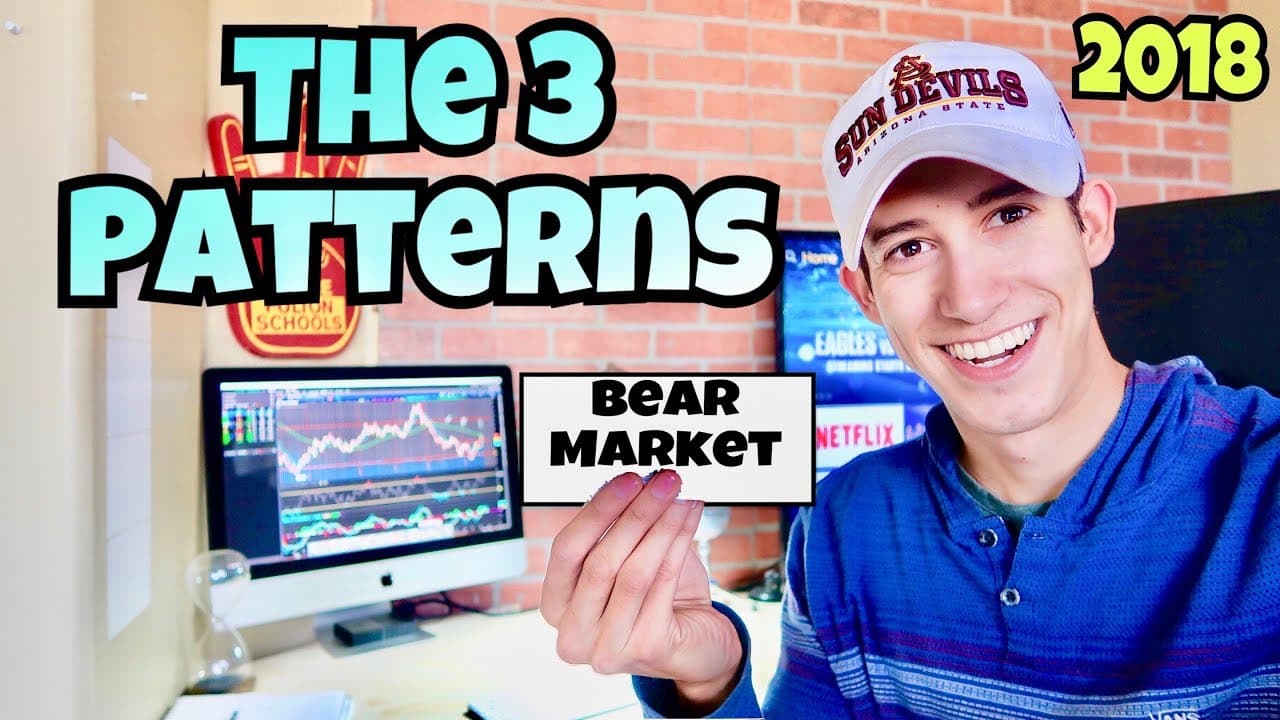
The 3 Patterns You MUST Know In A BEAR MARKET | Investing 101
TL;DR
To stay green during a broad market pullback, Ricky focuses on stocks or ETFs already trending upward and skips trades whose potential profit does not justify the risk. He illustrates this with JDST, which was up 7.29% that day, while declining an entry near $58.50 because resistance sat around $59–$60 and support near $55. Read on for his entry criteria, risk checks, and trading rules.
Transcript
what's going on guys it's Ricky with technical solutions hope that you guys are all having an amazing day so thank you guys again for others that are tuning in live I want to quickly cover three patterns I'm gonna try to make this video I'm kind of straight to the point three patterns that I've been focusing on that have assisted me in staying gree... Read More
Key Insights
- 💐 Actively trading stocks or ETFs that are trending up offers better potential for profit compared to trying to time potential reversals.
- 🎚️ Proper risk management and understanding of support and resistance levels are essential for successful trading.
- 🏅 Gold-based ETFs can be profitable during market pullbacks and negative market sentiment.
- 🧘 Confirming a reversal before taking a position helps minimize potential losses.
Install to Summarize YouTube Videos and Get Transcripts
Explore YouTube Video Summarizer or Get YouTube Transcript Extractor
Questions & Answers
Q: What patterns can help traders stay profitable in a bear market?
Ricky’s first demonstrated pattern is to trade stocks or ETFs that are actively trending upward instead of guessing when a reversal might occur. He evaluates the larger pattern for swing trades and holdings, not merely an intraday rise, and only enters when the potential profit justifies the potential loss.
Q: What three trading rules does Ricky emphasize?
Never trade based on another person’s opinion, never invest in a stock, ETF, or anything else you do not understand, and always use risk management. Risk management includes knowing where you plan to buy, sell, and cut losses.
Q: Why did Ricky take no day-trade or new swing-trade positions that day?
He did not see an opportunity that fit his plan or offered enough potential profit for the risk involved. He argues that taking no trade can be the best trade when nothing presents sufficient value.
Q: Why does Ricky favor assets that are already trending upward?
An active upward trend provides visible evidence of consistent growth instead of requiring a trader to predict a reversal. For a swing trade or longer hold, he wants to see a convincing broader pattern rather than relying only on intraday movement.
Q: How does Ricky distinguish a day-trade setup from a swing-trade setup?
An asset moving upward intraday may offer a day trade or scalp. For a swing trade or hold, however, Ricky looks for longer-term potential, growth, and an established overall upward pattern.
Q: Why did Ricky repeatedly trade or discuss JDST?
JDST had been actively trending upward and was green on multiple consecutive days, including a 7.29% gain on the day discussed. Ricky saw no reason to find a different stock or ETF each day when an instrument he understood continued to fit his strategy.
Q: Why did Ricky avoid entering JDST near $58.50?
JDST was approaching resistance around $59–$60, leaving only about 2.68% potential profit to $60 from an entry near $58.50. With support near $55, he judged the potential loss to be much greater than the available profit and decided the trade was not worth the risk.
Q: What JDST price levels were important to Ricky’s plan?
He identified a reversal around $45, support near $55, and resistance around $59–$60. His original plan included trading the $55-to-$60 range and another five-dollar margin beginning near $52, while reassessing any entry that came too close to resistance.
Summary & Key Takeaways
-
The speaker discusses three patterns he has been focusing on to stay profitable in a bear market.
-
The first pattern is trading stocks or ETFs that are actively trending up, rather than focusing on potential reversals.
-
The second pattern is waiting for a confirmation of a reversal before taking a position, avoiding trades that have limited potential for profit.
-
The third pattern is identifying stocks or ETFs that are showing signs of consistent growth and actively trading up, even during market pullbacks.
Read in Other Languages (beta)
Share This Summary 📚
Summarize YouTube Videos and Get Video Transcripts with 1-Click
Try YouTube Summary with ChatGPT & Claude or YouTube Transcript Generator
Explore More Summaries from Ricky Gutierrez 📚




Summarize YouTube Videos and Get Video Transcripts with 1-Click
Try YouTube Summary with ChatGPT & Claude or YouTube Transcript Generator