How Does Environment Influence Our Behavior?
TL;DR
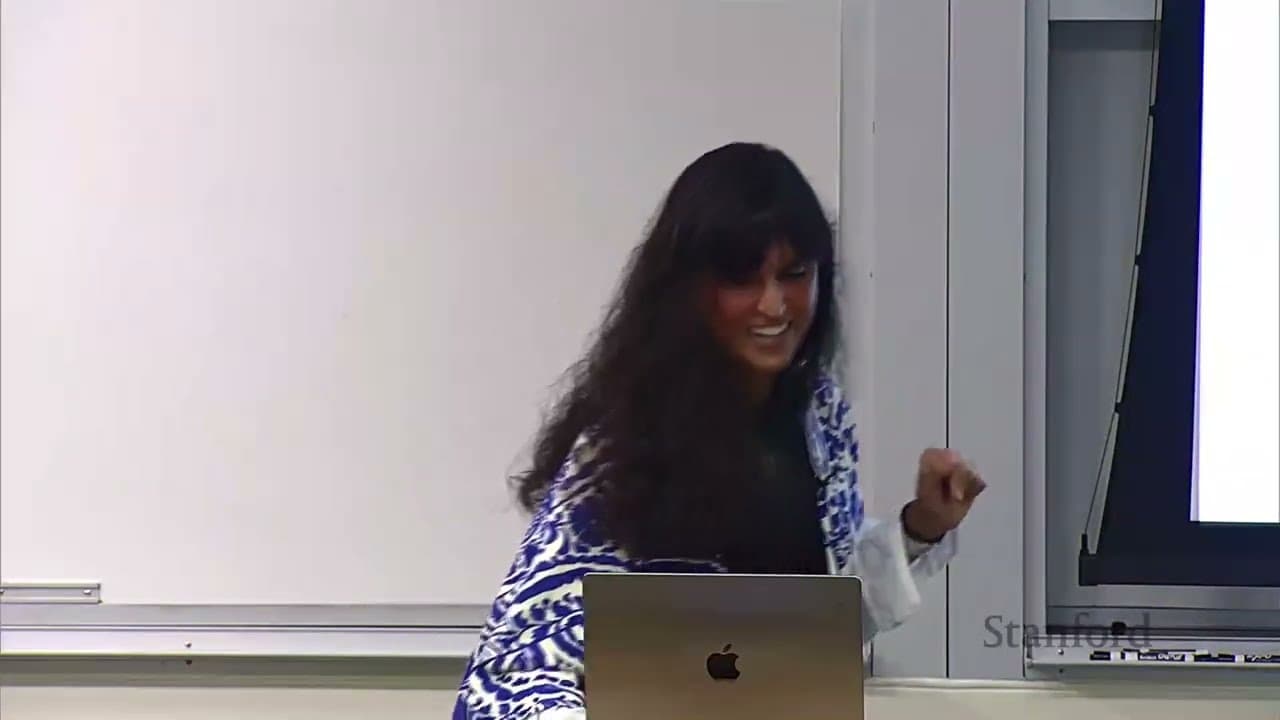
Constructed environments significantly impact human behavior, as evidenced by examples like low bridges designed to limit access. This video discusses two key studies: one examining how often people unfollow misinformation spreaders and the factors influencing this behavior, and another exploring a game-based approach to foster dialogue and reduce polarization between political factions.
Transcript
so yeah we'll talk about two studies with the hopes that uh it increases our chances of finding uh something uh of interest uh to uh to both of us so yes if anything you hear today sounds exciting just reach out to me it would be fun to have conversations uh so today's talk is on environments and problematic behaviors I want to start the talk with ... Read More
Key Insights
- 🌉 Constructed environments, such as the design of bridges and spatial separation of landmarks, can shape behaviors and perpetuate social inequalities.
- 🚱 Unfollowing misinformation spreaders is relatively rare, and connections to spreaders are stickier than connections to non-spreaders.
- ❓ Reciprocity of connections and initial exposure to misinformation are important predictors of unfollowing.
- ❓ Extreme conservatives are less likely to unfollow spreaders compared to extreme liberals.
Install to Summarize YouTube Videos and Get Transcripts
Explore YouTube Video Summarizer or Get YouTube Transcript Extractor
Questions & Answers
Q: What is the main objective of the speaker's research?
The speaker aims to understand how constructed environments influence behaviors, particularly in the context of unfollowing misinformation spreaders and reducing out-party hostility.
Q: What are the key findings of the study on unfollowing misinformation spreaders?
The study found that unfollowing rates are low, and individuals are more likely to unfollow non-misinformation spreaders than spreaders. Reciprocity of connections was a strong predictor of unfollowing, whereas ideology had a smaller effect. Initial exposure to misinformation was associated with higher likelihood of unfollowing (reversion hypothesis), rather than increased persistence of exposure (inertia hypothesis).
Q: Did the game-based intervention effectively reduce out-party hostility?
The intervention did not have a significant main effect on reducing out-party hostility overall. However, it did reduce out-party hostility among Democrats, indicating some success. There was also an increased willingness to engage in political discussions with out-party members for both groups.
Summary & Key Takeaways
-
The speaker emphasizes the impact of constructed environments on behaviors, using examples such as intentionally low bridges and the spatial separation of political landmarks.
-
Two studies are presented: one on the prevalence and predictors of unfollowing misinformation spreaders, and another on a game-based intervention to reduce out-party hostility and improve dialogue between political opponents.
Read in Other Languages (beta)
Share This Summary 📚
Summarize YouTube Videos and Get Video Transcripts with 1-Click
Try YouTube Summary with ChatGPT & Claude or YouTube Transcript Generator
Explore More Summaries from Stanford Online 📚


Summarize YouTube Videos and Get Video Transcripts with 1-Click
Try YouTube Summary with ChatGPT & Claude or YouTube Transcript Generator