What Is Visual Neuroscience and How Does It Work?
TL;DR
Visual neuroscience explores how the brain processes visual information through networks of neurons that communicate via action potentials. Neurons fire electrical signals that are measured using techniques like electrophysiology, EEG, and fMRI. The brain's visual system is organized hierarchically, where early areas respond to basic features and higher areas to complex objects.
Transcript
the following content is provided under a Creative Commons license your support will help MIT OpenCourseWare continue to offer high quality educational resources for free to make a donation or view additional materials from hundreds of MIT courses visit MIT opencourseware at ocw.mit.edu so I'm gonna go just go over some very basic neuroscience most... Read More
Key Insights
- ⚡ Neurons communicate through synapses and action potentials, which are spikes in voltage when the membrane potential reaches a threshold.
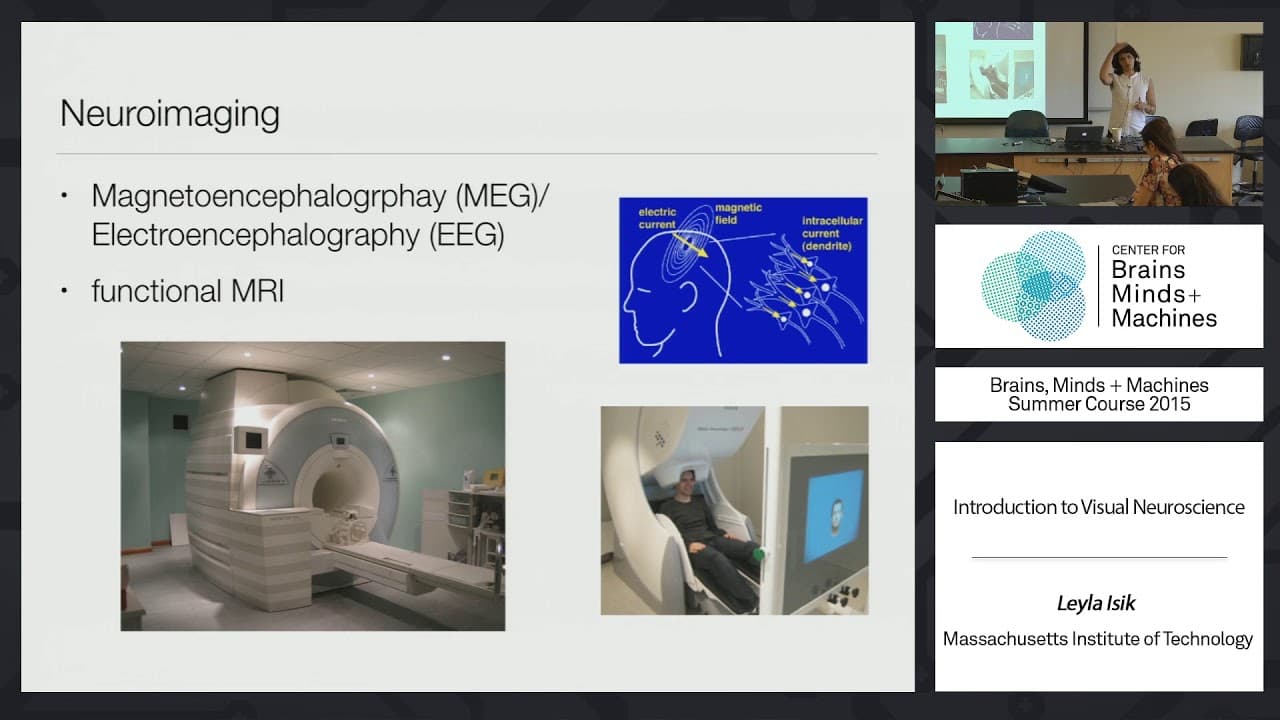
- 🚱 Different techniques, such as electrophysiology or non-invasive imaging methods like EEG and fMRI, can be used to measure neural activity.
- 🫥 The visual system is hierarchically organized, with early visual cortex responding to simple features like lines, and higher-level areas responding to more complex objects.
- 🧠 Hierarchical feed-forward models, inspired by the findings of Hubel and Wiesel, can be used to understand visual processing in the brain.
- 😘 Invasive techniques like electrophysiology offer high resolution, but are limited by brain coverage, while non-invasive techniques like EEG and fMRI have broader coverage but lower resolution.
- 😣 The content provides a basic foundation for understanding neuroscience and prepares the reader for the rest of the course.
Install to Summarize YouTube Videos and Get Transcripts
Explore YouTube Video Summarizer or Get YouTube Transcript Extractor
Questions & Answers
Q: How do neurons communicate with each other?
Neurons communicate through synapses, where electrical activity is transmitted from one neuron to another.
Q: What is an action potential?
An action potential is a spike in voltage that occurs when a neuron's membrane potential reaches a certain threshold, leading to the firing of the neuron.
Q: What are some invasive methods for measuring neural activity?
Invasive methods include electrophysiology, where electrodes are inserted into the brain to record neural activity.
Q: What are some non-invasive methods for measuring neural activity?
Non-invasive methods include EEG, MEG, and fMRI, which measure changes in electrical or magnetic fields associated with neural activity.
Summary & Key Takeaways
-
Neurons communicate with each other through electrical activity, which is transmitted along their axons and through synapses.
-
Neurons fire action potentials, which are all-or-none spikes in voltage, when their membrane potential reaches a certain threshold.
-
Neural activity can be measured using invasive techniques such as electrophysiology or non-invasive techniques like EEG, MEG, and fMRI.
Read in Other Languages (beta)
Share This Summary 📚
Summarize YouTube Videos and Get Video Transcripts with 1-Click
Try YouTube Summary with ChatGPT & Claude or YouTube Transcript Generator
Explore More Summaries from MIT OpenCourseWare 📚


Summarize YouTube Videos and Get Video Transcripts with 1-Click
Try YouTube Summary with ChatGPT & Claude or YouTube Transcript Generator