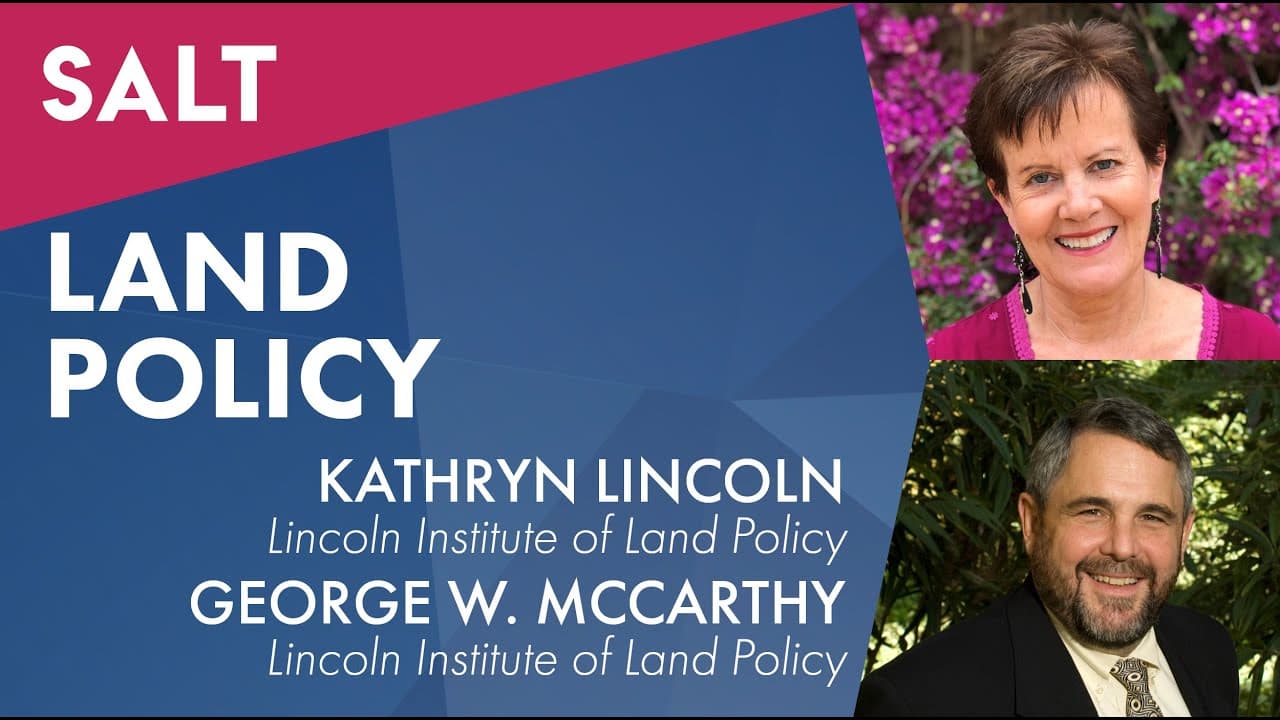
Land Economics & Taxation | SALT Talks #219
TL;DR
Land policy, including taxation and use, plays a crucial role in addressing climate change and water conservation issues.
Transcript
hello everyone and welcome back to salt talks my name is john darcy i'm the managing director of salt which is a global thought leadership forum and networking platform at the intersection of finance technology and public policy salt talks are a digital interview series with leading investors creators and thinkers and our goal on these salt talks t... Read More
Key Insights
- 💦 Land policy is crucial in addressing climate change and water conservation challenges.
- 😒 Taxation can shape land use and encourage responsible practices.
- 🏝️ Education and awareness are essential for creating effective land policies.
- 🏝️ Addressing issues of equity and marginalized communities should be a central focus in land policy.
- 🌐 Land policy should consider global and local challenges and promote sustainable development.
- 🏝️ Collaboration between different stakeholders is necessary for effective land policy implementation.
- 😫 The role of government in setting land policies is critical for achieving positive outcomes.
Install to Summarize YouTube Videos and Get Transcripts
Explore YouTube Video Summarizer or Get YouTube Transcript Extractor
Questions & Answers
Q: What is the mission of the Lincoln Institute of Land Policy?
The institute's mission is to address significant policy issues through innovative land use and taxation methods, with a focus on achieving better lives for all through better land policy.
Q: How does land policy contribute to climate change and water conservation efforts?
Land policy shapes how we use and manage land, impacting practices that contribute to climate change such as deforestation and urban sprawl. It also influences water management practices, ensuring that water resources are conserved and distributed equitably.
Q: What role does taxation play in land policy?
Taxation is a key tool in land policy as it promotes responsible land use. Taxing land encourages efficient use and discourages land speculation, while also generating revenue for public infrastructure and services.
Q: How does the Lincoln Institute promote education on land policy?
The institute works to educate policymakers and the public on the importance of land policy through research, publications, and conferences. They aim to raise awareness and provide resources for informed decision-making.
Summary & Key Takeaways
-
The Lincoln Institute of Land Policy is an independent global foundation focused on innovative land use and taxation methods to address significant policy issues.
-
Land policy is deeply connected to climate change, water conservation, and addressing inequities in marginalized communities.
-
The institute advocates for a more equitable and sustainable approach to land policy, including the taxation of land and promoting responsible land use.
Read in Other Languages (beta)
Share This Summary 📚
Summarize YouTube Videos and Get Video Transcripts with 1-Click
Try YouTube Summary with ChatGPT & Claude or YouTube Transcript Generator
Explore More Summaries from SALT 📚





Summarize YouTube Videos and Get Video Transcripts with 1-Click
Try YouTube Summary with ChatGPT & Claude or YouTube Transcript Generator