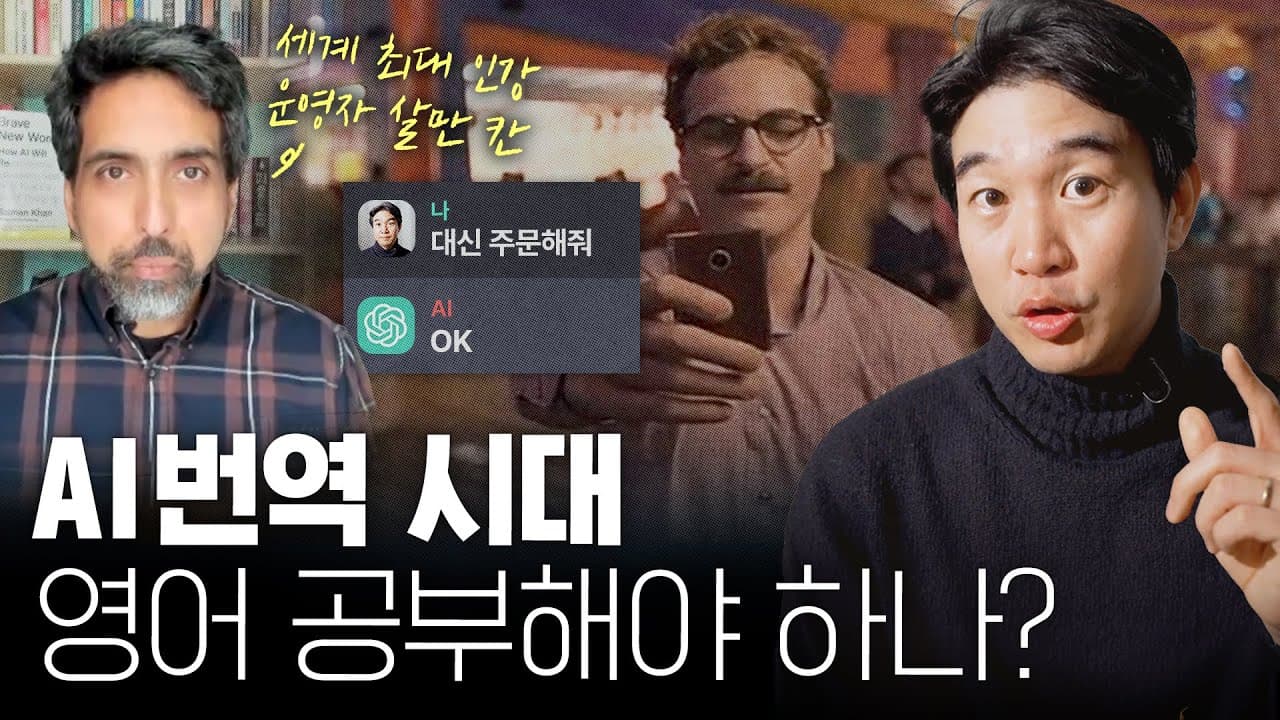
How Will AI Change Education and College Exams?
TL;DR
AI can improve education by identifying learning gaps, answering questions, giving hints, supporting writing, and reducing teachers’ administrative workload. It could also make assessments more revealing by combining multiple-choice answers with explanations of reasoning, although human oversight remains necessary because AI grading may contain bias or inconsistencies and cannot reliably prevent every misuse.
Transcript
for for Brave new word Brave New World I see that your life's work has been based upon this belief that technology can solve some of the most fundamental problems in today's education what do you think is the single biggest problem in education today and how do you think that cigo can be a part of the solution as mentioned I'm oftentimes known for ... Read More
Key Insights
- Student motivation is strongly affected by accumulated learning gaps. When students repeatedly encounter material they cannot understand, effort produces fewer rewards, struggle increases, and disengagement can follow. Addressing missing foundations may therefore restore both learning progress and confidence.
- Personal tutoring is presented as a historically effective but unequal educational resource. Wealthy families can hire tutors to identify gaps, provide focused help, and rebuild self-esteem, while mass public education has not been able to give every learner comparable individual support.
- AI tutoring can answer questions, provide hints, coach students, and support motivation. It can also give teachers information about student difficulties, although technology alone cannot suddenly multiply learning outcomes without sustained cooperation among teachers, parents, students, and system designers.
- AI-generated writing cannot be reliably detected when a student uses the technology skillfully. A process-based writing system offers a different response by recording how an essay develops, giving feedback during composition, and showing teachers whether submitted material appeared without a traceable learning process.
- Teacher support is a major educational use for AI. Lesson planning, grading, and progress reports consume hours that could otherwise support rest or direct interaction with students, so reducing this workload may create more time for personal attention and classroom relationships.
- Future AI tutors may extend beyond computer screens. Voice devices at tables could facilitate group discussions, conversational objects could support younger children, and augmented-reality tutors could bring virtual assistance into physical environments without forcing a strict choice between screen-based and real-world learning.
- AI-assisted assessment can combine multiple-choice answers with explanations of reasoning. A correct answer accompanied by a weak explanation may indicate guessing or incomplete understanding, while an explanation before selecting an answer can reveal how a student interprets a reading or concept.
- AI grading still requires safeguards because models may produce bias or inconsistent judgments. Keeping conventional assessment elements alongside AI-evaluated explanations provides a practical transitional approach until the technology becomes reliable enough for broader responsibility.
Install to Summarize YouTube Videos and Get Transcripts
Explore YouTube Video Summarizer or Get YouTube Transcript Extractor
Questions & Answers
Q: What is the biggest problem AI could address in education?
A major problem is declining motivation caused by unresolved learning gaps. Students may begin missing foundational concepts early, struggle increasingly as new lessons build on those concepts, and eventually find that effort produces little progress. AI could help by identifying gaps, answering questions, giving hints, and informing teachers about difficulties that might otherwise remain hidden, especially when students are too shy to ask for help.
Q: How can AI act like a personal tutor for students?
AI can approximate selected functions of personal tutoring by offering practice, delivering short lessons when needed, answering questions, providing hints, coaching students, and encouraging continued effort. It may also focus support on an individual learner’s missing knowledge. However, simply introducing technology does not guarantee stronger learning, because useful results still depend on collaboration among students, teachers, parents, and the people improving the software.
Q: Why do accumulated learning gaps reduce student motivation?
Accumulated gaps make later material progressively harder because students lack concepts required for understanding new lessons. Even when they make an effort, they may receive little benefit and begin to believe that continued work is pointless. What appears to be an inherent lack of motivation may therefore be the result of repeated frustration. Targeted help can fill missing foundations, improve performance, and potentially rebuild self-esteem.
Q: How can schools respond to students using AI to cheat?
Schools should not rely on claims that AI-generated work can always be detected, because skillful use may evade detection. A stronger approach is to make the learning process visible. An AI writing coach can provide feedback while recording how an essay develops. Teachers then receive both the final submission and its history, allowing them to notice paragraphs that appeared without discussion or evidence of student work.
Q: How can AI reduce teachers’ workload?
AI can assist with time-consuming duties such as preparing lesson plans, grading papers, and writing progress reports. Removing some of this administrative burden could give teachers more personal time and more opportunities for direct interaction with students. AI can also provide information about learners who are struggling, helping teachers identify where human attention, explanation, encouragement, or other classroom intervention may be most useful.
Q: How could AI change college entrance examinations?
AI could supplement multiple-choice testing by asking students to explain their reasoning in their own words. The resulting assessment could show not only whether an answer was correct, but also whether the student understood the concept or may have guessed. In reading comprehension, students could explain an author’s word choice before selecting an option, providing evidence of thought while retaining a conventional score.
Q: Why should AI not be the sole grader of student explanations?
AI should not yet be the only grader because its evaluations may contain bias or inconsistencies. A transitional system can retain multiple-choice questions while using AI to analyze explanations and provide additional evidence about understanding. This combined approach preserves an established scoring component while testing the value of richer responses, rather than treating an imperfect automated judgment as the sole basis for consequential educational decisions.
Q: How can students certify knowledge without only taking standardized tests?
A student can complete an assessment while their face and screen are recorded, explain their reasoning aloud, and have the evidence peer-reviewed. If reviewers confirm that the work is authentic and the reasoning is adequate, the student can be certified as ready to begin tutoring that subject area. This method demonstrates knowledge through performance and explanation rather than relying exclusively on a separate standardized examination.
Summary & Key Takeaways
-
A central problem in education is lost motivation caused by accumulated learning gaps. Students who repeatedly struggle may stop benefiting from effort and eventually give up. AI could approximate parts of personal tutoring by identifying weaknesses, answering questions, supplying hints, offering encouragement, and giving teachers clearer information about where each student needs support.
-
AI creates opportunities for cheating, but reliable detection is not the answer because careful misuse can evade detection. A writing coach can instead document the entire composition process while providing feedback. Teachers can then evaluate both the finished essay and its development, making unexplained paragraphs or outside contributions easier to notice.
-
Future assessments could preserve the consistency of multiple-choice testing while adding explanations that reveal understanding, reasoning, or guessing. AI can help evaluate these responses, but it is not yet dependable enough to grade alone. Recorded, peer-reviewed assessments also offer another way to certify knowledge and readiness for tutoring without relying only on standardized tests.
Read in Other Languages (beta)
Share This Summary 📚
Summarize YouTube Videos and Get Video Transcripts with 1-Click
Try YouTube Summary with ChatGPT & Claude or YouTube Transcript Generator
Explore More Summaries from 조승연의 탐구생활 📚





Summarize YouTube Videos and Get Video Transcripts with 1-Click
Try YouTube Summary with ChatGPT & Claude or YouTube Transcript Generator