What Are the Biggest Myths in Personal Finance?
TL;DR
Common personal finance advice like saving aggressively when young or viewing bonds as safe investments can be misleading. Instead, consider the life cycle model, which suggests a balanced approach to saving and spending. Understanding the true nature of investments and economic indicators can lead to better financial decisions.
Transcript
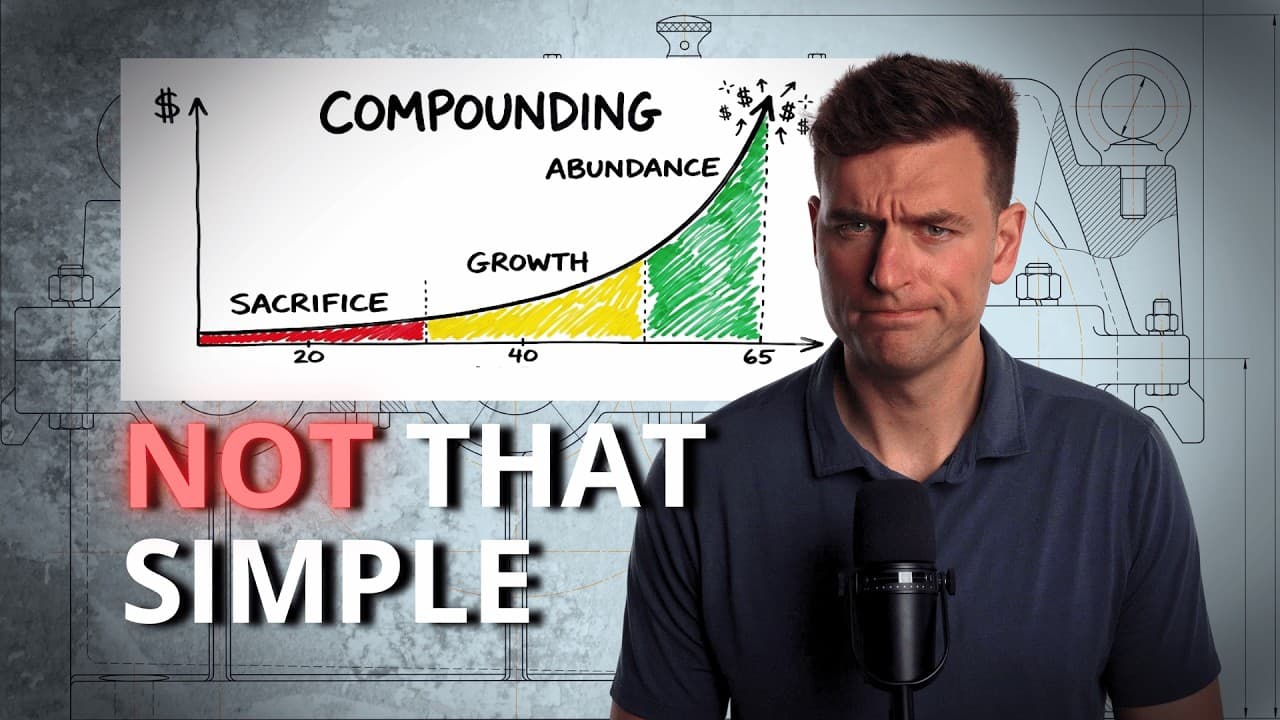
There are some persistent myths in personal finance that lead people to make objectively bad financial decisions. For example, you should save as much as possible when you're young to benefit from compounding. It's almost foundational advice in personal finance, but it's wrong or at least it's incomplete. I'm going to explain why and debunk nine mo... Read More
Key Insights
- Saving aggressively when young may neglect current quality of life, as income tends to be lower and expenses higher in early career stages.
- Economic growth does not directly correlate with stock market returns; the stock market prices future expectations.
- Dividends do not increase returns; they change the nature of returns from capital to income.
- Index funds often outperform actively managed funds due to lower fees and broader market exposure.
- High Shiller CAPE ratios do not guarantee low future returns; market timing based on valuations is unreliable.
- Warren Buffett's success is not easily replicable; he advocates for low-cost index funds for most investors.
- Bonds and cash, while less volatile, may not be the safest long-term investment due to inflation risks.
- Gold is not a reliable inflation hedge; its value is volatile and not strongly tied to inflation rates.
Install to Summarize YouTube Videos and Get Transcripts
Explore YouTube Video Summarizer or Get YouTube Transcript Extractor
Questions & Answers
Q: How does saving aggressively when young impact financial health?
Saving aggressively when young can lead to sacrificing current quality of life, as young adults typically have lower income and higher living expenses. The life cycle model suggests balancing saving with spending to maintain a consistent standard of living over time, rather than focusing solely on wealth accumulation early on.
Q: Why doesn't economic growth guarantee high stock market returns?
Economic growth does not guarantee high stock market returns because the stock market prices in future expectations, not current economic conditions. High economic growth can already be reflected in stock prices, and historically, high-growth economies have not always produced high stock returns.
Q: What is the misconception about dividends and stock market returns?
The misconception is that dividends increase stock market returns. In reality, dividends change the nature of returns from capital to income. When a dividend is paid, the stock's capital value decreases by the dividend amount, leaving the total return unchanged. Dividends describe returns but do not enhance them.
Q: How do index funds compare to actively managed funds?
Index funds often outperform actively managed funds due to their lower fees and broad market exposure. Most actively managed funds underperform the market, while index funds consistently deliver market returns, making them a top quartile investment choice without the risk of underperformance.
Q: What is the role of the Shiller CAPE ratio in predicting market returns?
The Shiller CAPE ratio is used to assess stock market valuations, but high CAPE ratios do not guarantee low future returns. While there is a historical relationship between valuations and returns, market timing based on CAPE is unreliable due to valuation drifts and limited historical data.
Q: Can individual investors replicate Warren Buffett's success?
Replicating Warren Buffett's success is challenging due to his unique skills and early performance. Buffett himself recommends low-cost index funds for most investors, acknowledging that few active managers outperform the market over long periods. His success is not easily replicable by casual investors.
Q: Are bonds and cash truly safe investments?
Bonds and cash are often perceived as safe due to their lower volatility compared to stocks. However, they may not be the safest long-term investments as they can be eroded by inflation, potentially impacting retirees' ability to sustain their standard of living throughout retirement.
Q: Is gold an effective hedge against inflation?
Gold is not an effective hedge against inflation due to its volatility and lack of strong correlation with inflation rates. While gold has held value over long periods, its short-term price fluctuations make it unreliable for protecting purchasing power within a typical investment horizon.
Summary & Key Takeaways
-
Saving aggressively when young can ignore the life cycle model, which emphasizes balancing saving with current quality of life. Early career stages often have lower income, making it crucial to consider spending on experiences and essentials.
-
The stock market is not a direct reflection of economic growth. Instead, it prices future expectations, meaning high economic growth does not always result in high stock returns. Investors should focus on fundamentals rather than economic headlines.
-
Index funds provide above-average returns by offering broad market exposure and low fees, outperforming many actively managed funds. Their consistent performance makes them a reliable choice for most investors, unlike actively managed funds which often underperform.
Read in Other Languages (beta)
Share This Summary 📚
Summarize YouTube Videos and Get Video Transcripts with 1-Click
Try YouTube Summary with ChatGPT & Claude or YouTube Transcript Generator
Explore More Summaries from Ben Felix 📚




Summarize YouTube Videos and Get Video Transcripts with 1-Click
Try YouTube Summary with ChatGPT & Claude or YouTube Transcript Generator