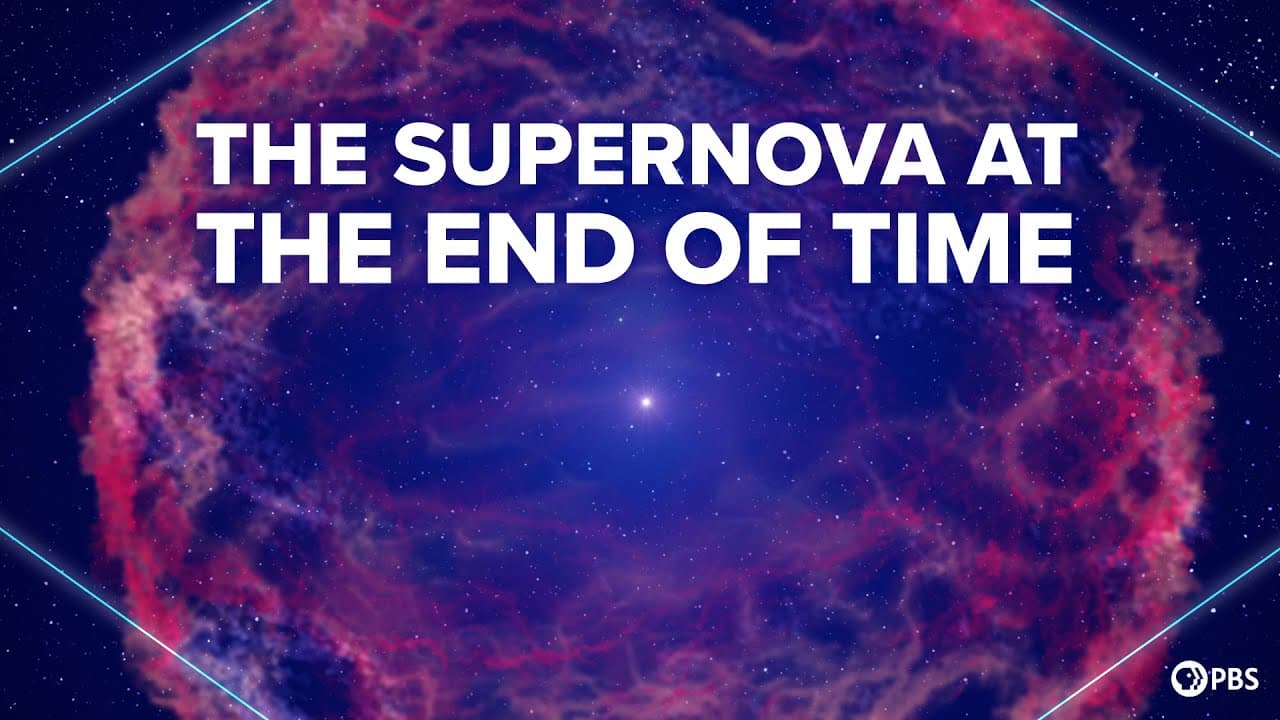
The Supernova At The End of Time
TL;DR
The universe may end with unique supernovae from iron stars.
Transcript
Good news everyone: it looks like the universe is going to end with a series of catastrophic explosions. A little while ago we did a series on the end of the world - I should say “ends” plural, because many very final-seeming fates await the Earth, then solar system, then galaxy, and ultimately the universe. The very very long story short is that t... Read More
Key Insights
- The universe is theorized to end in a heat death, reaching maximum entropy and an empty, cold state.
- Astrophysicist Matt Caplan proposes a new type of supernova that may occur at the universe's end, involving iron stars.
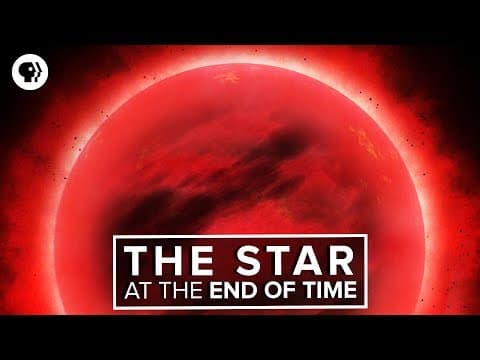
- Iron stars are formed over unimaginable timescales through pycnonuclear fusion, converting stellar remnants into iron.
- If protons are stable, iron stars will eventually collapse into black holes through quantum tunneling, but some may explode first.
- The Chandrasekhar limit determines the maximum mass a stellar remnant can have before collapsing, influencing the fate of iron stars.
- Black dwarf supernovae could occur in the distant future, adding a climactic end to some stars.
- The concept of time and memory is discussed, highlighting how physical laws don't prefer a time direction, but observers do.
- Quantum mechanics and interpretations like Copenhagen and Many Worlds affect how time and phenomena like the double slit experiment are understood.
Install to Summarize YouTube Videos and Get Transcripts
Explore YouTube Video Summarizer or Get YouTube Transcript Extractor
Questions & Answers
Q: What is the predicted final state of the universe?
The universe is predicted to end in a heat death, where it reaches maximum entropy, resulting in an empty and cold state. This occurs due to the eternal exponential expansion of the universe, ultimately leading to a state of effective emptiness and absolute coldness, devoid of any significant events or energy exchanges.
Q: What are iron stars and how do they form?
Iron stars are hypothetical stellar remnants formed through pycnonuclear fusion over incredibly long timescales. This process slowly converts the core of a white dwarf into iron, the most stable element, as the star cools and crystallizes. The transformation occurs over timescales far exceeding the current age of the universe, leading to a dense, iron-rich structure.
Q: How does the Chandrasekhar limit affect stellar remnants?
The Chandrasekhar limit is the maximum mass a stellar remnant, like a white dwarf, can have before collapsing under its own gravity. It is approximately 1.44 times the mass of the Sun. If a remnant exceeds this limit, electron degeneracy pressure can no longer support it, leading to collapse and potentially a supernova or formation of a neutron star or black hole.
Q: What is the role of quantum tunneling in the fate of iron stars?
Quantum tunneling plays a critical role in the fate of iron stars, allowing nuclear reactions to occur over vast timescales. In an iron star, nuclei can tunnel through potential barriers to fuse, gradually converting the star into iron. Eventually, this process could lead to the star collapsing into a black hole or exploding as a black dwarf supernova, depending on its mass.
Q: What is a black dwarf supernova?
A black dwarf supernova is a theoretical type of supernova that could occur in the distant future of the universe. It involves the collapse and explosion of an iron star, a stellar remnant that has cooled and crystallized over unimaginable timescales. This event would provide a dramatic end to some stars, adding a climactic note to the universe's final stages.
Q: How does the video address the concept of time and memory?
The video discusses the nature of time and memory, highlighting that while physical laws are time-symmetric, observers experience time directionally. This means that our perception of past and future is linked to the increase in correlations and entropy. The video explores how different interpretations of quantum mechanics, like Copenhagen and Many Worlds, influence our understanding of time.
Q: What is the significance of the double slit experiment in the context of time?
The double slit experiment is significant in discussions of time because it illustrates the peculiarities of quantum mechanics and observation. Depending on the interpretation, such as Copenhagen or Many Worlds, the experiment's outcomes and their reversibility can vary. These interpretations affect how we understand the flow of time and the possibility of reversing quantum events, challenging our classical notions of time.
Q: How does the video incorporate viewer interaction and support?
The video incorporates viewer interaction and support by acknowledging the contributions of Patreon supporters and encouraging viewer donations to PBS member stations. It emphasizes the importance of community support in continuing the production of content, highlighting specific supporters and dedicating aspects of the video to them as a form of gratitude for their generosity.
Summary & Key Takeaways
-
The universe is expected to end in a state of maximum entropy and cold emptiness, but new research suggests a more explosive finale with unique supernovae from iron stars. Astrophysicist Matt Caplan's work indicates that these cataclysmic events could occur in the distant future, providing a more dramatic end to the universe.
-
Iron stars, formed through pycnonuclear fusion over incredibly long timescales, could collapse and explode as black dwarf supernovae. This process is influenced by the Chandrasekhar limit, which determines the mass threshold for stellar remnants before collapsing, potentially leading to a more eventful cosmic conclusion.
-
The video also explores the nature of time and memory, emphasizing that while physical laws are time-symmetric, observers experience time directionally. Quantum mechanics, with interpretations like Copenhagen and Many Worlds, further complicate our understanding of time and phenomena, such as the double slit experiment, in a universe where the future is as uncertain as the past.
Read in Other Languages (beta)
Share This Summary 📚
Summarize YouTube Videos and Get Video Transcripts with 1-Click
Try YouTube Summary with ChatGPT & Claude or YouTube Transcript Generator
Explore More Summaries from PBS Space Time 📚
Summarize YouTube Videos and Get Video Transcripts with 1-Click
Try YouTube Summary with ChatGPT & Claude or YouTube Transcript Generator