How to Set Boundaries After Family Humiliation
TL;DR
Pamela stops hiding her success after her mother and sister deliberately humiliate her at the Sterling Hotel, a property she secretly purchased six months earlier. By allowing their plan to unfold and refusing to shrink herself, she shows that boundaries are an expression of self-respect, and that personal worth does not depend on recognition or approval from dismissive relatives.
Transcript
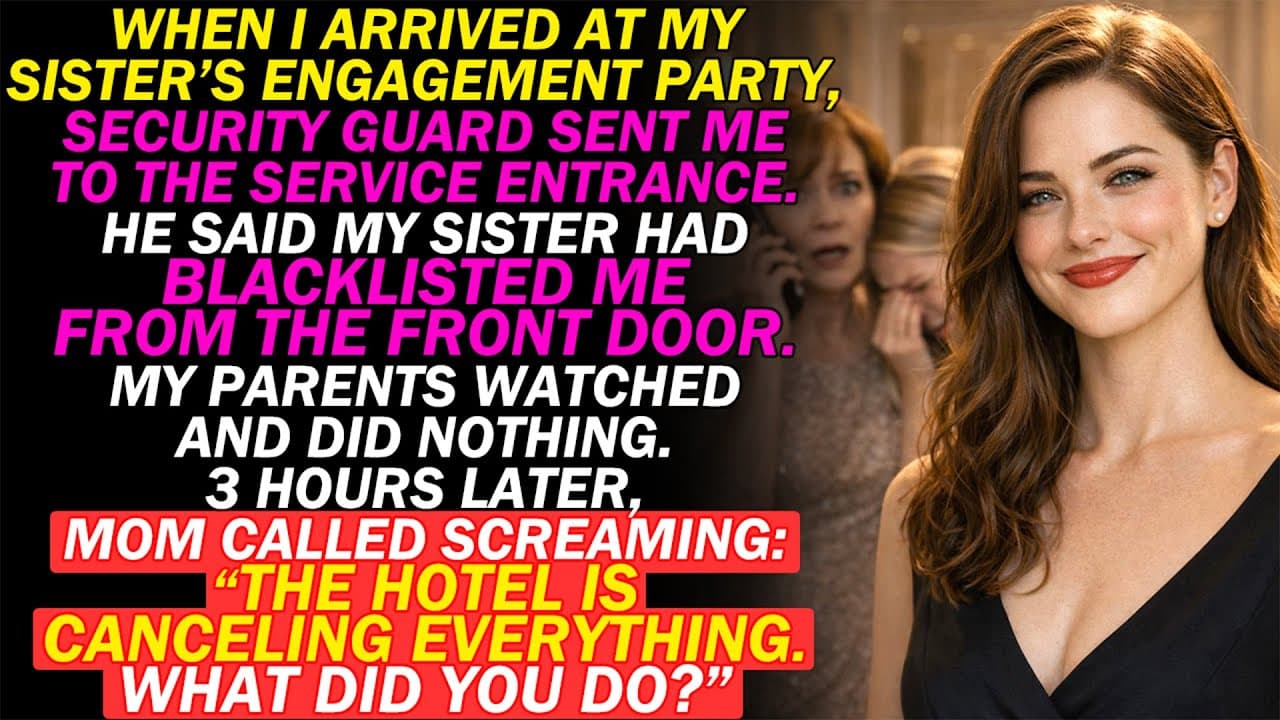
My name is Pamela Seard. I'm 34 and last Saturday, a security guard told me I wasn't good enough to use the front door of my own hotel. My sister Natalie had specifically requested that I be redirected to the service entrance, the one for delivery trucks and kitchen staff. My mother stood 5 m away watching the whole thing. She smiled. Not a nervous... Read More
Key Insights
- Pamela's family judges her through an outdated image because they never ask about her life or accomplishments. Their ignorance is not evidence that she lacks success. It demonstrates how favoritism can prevent relatives from recognizing significant growth occurring outside their attention.
- The service-entrance instruction is a deliberate act of exclusion because Natalie identifies Pamela by name, labels her as the bride's sister, and prohibits her from entering through the main lobby. Pamela's mother confirms her participation by watching the confrontation with visible satisfaction instead of offering assistance.
- Pamela's ownership of the Sterling Hotel transforms the power dynamic without requiring her to fabricate a confrontation. She purchased the property six months before learning about the engagement party, so the family's decision to hold the celebration there creates an accidental reckoning rather than a scheme she arranged.
- Pamela's business success begins after her mother refuses to support her proposed bed-and-breakfast purchase. She takes a bank loan at 18% interest, survives a difficult first year, and expands to more properties. Her progress illustrates persistence despite financial pressure and familial discouragement.
- The distinction between revenge and closure guides Pamela's decision. Daniel asks which outcome she wants, and Pamela concludes that she wants her family to understand she is not the person they imagine. Her goal is to stop making herself smaller, even if revealing the truth disrupts the celebration.
- Setting boundaries is presented as self-respect rather than retaliation. Pamela does not cancel the event, interfere with its arrangements, or announce her ownership beforehand. She permits Natalie and her mother to act according to their intentions, then allows her authentic position to become visible through the hotel manager's recognition.
- Family favoritism has repeatedly harmed Pamela beyond the engagement party. Her mother minimizes her adulthood, compares her unfavorably with Natalie, dismisses her entrepreneurial plans, and blames her after David's infidelity. These experiences eventually persuade Pamela to stop seeking emotional support from someone committed to misunderstanding her.
- Quiet presentation strengthens Pamela's response because she attends in a simple black dress with inherited pearl earrings and requests that staff keep her arrival private. She does not rely on conspicuous wealth to establish her status. The manager's respectful acknowledgment reveals authority that her family failed to recognize.
- Personal worth remains intact when relatives refuse to acknowledge it. Pamela's hotels, resilience, and independence exist regardless of her family's assumptions. The central lesson is that success does not require approval from people who have already decided to overlook someone, and family ties do not require accepting calculated mistreatment.
Install to Summarize YouTube Videos and Get Transcripts
Explore YouTube Video Summarizer or Get YouTube Transcript Extractor
Questions & Answers
Q: Why was Pamela sent to the hotel's service entrance?
Pamela was sent to the service entrance because Natalie included her on a guest-management list containing special access instructions. The document identified Pamela as the bride's sister and ordered staff to redirect her if she appeared, while prohibiting her from using the main lobby under any circumstances. Her mother's satisfied reaction at the entrance showed that the exclusion was deliberate rather than an administrative mistake.
Q: Who owned the Sterling Hotel during the engagement party?
Pamela owned the Sterling Hotel during Natalie's engagement party. She had quietly finalized the purchase six months earlier, before she knew Natalie was dating Bradley or planning a celebration there. Her family remained unaware because they rarely asked about her life or work. Consequently, they arranged an $85,000 party and attempted to exclude Pamela through the service entrance of her own property.
Q: Why did Pamela allow the engagement party to continue?
Pamela allowed the engagement party to proceed because canceling it, refusing to attend, or exposing her ownership in advance would not accomplish what she wanted. She feared that a dramatic reaction would reinforce her family's negative assumptions. Instead, she instructed Marcus not to change the arrangements and chose to let Natalie and their mother reveal their intentions before Pamela's real position became known naturally.
Q: How did Pamela build her hotel business without family support?
Pamela began by trying to purchase a small, 10-room bed-and-breakfast that needed work. Her mother dismissed the idea and refused her request for a loan, so Pamela obtained bank financing at 18% interest. The first year nearly broke her, but she made the property succeed and later purchased additional properties, including the Sterling Hotel, without her family's attention or approval.
Q: What history of favoritism existed between Pamela and Natalie?
Pamela's mother consistently celebrated Natalie while minimizing Pamela. She gave Natalie $40,000 for an apartment down payment but called Pamela's proposed hospitality business a fantasy. She introduced adult Pamela as someone still figuring things out, focused family conversations on Natalie's achievements, and even compared Pamela unfavorably with Natalie after Pamela discovered that her husband David had cheated and her marriage ended.
Q: Why did Pamela bring Daniel to the engagement party?
Pamela brought Daniel because he was both her longtime friend and her attorney. He had known her since college and had witnessed her build her business from nothing, making him a trusted source of emotional and practical support. Daniel offered to attend as her plus one and bring ownership documentation in case anyone challenged Pamela or demanded proof of her relationship to the hotel.
Q: Was Pamela seeking revenge against her family?
Pamela explicitly tells Daniel that she does not want revenge. She wants closure and recognition of the fact that she is not the unsuccessful, drifting person her family imagines. More importantly, she wants to stop shrinking herself to fit the limited role they assigned her. She accepts that revealing the truth might disrupt the party, but views the family's response as their choice.
Q: What lesson does Pamela's experience teach about boundaries?
Pamela's experience presents boundaries as self-respect rather than revenge. She does not sabotage the party or invent a public spectacle. She simply stops concealing her achievements and refuses to cooperate with a family role built on humiliation and invisibility. Her response shows that family relationships do not require accepting mistreatment, and that personal value remains real even when relatives refuse to acknowledge it.
Summary & Key Takeaways
-
Pamela learns through an email from Marcus, the Sterling Hotel's general manager, that her sister Natalie ordered staff to redirect her through the service entrance during an $85,000 engagement party. Natalie and their mother do not know that Pamela purchased the hotel six months earlier after building her hospitality business independently.
-
Years of favoritism shaped the conflict. Pamela's mother gave Natalie $40,000 toward an apartment but dismissed Pamela's request for a business loan as a fantasy. Pamela instead accepted a bank loan at 18% interest, made her first bed-and-breakfast succeed, acquired additional properties, and endured the family's continuing indifference.
-
Pamela decides against canceling the party or revealing her ownership beforehand. Accompanied by her attorney and longtime friend Daniel, she attends in an understated black dress. Security directs her away from the main entrance while her mother smiles, setting up the moment when the hotel manager publicly recognizes Pamela as the property's owner.
-
Key Insights greatly influence the narrative. Pamela's family judges her through an outdated image because they never ask about her life or accomplishments. Their ignorance is not evidence that she lacks success. It demonstrates how favoritism can prevent relatives from recognizing significant growth occurring outside their attention.
-
The service-entrance instruction is a deliberate act of exclusion because Natalie identifies Pamela by name, labels her as the bride's sister, and prohibits her from entering through the main lobby. Pamela's mother confirms her participation by watching the confrontation with visible satisfaction instead of offering assistance.
-
Pamela's ownership of the Sterling Hotel transforms the power dynamic without requiring her to fabricate a confrontation. She purchased the property six months before learning about the engagement party, so the family's decision to hold the celebration there creates an accidental reckoning rather than a scheme she arranged.
-
Pamela's business success begins after her mother refuses to support her proposed bed-and-breakfast purchase. She takes a bank loan at 18% interest, survives a difficult first year, and expands to more properties. Her progress illustrates persistence despite financial pressure and familial discouragement.
-
The distinction between revenge and closure guides Pamela's decision. Daniel asks which outcome she wants, and Pamela concludes that she wants her family to understand she is not the person they imagine. Her goal is to stop making herself smaller, even if revealing the truth disrupts the celebration.
-
Setting boundaries is presented as self-respect rather than retaliation. Pamela does not cancel the event, interfere with its arrangements, or announce her ownership beforehand. She permits Natalie and her mother to act according to their intentions, then allows her authentic position to become visible through the hotel manager's recognition.
-
Family favoritism has repeatedly harmed Pamela beyond the engagement party. Her mother minimizes her adulthood, compares her unfavorably with Natalie, dismisses her entrepreneurial plans, and blames her after David's infidelity. These experiences eventually persuade Pamela to stop seeking emotional support from someone committed to misunderstanding her.
-
Quiet presentation strengthens Pamela's response because she attends in a simple black dress with inherited pearl earrings and requests that staff keep her arrival private. She does not rely on conspicuous wealth to establish her status. The manager's respectful acknowledgment reveals authority that her family failed to recognize.
-
Personal worth remains intact when relatives refuse to acknowledge it. Pamela's hotels, resilience, and independence exist regardless of her family's assumptions. The central lesson is that success does not require approval from people who have already decided to overlook someone, and family ties do not require accepting calculated mistreatment.
Read in Other Languages (beta)
Share This Summary 📚
Summarize YouTube Videos and Get Video Transcripts with 1-Click
Try YouTube Summary with ChatGPT & Claude or YouTube Transcript Generator
Explore More Summaries from Calm Drama Stories 📚






Summarize YouTube Videos and Get Video Transcripts with 1-Click
Try YouTube Summary with ChatGPT & Claude or YouTube Transcript Generator