How to Improve Memory Retention Effectively
TL;DR
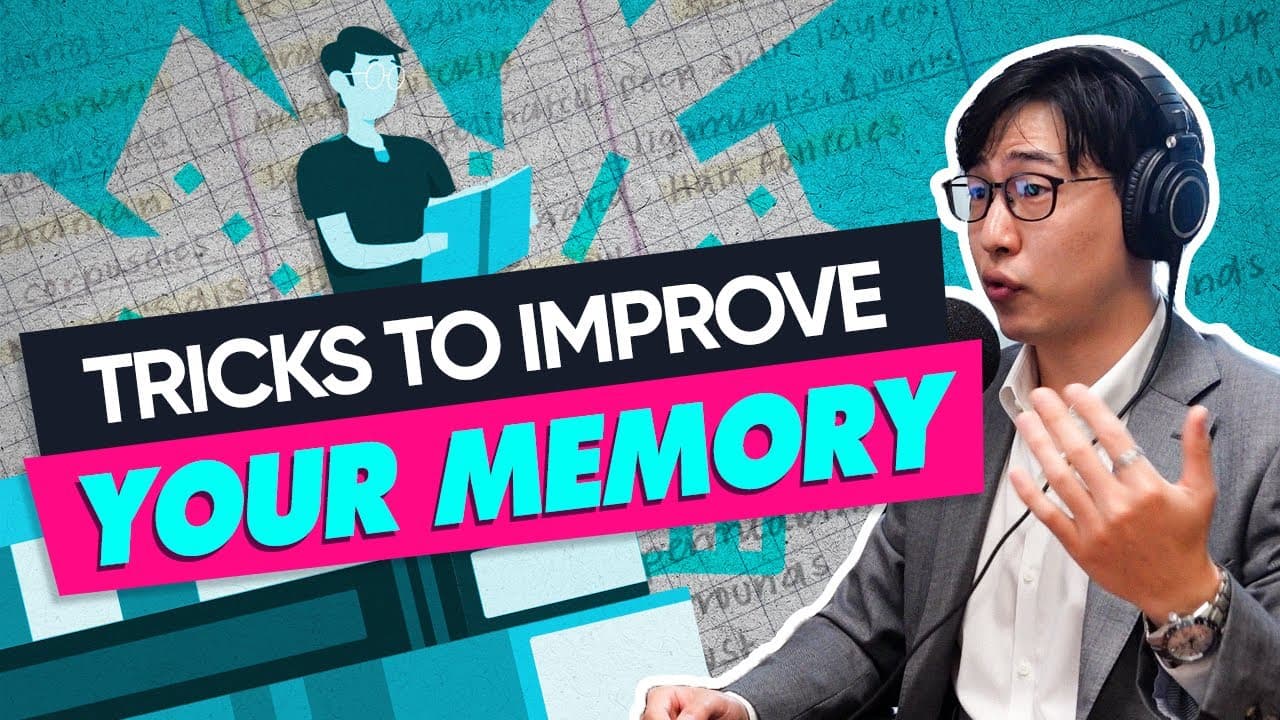
To boost memory retention, focus on the relevance of the information by connecting it to prior knowledge and personal experiences. Learning in layers, prioritizing what is applicable, and practicing skills immediately can significantly enhance understanding and retention. Implementing techniques like syntopical reading and taking breaks for consolidation further supports long-term mastery.
Transcript
so often we'd say oh then I'd be learning out of order and then what if I miss all these details but no no we're not learning out of order we're learning in the right order it was presented to us in the wrong order I want to just reflect on our University days I generally studied just to pass an exam but many months later I would really not retain ... Read More
Key Insights
- 😮 Relevance is key to retaining information. The brain naturally holds onto information that is relevant and applicable to our lives, making it more memorable in the long run.
- 🧠 Making connections between new information and prior knowledge is crucial for retention. Creating analogies or finding similar experiences can help create relevance and improve learning outcomes.
- 📚 Learning in a structured, linear way may not always be the most effective. By approaching learning as a sea of knowledge and working in passes or layers, we can prioritize what is relevant to us and build connections over time.
- 🎯 Having a clear purpose and problem to solve before diving into a book or resource can enhance learning outcomes. Don't feel the need to consume information that isn't directly applicable to your goals.
- 🔍 Syntopical reading, or reading multiple resources simultaneously, can provide a broader understanding of a topic and enhance retention. It allows for a wider appreciation of how knowledge can be used and creates more relevance.
- ️ Taking breaks from consuming new information to deeply apply what has been learned is essential for consolidation and mastery. Give yourself time to fully utilize and internalize the knowledge before moving on to the next learning sprint.
- 📖 When it comes to reading for educational purposes, focus on finding resources that directly address the problem or application you have. Prioritize quality over quantity and avoid consumerism-style learning.
- 📚 Not all learning methods are created equal. Use techniques that are most effective for the desired outcome, and don't be afraid to challenge the traditional ways of learning that may not suit your needs as an adult learner.
Install to Summarize YouTube Videos and Get Transcripts
Explore YouTube Video Summarizer or Get YouTube Transcript Extractor
Questions & Answers
Q: How does relevance impact the brain's ability to retain information?
Relevance plays a significant role in the brain's ability to remember information. When information is perceived as relevant, the brain naturally holds on to it for longer periods. Relevance is associated with practical applicability and personal interest, making the information more memorable and easier to retain.
Q: How can we make new information more relevant if there is no prior knowledge or connection?
When new information lacks prior knowledge or connection, it can be challenging to make it immediately relevant. In such cases, learning in passes or layers can be beneficial. By prioritizing and learning what is relevant first, even if it seems out of order, we can gradually build new connections and create relevance over time.
Q: What strategies can be employed to increase relevance and retention when reading books for educational purposes?
When reading books for educational purposes, it is important to start by defining the purpose and problem you aim to solve. Clearly identifying why you are learning about a topic will help you select the most relevant resources. Additionally, practicing syntopical reading, where you simultaneously read multiple resources on the same topic, can provide a broader and more connected understanding, leading to deeper retention and mastery.
Q: Is it necessary to consume large amounts of information continuously to enhance learning?
No, constantly consuming new information without giving yourself time to consolidate and apply what you have learned can hinder learning. After an intensive reading phase, it is essential to pause and deeply apply the acquired knowledge before moving on to consuming more information. This consolidation phase allows for better integration of the material and solidifies it as part of your knowledge and schema.
Summary & Key Takeaways
-
Relevance is crucial for retaining information, as the brain naturally holds on to information that is perceived as applicable and interesting.
-
Creating prior knowledge and making connections with new information can increase its relevance and retention.
-
Learning in passes or layers, prioritizing relevant information first, and gradually building on prior knowledge can enhance retention and mastery.
Read in Other Languages (beta)
Share This Summary 📚
Summarize YouTube Videos and Get Video Transcripts with 1-Click
Try YouTube Summary with ChatGPT & Claude or YouTube Transcript Generator
Explore More Summaries from Justin Sung 📚


Summarize YouTube Videos and Get Video Transcripts with 1-Click
Try YouTube Summary with ChatGPT & Claude or YouTube Transcript Generator