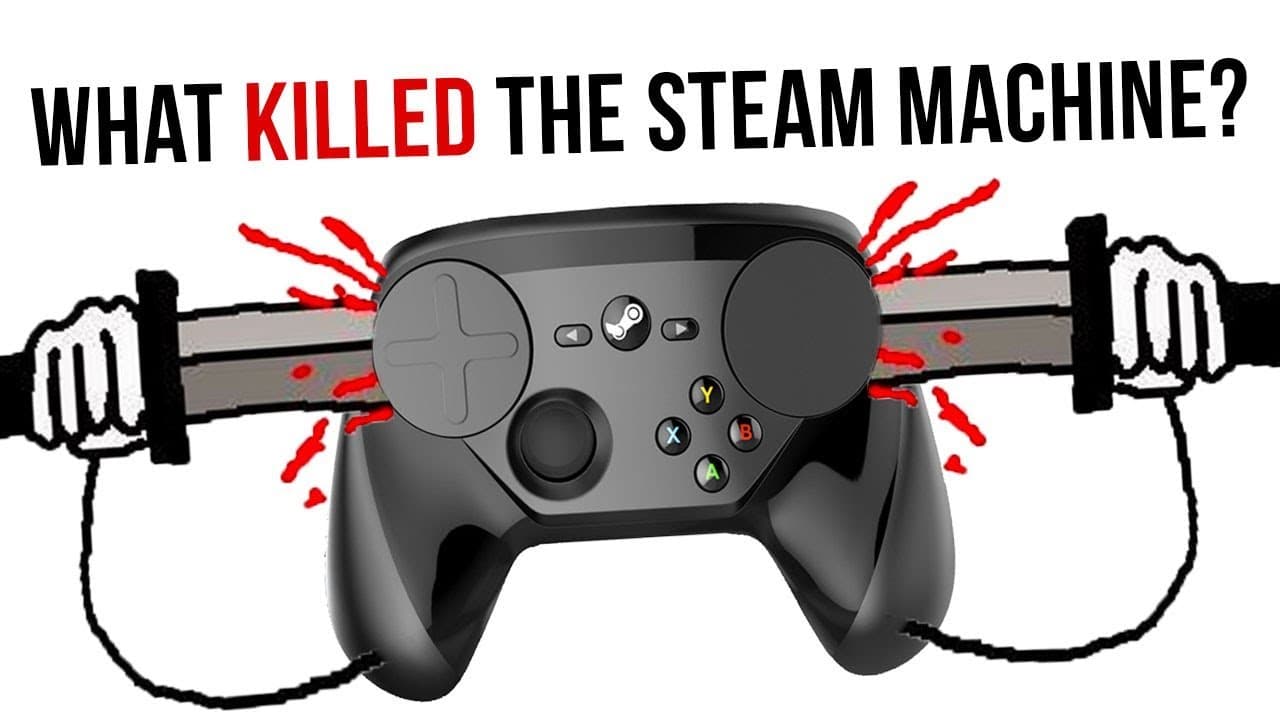
What KILLED The Steam Machine?
TL;DR
Steam Machines were overshadowed by consoles and poor marketing, leading to their decline.
Transcript
valve very carefully very quietly took the steam machines off of steam what was once regarded as an incredibly important project for valve a hardware solution for steam with its own version of Linux intended to compete with Microsoft's Windows operating system is now no longer even reference in the steam store hi folks its Falcon and today on game ... Read More
Key Insights
- 💨 Steam Machines were introduced as a response to Microsoft's shift in focus away from gamers with Windows 8.
- 🎮 Prices and specifications of Steam Machines typically made them less attractive than competing consoles.
- 🖤 Valve's lack of aggressive marketing contributed to the perception of the Steam Machines as an unimportant initiative.
- 💋 The introduction of Steam OS marked an effort to retain gamers within the Valve ecosystem.
- 🎮 Steam Machines underscored the competitive nature of the gaming market, particularly against well-established consoles.
- 🎮 Many gamers preferred simplicity and immediacy that consoles provide over the complexities of Steam Machines.
- 😚 Valve's strategy with Steam Machines was to hedge against potential threats from closed platforms.
Install to Summarize YouTube Videos and Get Transcripts
Explore YouTube Video Summarizer or Get YouTube Transcript Extractor
Questions & Answers
Q: What prompted Valve to launch Steam Machines?
Valve's decision to launch Steam Machines stemmed from concerns over Microsoft's Windows 8, which was seen as neglecting gamers' needs. By introducing an alternative, Valve aimed to protect PC gaming from a potential exodus to other platforms like console and mobile gaming due to Windows 8's shortcomings.
Q: Why did Steam Machines not perform well in the market?
The pricing and specifications of Steam Machines were significant barriers. At an average price range of $800 to $850, consumers found it hard to justify these costs compared to established consoles. Moreover, lower-end models fell short in performance, making them less appealing to gamers known for demanding specifications.
Q: How did Valve's marketing strategy impact Steam Machines?
Valve did not aggressively market Steam Machines, leading to a perception of indifference toward the project's success. The lack of clear benefits over consoles and limited support made it difficult to attract potential buyers who were already satisfied with existing gaming systems.
Q: What was the broader significance of Steam OS for Valve?
Steam OS served as a strategic move for Valve to maintain competition against Microsoft's growing influence in gaming. By developing a Linux platform specifically for gamers, Valve aimed to reinforce its ecosystem and ensure that Steam remained a viable and independent gaming distribution platform.
Q: Did competition from consoles influence the fate of Steam Machines?
Yes, competition from consoles played a vital role in the decline of Steam Machines. Many gamers preferred the simplicity and established nature of consoles over the complexities of building or buying a Steam Machine, leading to a preference for products like the PlayStation 4 and Xbox One.
Q: What lessons did Valve learn from the Steam Machines initiative?
Valve's experience with Steam Machines highlighted the importance of strong marketing and clear consumer benefits. It demonstrated that while innovations can challenge the status quo, they must also resonate with users and provide distinct advantages to succeed in a competitive market.
Q: Is there a future for gaming on Linux despite the decline of Steam Machines?
Yes, the decline of Steam Machines does not diminish the potential for gaming on Linux platforms. Steam OS remains available, and its continued improvements may attract developers and gamers seeking alternatives. The foundation laid by Steam Machines can still support Linux gaming's growth moving forward.
Q: What role did consumer expectations play in Steam Machines’ downfall?
Consumers had high expectations for Steam Machines as a bridge between consoles and PC gaming. However, the reality of often inferior hardware and inflated costs did not meet those expectations. This discrepancy illustrated a disconnect between what Valve aimed to achieve and what consumers wanted in a gaming system.
Summary & Key Takeaways
-
Steam Machines were introduced partly in response to Microsoft's Windows 8, which was viewed as detrimental to gaming, pushing Valve to provide an alternative for PC gamers.
-
The initial pricing and lackluster specs of Steam Machines hindered their market success, with sales significantly lower than competing consoles.
-
Although Steam Machines have died down, Steam OS continues to provide a Linux platform for gaming, ensuring Valve remains competitive against Microsoft.
Read in Other Languages (beta)
Share This Summary 📚
Summarize YouTube Videos and Get Video Transcripts with 1-Click
Try YouTube Summary with ChatGPT & Claude or YouTube Transcript Generator
Explore More Summaries from gameranx 📚






Summarize YouTube Videos and Get Video Transcripts with 1-Click
Try YouTube Summary with ChatGPT & Claude or YouTube Transcript Generator