NASA International Space Station Briefing of the Cloud-Aerosol Transport System (CATS)
TL;DR
NASA is launching the Cloud Aerosol Transport System (CATS) mission to study clouds and small particles in the atmosphere from the International Space Station.
Transcript
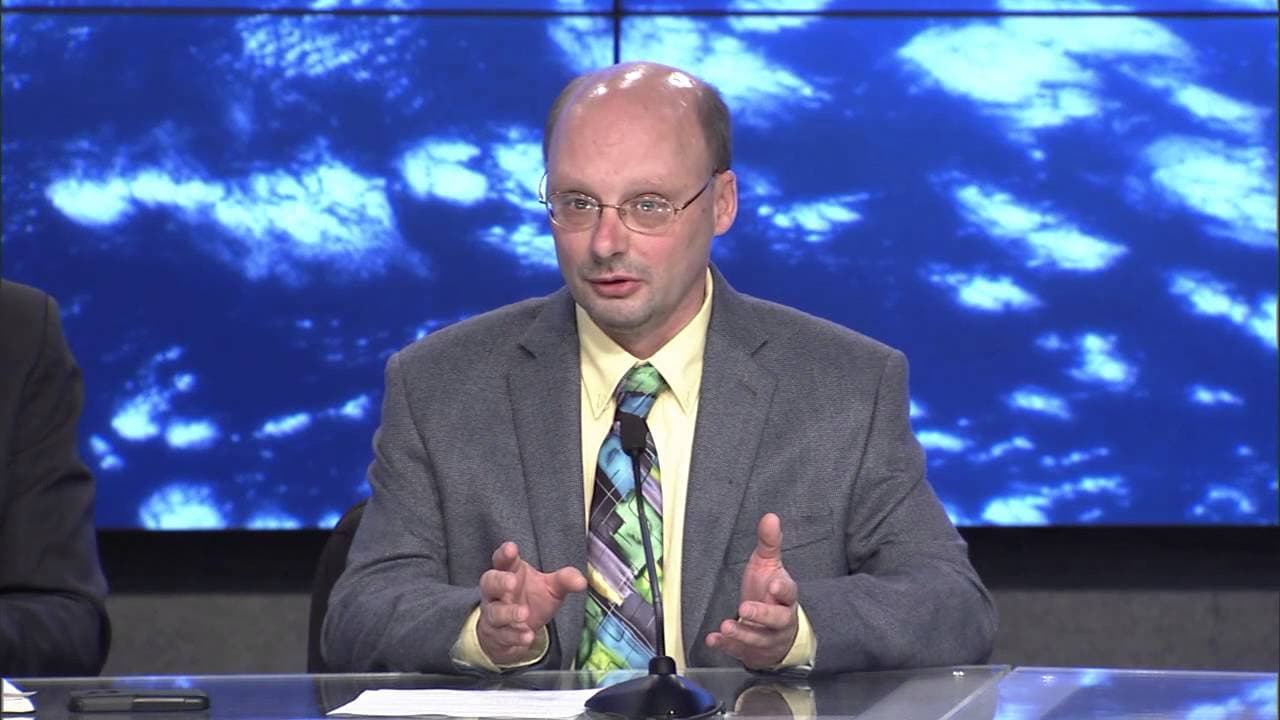
good afternoon and welcome to NASA's Kennedy Space Center in Florida where excitement is building for the launch tomorrow morning at 6:20 a.m. of a SpaceX Falcon 9 rocket with the dragon payload on the SpaceX Commercial resupply Services flight number five to the International Space Station today we are here to talk about the NASA's fourth new Eart... Read More
Key Insights
- 🎟️ The CATS mission is NASA's fourth new Earth Science mission in the past 11 months, highlighting the agency's focus on understanding our home planet.
- 😘 The ISS serves as a valuable platform for Earth and space science experiments, allowing for the testing and rotation of instruments.
- 😶🌫️ CATS' measurements of clouds and aerosols contribute to a better understanding of climate change predictions and the impact of pollutants on human health.
- 😶🌫️ The vertical resolution provided by CATS' observations is crucial for accurately studying the Earth's radiation balance and cloud characteristics.
- 🎟️ The CATS mission is a stepping stone towards future satellite missions, and its technology is expected to find its way into future missions.
- 😘 The use of the ISS as a platform for scientific research and experiments extends its functionality beyond space exploration and showcases its value for Earth observation.
- 😶🌫️ Understanding the vertical distribution and location of clouds and aerosols helps improve climate models and predictions.
Install to Summarize YouTube Videos and Get Transcripts
Explore YouTube Video Summarizer or Get YouTube Transcript Extractor
Questions & Answers
Q: How does CATS help in managing and understanding Earth?
CATS provides important data on clouds and aerosols, which affect our health, climate, and the Earth's radiation balance. This information helps in managing disasters and understanding the Earth as a system.
Q: Why was the ISS chosen as the platform for CATS?
The ISS provides a unique platform for Earth observing instruments, allowing for the testing of payloads before they go on free-flying satellites. Its proximity to Earth, different orbit, and the ability to rotate instruments make it an ideal platform for Earth science research.
Q: What are the key uses of CATS' observations of clouds and particles?
CATS' observations contribute to real-time hazard event monitoring, improving climate change predictions, and studying the impact of natural and man-made pollutants on human health and air quality.
Q: How long will the CATS mission last?
CATS is approved to be on the ISS for up to three years. If it's still operating by the end of three years, an extension can be requested.
Summary & Key Takeaways
-
NASA's Kennedy Space Center is excited for the launch of a SpaceX Falcon 9 rocket with the CATS payload to the International Space Station.
-
CATS is a new laser technology developed to measure clouds and small particles in the atmosphere, contributing to understanding Earth's climate system.
-
The ISS serves as a platform for Earth and space science experiments, allowing for the testing and rotation of scientific instruments.
Read in Other Languages (beta)
Share This Summary 📚
Summarize YouTube Videos and Get Video Transcripts with 1-Click
Try YouTube Summary with ChatGPT & Claude or YouTube Transcript Generator
Explore More Summaries from NASA 📚

Summarize YouTube Videos and Get Video Transcripts with 1-Click
Try YouTube Summary with ChatGPT & Claude or YouTube Transcript Generator