Possible Moon Found Outside Solar System by Hubble and Kepler Telescopes
TL;DR
Astronomers are using NASA's Hubble Space Telescope to search for the first exomoon ever detected, which could provide valuable insights into diverse planetary systems.
Transcript
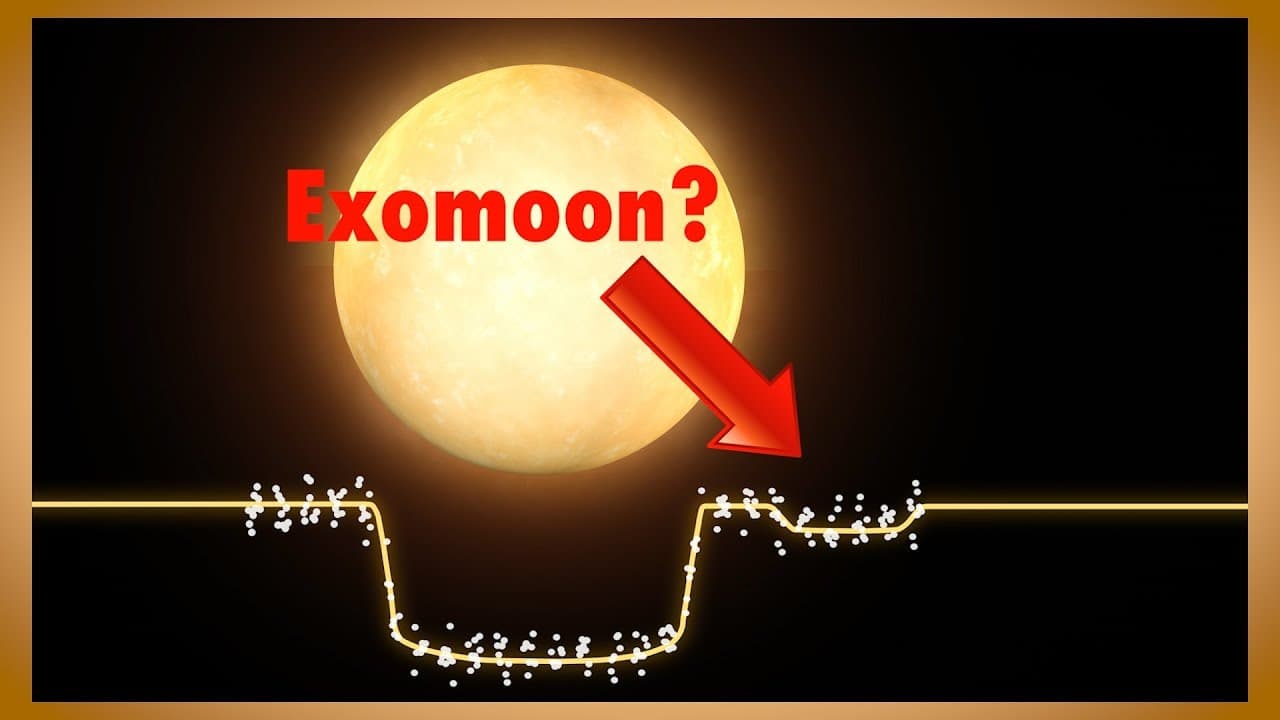
In 2017, astronomers using NASA’s Kepler telescope found hints of evidence of what they thought could be the first exomoon ever detected– a moon orbiting a planet outside our solar system. A lot of people were very excited about the potential discovery, and the research team requested time on NASA’s Hubble Space Telescope to see if there was truly ... Read More
Key Insights
- ⛩️ Astronomers found hints of the first exomoon using Kepler data and requested Hubble observations for confirmation.
- ❓ The presence of exomoons in different solar systems would provide valuable knowledge about diverse planetary systems.
- 🛀 Kepler-1625b shows evidence of an exomoon, but more observations are needed for definite confirmation.
- 💆 The potential exomoon is several times the mass of Jupiter and has a similar mass ratio to the Earth-Moon system.
- ❓ Discovering exomoons expands our understanding of planetary systems beyond our solar system.
- 🖐️ Telescopes like Hubble and upcoming missions like the James Webb Space Telescope will play a crucial role in confirming and characterizing exomoons.
- 🧡 Scientists aim to study a range of fascinating exoplanets and exomoons using high-precision measurements from infrared wavelengths.
Install to Summarize YouTube Videos and Get Transcripts
Explore YouTube Video Summarizer or Get YouTube Transcript Extractor
Questions & Answers
Q: How do astronomers search for exomoons using telescopes like Kepler and Hubble?
Astronomers analyze data from transit measurements of exoplanets, looking for light curves that indicate the presence of a moon. Multiple transits are required for convincing evidence.
Q: What evidence has been found for the potential exomoon of Kepler-1625b?
Hubble observations showed a second smaller dip in the light curve during the transit of Kepler-1625b, suggesting the presence of an exomoon. Further observations are needed for confirmation.
Q: How does the mass and radius of the potential exomoon compare to known moons in our solar system?
The potential exomoon of Kepler-1625b is similar in mass and radius to Neptune. Such a moon is not found in our solar system, and its formation remains a mystery.
Q: What future missions and telescopes will aid in the search for exomoons?
Scientists plan to use the upcoming James Webb Space Telescope, along with Hubble, to confirm the discovery of exomoons and characterize other exoplanetary systems.
Summary & Key Takeaways
-
Astronomers found hints of the first exomoon outside our solar system using NASA's Kepler telescope.
-
They analyzed data from 284 Kepler measurements of transiting exoplanets to search for light curves that indicate the presence of moons.
-
The Kepler-1625b exoplanet shows promising evidence of an exomoon, but more observations are needed to confirm its existence.
Read in Other Languages (beta)
Share This Summary 📚
Summarize YouTube Videos and Get Video Transcripts with 1-Click
Try YouTube Summary with ChatGPT & Claude or YouTube Transcript Generator
Explore More Summaries from NASA 📚

Summarize YouTube Videos and Get Video Transcripts with 1-Click
Try YouTube Summary with ChatGPT & Claude or YouTube Transcript Generator