What Are the 10 Insane Abilities Unlocked Only by Hardcore Players?
TL;DR
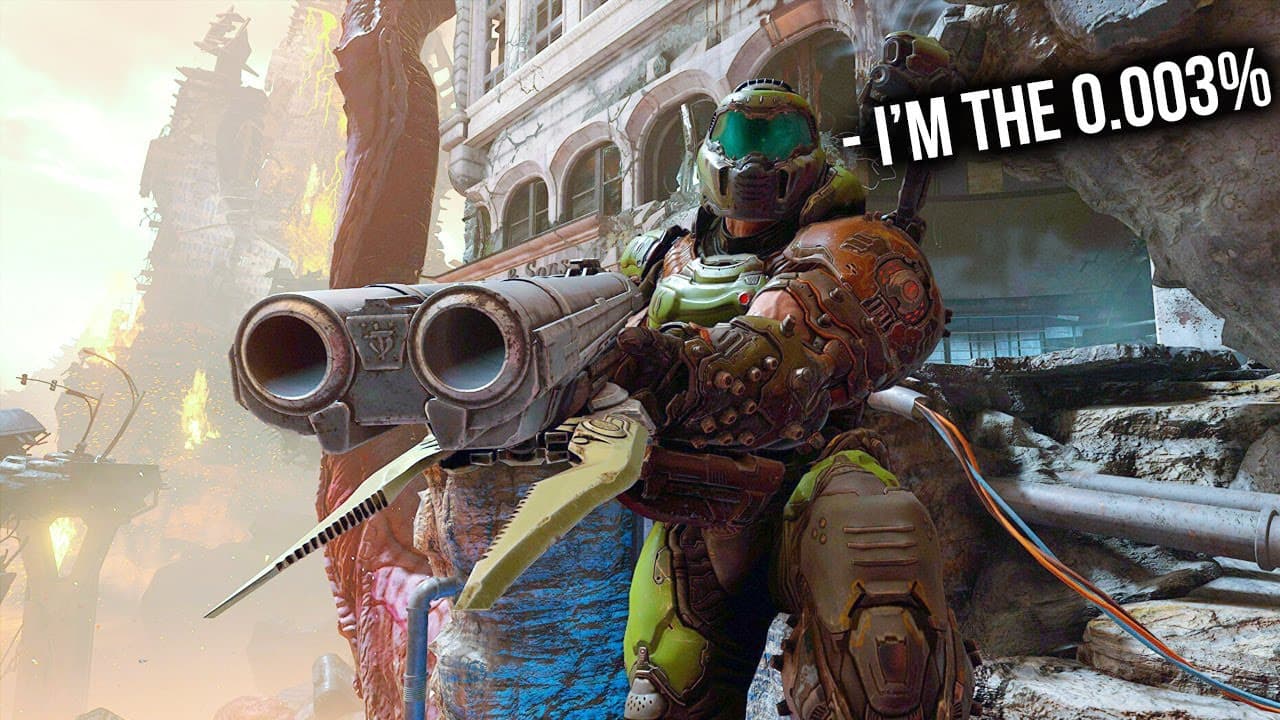
Hardcore players use demanding movement techniques and glitches to bypass fights, cross large distances and build extraordinary speed. Doom Eternal’s Yeet Hook, for example, uses the Super Shotgun’s grappling hook to slingshot the player farther than intended. The featured abilities depend on precise timing, unusual action sequences and sustained control, so read on for how each documented technique works.
Transcript
obviously the best players pull off the best moves but these moves take a level of skill well beyond a normal player even an abnormal player let's talk about the ridiculous techniques players have figured out that have just broken games in half hi folks it's Falcon and today on game ranks 10 insane abilities unlocked only for hardcore players start... Read More
Key Insights
- Feel replaces a simple formula: The Yeet Hook is not described as a trick with one reliable shortcut or fixed input sequence. Its difficulty comes from learning the relationship between grappling-hook timing and player movement. Repetition eventually develops the required feel, separating players who merely understand the concept from those who can use it effectively throughout a run.
- One tool serves several purposes: Doom Eternal’s Super Shotgun grappling hook becomes more than a way to approach an enemy. Through the Yeet Hook, it supports faster general travel, more effective fight navigation, platforming skips and, under certain circumstances, complete fight bypasses. Its value comes from applying one demanding movement technique differently according to the surrounding level.
- Cutscenes become input opportunities: Super Mario Odyssey’s BUMPS technique depends on buffering an action while a cutscene is active. A spin jump followed by a ground pound prepares Mario to roll at full speed as soon as control resumes. The cutscene therefore becomes part of the execution window rather than merely an interruption between playable sections.
- Instant speed changes the outcome: BUMPS is valuable because Mario does not need to accelerate gradually after the cutscene. Correct timing produces full rolling speed immediately, creating a dramatic burst of movement. The resulting motion looks chaotic and nearly out of control, showing how a precisely prepared input can radically change the first moments after a cutscene.
- Three frames define success: Mirror’s Edge’s kick glitch depends on an invisible platform that remains solid for only three frames. The player must jump during that exceptionally narrow interval after performing a wall run kick. Missing the temporary platform prevents the airborne jump, so precision is not simply helpful here, it is the central requirement of the technique.
- Platform differences affect execution: The kick glitch is described as nearly impossible on consoles but easier on PC. A PC player can bind jump to the scroll wheel, then roll the wheel after the wall run kick to generate jump inputs. This does not make the trick easy, but it provides a practical way to address its three-frame timing window.
- BLSS requires an exact sequence: Breath of the Wild’s bow lift smuggle sliding starts by picking up an object while drawing the bow. The player then jumps and pauses at the same time to trigger the glitch, runs to a ledge and jumps again to begin flying. Its difficulty comes from coordinating several unusual actions in the proper order.
- Flight demands continuous control: Triggering BLSS is only the beginning of the technique. Once Link is airborne, the player must keep moving, or waggling, the controller because returning it to the neutral position makes Link fall back to Earth. Successful travel therefore requires sustained input after the initial setup rather than a single completed activation.
- Airborne Link avoids interference: While BLSS keeps Link in the air, he avoids contact with almost everything and is described as basically untouchable. This makes traversing Breath of the Wild’s world much simpler once the technique is active. The benefit is substantial, but it is balanced by a frustrating setup and the need to prevent the controller from becoming neutral.
- Each Ultra Dash adds speed: Celeste’s Ultra Dash provides about a 1.2 times speed boost whenever it is executed. One boost may sound modest, but expert players can string multiple Ultra Dashes together. The technique becomes remarkable through repetition, allowing players to maintain growing momentum, move at extremely high speeds and accomplish feats presented as normally impossible.
- A precise jump preserves momentum: To perform an Ultra Dash, the player makes a down-diagonal dash into a platform and jumps with the proper timing. That jump preserves and continues the generated momentum. If the timing is off at all, the character performs a normal move instead and the extra momentum disappears, making consistent execution essential.
- Celeste techniques work together: The Ultra Dash is not presented in isolation. It combines with intentional techniques such as wave dashing and the hyperdash to produce especially impressive Celeste speedruns. The interaction shows that expert movement can depend on selecting and connecting several mechanics, with the Ultra Dash contributing extra momentum when its tight timing window is met.
Install to Summarize YouTube Videos and Get Transcripts
Explore YouTube Video Summarizer or Get YouTube Transcript Extractor
Questions & Answers
Q: What are the insane abilities unlocked only by hardcore players?
The excerpt documents the Yeet Hook in Doom Eternal, BUMPS in Super Mario Odyssey, the kick glitch in Mirror’s Edge, BLSS in The Legend of Zelda: Breath of the Wild and the Ultra Dash in Celeste. It also introduces tag barrel storage from Donkey Kong 64 as number five without explaining its execution. These abilities enable faster movement, unusual airborne travel, momentum preservation and major skips. They qualify as hardcore techniques because their timing, movement or input sequences are difficult to execute consistently.
Q: How does the Yeet Hook work in Doom Eternal?
The Yeet Hook uses the Super Shotgun’s grappling hook to slingshot the player much farther than intended. Correct timing and movement create the extended launch, but the explanation does not offer a simple guaranteed input trick. Players instead have to develop a feel for the technique through practice. Mastery enables faster traversal and can skip fights, platforming sections or large parts of levels.
Q: What is BUMPS in Super Mario Odyssey?
BUMPS is short for the buffered spin jump ground pound. The player performs a buffered spin jump and then a ground pound during a cutscene. With the right timing, Mario starts rolling at full speed immediately after the cutscene finishes. The technique matters because it converts buffered inputs into an instant speed boost instead of requiring Mario to build momentum normally.
Q: Why is the Mirror’s Edge kick glitch so difficult?
The kick glitch requires the player to begin with a wall run kick. During the subsequent fall, an invisible platform becomes solid beneath the player for only three frames. The player must jump within that narrow window to create the apparent double jump through the air. Because the usable platform exists so briefly, the technique demands extremely precise timing and is described as nearly impossible on consoles.
Q: How can PC players make the kick glitch easier?
On PC, players can bind the jump action to the scroll wheel. After performing the wall run kick, they roll the wheel to produce jump inputs while the invisible platform briefly becomes solid. This approach improves the chance of hitting the three-frame window. It only makes the glitch easier relative to console execution, and the technique remains difficult for ordinary players.
Q: How do players activate BLSS in Breath of the Wild?
Players begin BLSS by picking up an object while pulling out the bow at the same time. They then jump and pause simultaneously to trigger the glitch. Next, they run to a ledge and jump, which starts Link’s airborne movement. The sequence is difficult because several unusual actions must be coordinated before the flight state becomes available.
Q: Why must players keep moving the controller during BLSS?
Once Link is flying through BLSS, the controller must be continuously waggled. If the controller returns to its neutral position, Link falls back to Earth. Continued input therefore maintains the airborne state after the setup sequence succeeds. While that state lasts, Link avoids contact with almost everything and can move around the world much more easily.
Q: How does the Ultra Dash increase speed in Celeste?
The player performs a down-diagonal dash into a platform and then jumps at the correct moment. Proper timing preserves the generated momentum and provides about a 1.2 times speed boost. Players can string multiple Ultra Dashes together to reach extreme speeds and complete normally impossible feats. If the jump timing is even slightly wrong, the move becomes normal and the extra momentum is lost.
Summary & Key Takeaways
-
Breaking games through mastery: Falcon presents a Game Ranks countdown of ten abilities that demand skill beyond what normal, or even abnormal, players usually demonstrate. These techniques exploit movement systems, glitches and unintended interactions to make games behave in extraordinary ways. The excerpt proceeds from number ten through the introduction of number five, explaining how dedicated players turn difficult inputs and narrow timing windows into faster travel, skipped encounters and feats that initially appear impossible.
-
Launching with the Yeet Hook: At number ten, Doom Eternal players use the Super Shotgun’s grappling hook to slingshot themselves much farther than intended. The technique primarily improves movement speed and navigation during fights, but certain applications bypass fights, platforming challenges or massive sections of levels. There is no simple input formula that guarantees success. Players must develop a feel for the timing and movement, which makes the technique difficult to master despite how effortless skilled runners can make it look.
-
Building instant Mario momentum: At number nine, Super Mario Odyssey’s buffered spin jump ground pound, called BUMPS for short, turns a cutscene into a movement advantage. The player buffers a spin jump and then performs a ground pound, allowing Mario to begin rolling at full speed immediately. Because the trick can only be performed during a cutscene, its timing must align with the cutscene ending. Successful execution produces an immediate speed boost and sends Mario rolling rapidly around the screen.
-
Jumping beyond Mirror’s Edge physics: At number eight, the kick glitch begins with a wall run kick. At a particular point during the resulting fall, an invisible platform appears beneath the player and remains solid for only three frames. Jumping during that window creates what functions like a double jump through the air. The trick is nearly impossible on consoles, while PC players can make repeated jump inputs easier by binding jump to the scroll wheel and rolling it after the wall run kick.
-
Flying and preserving speed: At number seven, Breath of the Wild’s bow lift smuggle sliding, or BLSS, lets Link travel through the air while avoiding contact with almost everything. It requires coordinated object, bow, jump and pause actions, followed by a ledge jump and continuous controller movement. At number six, Celeste’s Ultra Dash grants about a 1.2 times speed boost through a down-diagonal dash into a platform and a precisely timed jump. Chaining Ultra Dashes preserves and compounds useful momentum.
Read in Other Languages (beta)
Share This Summary 📚
Summarize YouTube Videos and Get Video Transcripts with 1-Click
Try YouTube Summary with ChatGPT & Claude or YouTube Transcript Generator
Explore More Summaries from gameranx 📚






Summarize YouTube Videos and Get Video Transcripts with 1-Click
Try YouTube Summary with ChatGPT & Claude or YouTube Transcript Generator