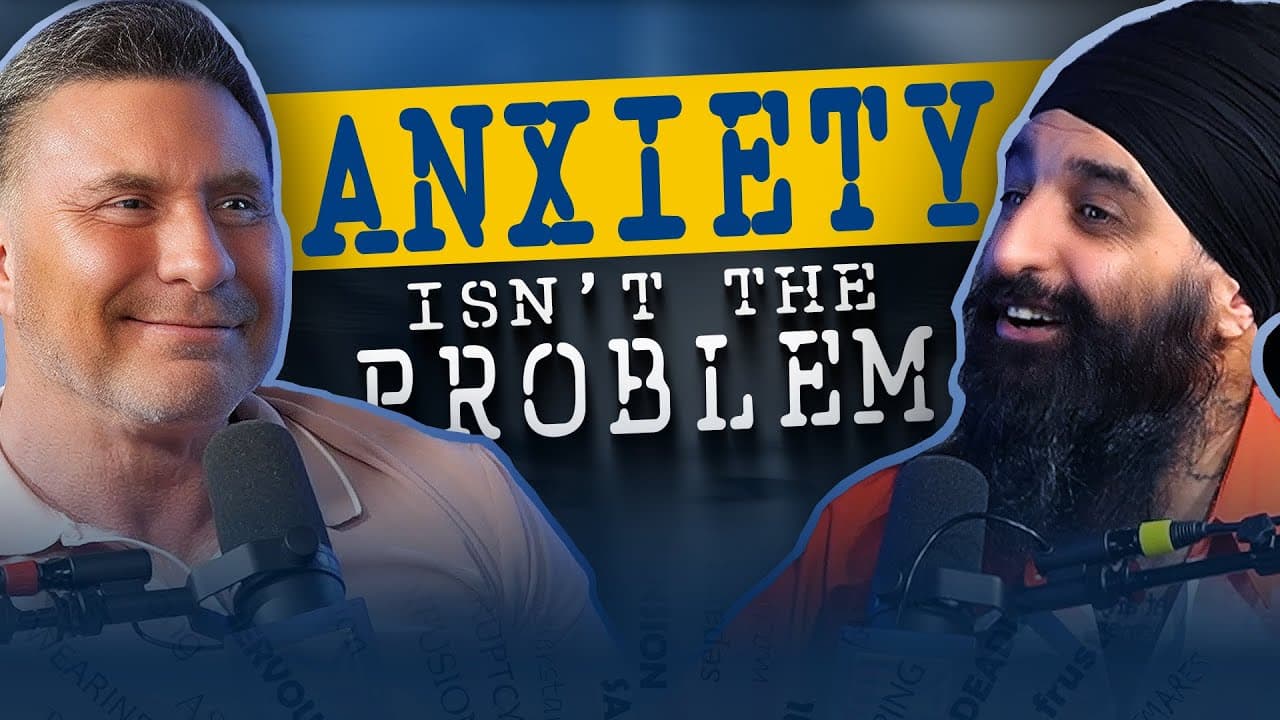
Anxiety Isn't Your Enemy—It's a Map (Here's How to Read It) Ft. Humble The Poet
TL;DR
Anxiety is a signal, not an enemy; embrace it for growth.
Transcript
you say anxiety is really overestimating the threat Yeah And I think you said underestimating your ability to deal with it We are teaags We don't know how strong we are until we're in hot water It's amazing that we're having mental health conversations but we've swung the pendulum so far the other way that now mental health has become this excuse t... Read More
Key Insights
- Anxiety often arises from overestimating threats and underestimating our ability to handle them, acting as a signal for areas needing attention.
- Social media can be a significant source of anxiety, often tricking us into believing our worth is tied to external achievements.
- Equanimity is about maintaining peace under stress, achieved by shortening the reaction time to anxiety and responding with clarity.
- Triggers can be both positive and negative, and understanding them helps in managing anxiety and building resilience.
- Overachievers often tie their identity to recent achievements, leading to burnout; it's crucial to separate personal worth from external success.
- Despair stems from a perceived lack of options; increasing awareness and exploring possibilities can reduce anxiety.
- Community and connection are essential in combating anxiety; isolation can exacerbate feelings of despair and worthlessness.
- Practicing self-awareness and understanding personal triggers can lead to better emotional regulation and reduced anxiety.
Install to Summarize YouTube Videos and Get Transcripts
Explore YouTube Video Summarizer or Get YouTube Transcript Extractor
Questions & Answers
Q: What is the main perspective on anxiety discussed in the video?
The video suggests that anxiety is not an enemy but a signal indicating areas that require attention and growth. It emphasizes that anxiety is a natural response to uncertainty and overestimating threats while underestimating our ability to handle them. By understanding and embracing anxiety, individuals can use it as a map to guide personal development and resilience.
Q: How does social media impact anxiety according to the video?
Social media often fuels anxiety by creating a false sense of worth tied to likes, achievements, and external validation. It can lead to feelings of inadequacy, fear of missing out, and increased stress. The video suggests that stepping away from social media can help individuals focus on their true values and reduce anxiety by eliminating unnecessary comparisons and pressures.
Q: What is equanimity and how is it achieved?
Equanimity is defined as maintaining peace and emotional stability under stress. It is achieved by shortening the reaction time to anxiety and learning to respond with clarity and grace. This involves understanding personal triggers, practicing self-awareness, and building emotional resilience. Equanimity allows individuals to handle challenges more effectively without being overwhelmed by fear or stress.
Q: How can envy be used positively according to the video?
Envy can be a valuable tool for self-discovery by revealing what an individual truly values. By paying attention to moments of envy, individuals can identify areas of personal interest and importance. This insight can guide them in aligning their actions and goals with their genuine desires, leading to a more fulfilling and authentic life.
Q: What role does community play in managing anxiety?
Community and connection are crucial in managing anxiety, as they provide support, understanding, and a sense of belonging. Isolation can exacerbate feelings of despair and worthlessness, while being part of a community offers emotional safety and shared experiences. Building strong relationships and engaging with others can significantly reduce anxiety and promote mental well-being.
Q: Why is it important to differentiate between reacting and responding?
Differentiating between reacting and responding is important because reactions are often impulsive and driven by survival instincts, while responses are thoughtful and intentional. By practicing self-regulation and emotional control, individuals can reduce the duration of reactive states and choose more constructive responses. This leads to better decision-making and a more balanced emotional state.
Q: What is the relationship between overachieving and anxiety?
Overachievers often tie their identity and self-worth to their most recent achievements, leading to anxiety and burnout. The pressure to constantly achieve and validate oneself through external success can create a cycle of stress and dissatisfaction. Recognizing this pattern and separating personal worth from achievements can help reduce anxiety and promote a healthier self-image.
Q: How can understanding triggers help in managing anxiety?
Understanding triggers helps in managing anxiety by providing insight into past experiences and emotional patterns. Positive triggers can be reinforced to create feelings of joy and peace, while negative triggers can be addressed to build resilience. This awareness allows individuals to anticipate and prepare for anxiety-inducing situations, leading to better emotional regulation and reduced stress.
Summary & Key Takeaways
-
Anxiety is not an enemy but a signal highlighting areas where work is needed. Instead of avoiding anxiety, individuals should embrace it as a part of their growth journey.
-
Social media often exacerbates anxiety by creating a false sense of worth tied to external achievements. Stepping away from it can help regain peace and focus on true values.
-
Equanimity, or maintaining peace under stress, is achieved by shortening the reaction time to anxiety and responding thoughtfully. Understanding triggers and building resilience are key components.
Read in Other Languages (beta)
Share This Summary 📚
Summarize YouTube Videos and Get Video Transcripts with 1-Click
Try YouTube Summary with ChatGPT & Claude or YouTube Transcript Generator
Explore More Summaries from Ed Mylett 📚


Summarize YouTube Videos and Get Video Transcripts with 1-Click
Try YouTube Summary with ChatGPT & Claude or YouTube Transcript Generator