What Did NASA Announce About Apollo 11, Mars, Europa, Cygnus and James Webb on This Week @NASA?
TL;DR
NASA marked Apollo 11's 45th anniversary while outlining its next giant leap toward sending astronauts to Mars. Its stepping stone plan combined research aboard the International Space Station, the Space Launch System rocket, the Orion deep space capsule and other technologies. The update also covered Europa instruments, a Cygnus delivery and the James Webb Space Telescope, making the full account worth reading for how these efforts fit together.
Transcript
"Here's some of the stories trending This Week at NASA!" "Houston, Tranquility Base here -- the Eagle has landed." NASA is celebrating the 45th anniversary of the historic Apollo 11 mission to the moon. On July 20, 1969, Neil Armstrong and Buzz Aldrin, with crewmate Michael Collins manning the command service module from lunar orbit, became the fir... Read More
Key Insights
- Apollo connected past and future: The anniversary segment used Apollo 11 as more than a historical commemoration. NASA connected the first human moon landing directly to its stated goal of sending astronauts to Mars. That framing made the 1969 mission a model of ambitious progress while emphasizing that another giant leap would require a new sequence of deliberate preparations.
- Three astronauts had distinct roles: Neil Armstrong and Buzz Aldrin became the first humans on the moon on July 20, 1969, while Michael Collins remained in lunar orbit. Collins manned the command service module as his crewmates descended to the surface. The account therefore presents Apollo 11 as a coordinated three-person mission, even though Armstrong's first lunar step became its defining public symbol.
- Mars planning starts in orbit: Research aboard the International Space Station is one of the key elements in NASA's path to Mars. The work specifically includes human health and technology research, connecting current activity in Earth orbit to the demands of later missions. In NASA's stepping stone approach, the station functions as part of preparation for deep-space human exploration.
- Launch and crew systems converge: NASA identified both the Space Launch System rocket and the Orion deep space capsule as central parts of the Mars pathway. The report says each system would undergo development and evolution. Their inclusion alongside station research shows that reaching Mars depends on several connected capabilities, not solely on producing a powerful launch vehicle.
- Europa instruments begin with proposals: The July 15 Announcement of Opportunity did not announce selected instruments or a launched mission. It opened a route for the research community to propose potential science instruments that could fly on a future Europa mission. This distinction shows the effort at a proposal stage, with scientific participation helping define what the mission might eventually carry.
- Europa's ocean drives interest: A mission to Jupiter's moon Europa is a high priority for the scientific community because the moon is believed to have liquid water beneath its icy crust. That possibility makes Europa potentially habitable. The proposed mission would seek to improve scientific understanding of the moon rather than treating habitability as an already established fact.
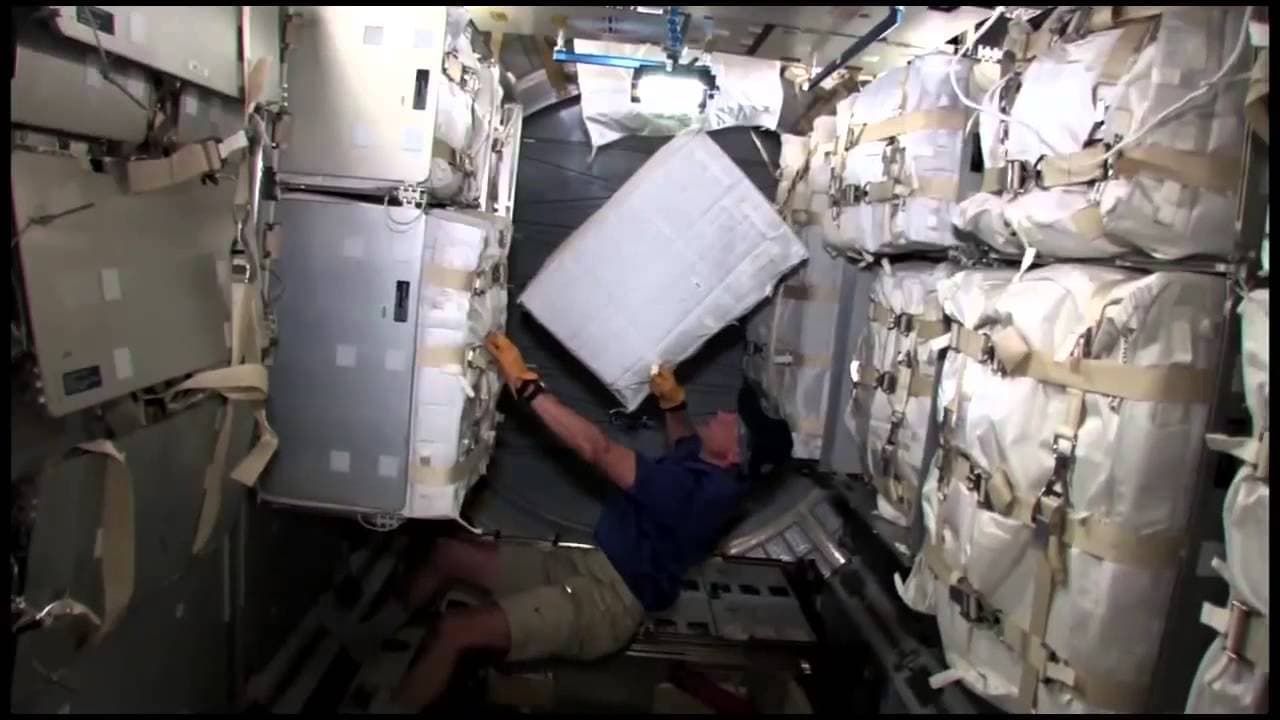
- Cygnus delivered diverse cargo: The Cygnus cargo craft brought more than 3,000 pounds to the International Space Station, including food, general supplies, spare parts and experiments. This mixed manifest supported both the crew's daily needs and research activity. The delivery illustrates how a single cargo flight can sustain station operations across several practical categories.
- Cygnus followed a timed sequence: Orbital Sciences Corporation launched Cygnus aboard an Antares rocket from Wallops Flight Facility in Virginia on July 13. The craft arrived at the station on July 16 and was expected to remain attached to the Harmony module for about a month. During that period, the station crew would transfer its cargo.
- The next crew was identified: About eight hours after Cygnus reached the station, members of the Expedition 41/42 crew participated in a NASA Television news conference at Johnson Space Center. NASA astronaut Barry "Butch" Wilmore appeared with cosmonauts Elena Serova and Alexander Samokutyaev. They were scheduled to launch in September and return to Earth in March 2015.
- Bolden combined military and spaceflight experience: Charles F. Bolden Junior spent thirty-four years in the Marines and fourteen years in the NASA Astronaut office. Between 1986 and 1994, he traveled to space four times aboard the space shuttle, twice serving as mission Commander. As NASA Administrator, he led the agency team and managed resources in support of its missions and goals.
- The observatory event joined disciplines: NASA's July 14 headquarters program focused on discoveries from space and ground observatories that facilitate the search for life in the universe. Chief Scientist Ellen Stofan moderated the event. Participants included astronaut and Associate Administrator for Science John Grunsfeld, Nobel Laureate John Mather of Goddard Space Flight Center, and other scientists and engineers.
- James Webb promised major change: The James Webb Space Telescope appeared within a broader discussion of unprecedented observatory discoveries and the search for life. Participants discussed how the telescope could help rewrite scientific textbooks after its scheduled launch in 2018. The phrasing signals expectations of findings substantial enough to alter established scientific accounts, while stopping short of specifying particular future discoveries.
Install to Summarize YouTube Videos and Get Transcripts
Explore YouTube Video Summarizer or Get YouTube Transcript Extractor
Questions & Answers
Q: What did NASA say about Apollo 11 and its next giant leap to Mars?
NASA marked the 45th anniversary of Apollo 11 and presented the mission as inspiration for sending astronauts to Mars. Apollo 11 placed Neil Armstrong and Buzz Aldrin on the moon on July 20, 1969, while Michael Collins remained in lunar orbit aboard the command service module. NASA said the Mars goal would be pursued through a stepping stone approach involving International Space Station research, the Space Launch System rocket, the Orion deep space capsule and other technologies. These elements matter because the agency linked present research and system development to the capabilities required for tomorrow's missions.
Q: Why was Apollo 11 historically significant?
Apollo 11 was the mission on which humans first reached the moon. Neil Armstrong and Buzz Aldrin landed on the lunar surface, while Michael Collins manned the command service module from lunar orbit. Armstrong's first step became a symbolic giant leap for humanity. NASA highlighted the achievement because its legacy could inspire the sustained work needed for another major objective, sending astronauts to Mars.
Q: How did NASA describe its path to Mars?
NASA described the path to Mars as a stepping stone approach built from several key elements. Human health and technology research aboard the International Space Station forms one part of that preparation. NASA also named the development and evolution of the Space Launch System rocket, the Orion deep space capsule and other game-changing technologies. The approach matters because NASA presented a Mars journey as the result of connected research and engineering efforts rather than one isolated project.
Q: Why was a mission to Europa considered a high priority?
Europa was considered a high priority because it is believed to have a liquid water ocean beneath its icy crust. That characteristic makes Jupiter's moon potentially habitable. A future mission would improve scientific understanding of Europa, and NASA's July 15 Announcement of Opportunity could lead to proposals for science instruments from the research community. Those instruments would provide the means to investigate the moon's properties on a future mission.
Q: What did the Cygnus cargo craft deliver to the International Space Station?
Cygnus delivered more than 3,000 pounds of food, supplies, spare parts and experiments for the station crew. Orbital Sciences Corporation launched the craft on an Antares rocket from Wallops Flight Facility in Virginia on July 13, and it arrived on July 16. It was scheduled to remain attached to the station's Harmony module for about a month while the crew transferred cargo. The shipment supported daily crew needs, station maintenance and onboard experimentation.
Q: Who were the Expedition 41/42 crew members discussed by NASA?
The report named NASA astronaut Barry "Butch" Wilmore and Russian Federal Space Agency cosmonauts Elena Serova and Alexander Samokutyaev. They participated in a NASA Television news conference at Johnson Space Center about eight hours after Cygnus arrived at the station. The trio was identified as the next crew members scheduled to launch to the International Space Station in September. They were scheduled to return to Earth in March 2015.
Q: What experience did NASA Administrator Charles F. Bolden Junior have?
Charles F. Bolden Junior served thirty-four years in the Marines and spent fourteen of those years in the NASA Astronaut office. He traveled to space four times aboard the space shuttle between 1986 and 1994. On two of those flights, he served as mission Commander. July 17 marked the fifth anniversary of his U.S. Senate confirmation as NASA's 12th Administrator, a role in which he led the NASA team and managed agency resources.
Q: What role did the James Webb Space Telescope have in NASA's update?
James Webb was discussed during a July 14 event at NASA headquarters about discoveries by space and ground observatories. The broader program examined how those discoveries facilitate the search for life in the universe. Participants said the telescope would help rewrite scientific textbooks after its scheduled launch in 2018. Its role in the update was therefore to represent the potential for future observatory findings to reshape scientific understanding.
Summary & Key Takeaways
-
Remembering Apollo 11's achievement: NASA celebrated the mission's 45th anniversary by recalling the first human landing on the moon. On July 20, 1969, Neil Armstrong and Buzz Aldrin reached the lunar surface while Michael Collins operated the command service module from lunar orbit. Armstrong's first step became a symbolic giant leap for humanity. NASA presented that achievement not only as history, but also as inspiration for the agency's next intended giant leap, sending astronauts to Mars.
-
Building the path to Mars: NASA described a stepping stone approach rather than a single mission element. The path includes human health and technology research aboard the International Space Station, development and evolution of the Space Launch System rocket, and work on the Orion deep space capsule. The agency also identified other game-changing technologies as necessary for future missions. Together, these efforts represent the practical steps NASA said it was taking toward eventually sending astronauts to Mars.
-
Preparing a future Europa mission: NASA issued an Announcement of Opportunity on July 15 that could generate research-community proposals for potential science instruments. Those instruments could fly on a future mission to Jupiter's moon Europa. The scientific community considers such a mission a high priority because Europa is believed to contain a liquid water ocean beneath its icy crust. NASA framed the proposed instruments as a way to improve understanding of this potentially habitable moon.
-
Supplying and staffing the station: Orbital Sciences Corporation's Cygnus cargo craft reached the International Space Station on July 16 with more than 3,000 pounds of food, supplies, spare parts and experiments. It was to remain attached to the Harmony module for about a month while cargo was transferred. The report also introduced Expedition 41/42 members Barry "Butch" Wilmore, Elena Serova and Alexander Samokutyaev, who were scheduled to launch in September and return in March 2015.
-
Recognizing leadership and new discoveries: July 17 marked five years since the U.S. Senate confirmed Marine Corps Major General Charles F. Bolden Junior as NASA's 12th Administrator. The report then covered a July 14 event about discoveries from NASA space and ground observatories that support the search for life in the universe. Chief Scientist Ellen Stofan moderated a panel featuring John Grunsfeld, Nobel Laureate John Mather and others. Discussion included how James Webb could rewrite scientific textbooks after its scheduled 2018 launch.
Read in Other Languages (beta)
Share This Summary 📚
Summarize YouTube Videos and Get Video Transcripts with 1-Click
Try YouTube Summary with ChatGPT & Claude or YouTube Transcript Generator
Explore More Summaries from NASA 📚
Summarize YouTube Videos and Get Video Transcripts with 1-Click
Try YouTube Summary with ChatGPT & Claude or YouTube Transcript Generator