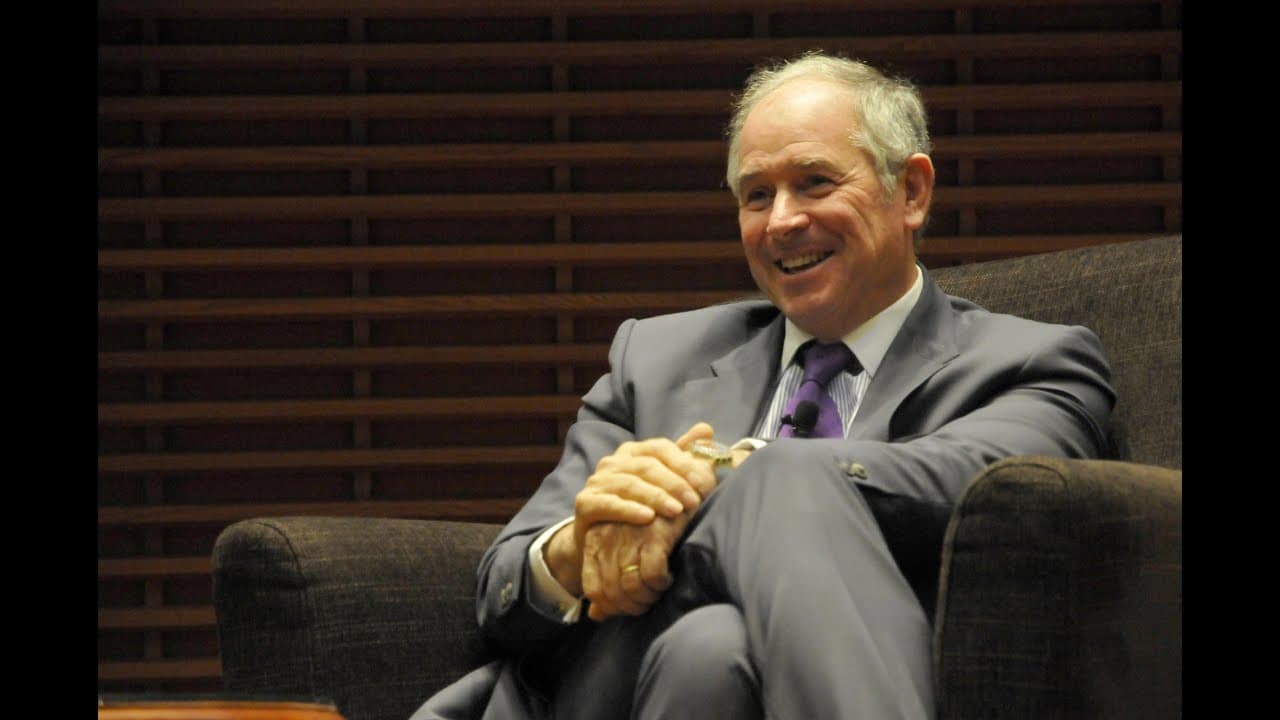
Blackstone's Stephen Schwarzman on Hiring Phenomenal People
TL;DR
Hire only 'tens' — people who sense problems before they happen and make things happen without direction, not just skilled executors. Blackstone's founders sent 488 offering circulars and were rejected roughly 350 times before landing 32 investors, proving that a thick skin and force of will matter more than early credentials.
Transcript
[MUSIC] I'm particularly honored to be let's just say we were a few pay grades the next 40 minutes. >> Good. >> So I wanna take this opportunity, and along with all my classmates here to as a leader, and as someone who has great And I wanna walk away from it, getting a To get started I wanna say that people one of the largest asset management I wan... Read More
Key Insights
- Hiring 'tens' is the core of a winning firm: tens sense problems before they happen and make things occur without instruction, while nines are strong executors and sevens or below don't work in the private equity business at all.
- Rejection is nearly infinite for entrepreneurs: Blackstone's founders sent 488 offering circulars, faced roughly 350 rejections, and still raised what became their biggest first-time fund through sheer force of will.
- Starting a business is harder at the beginning than after success because failure rates are high, so founders must think through what unique value they offer before there is any track record to point to.
- Blackstone's original plan had three parts: enter the M&A advisory cash-flow business, exploit the underserved private equity space where capital was available and competition was thin, and add affiliates bringing intellectual capital.
- A CEO must balance control and autonomy: enough controls that the firm doesn't spin out, but enough autonomy that people feel self-worth and importance, since no one wants to work where they have no independence.
- Values-based hiring is essential: you won't do well unless you hire people consistent with your values, and a CEO must constantly articulate what the firm stands for so the organization stays aligned.
- Small-firm cohesion is a deliberate choice: Schwarzman preferred the feeling of a place where you know everyone by name, contrasting Lehman's growth from 550 people when he joined to around 30,000 when it collapsed.
- Starting new businesses gives talented people ownership and command: most people want to be at least a brigadier general rather than a private, so launching ventures creates the leadership roles that retain top performers.
Install to Summarize YouTube Videos and Get Transcripts
Explore YouTube Video Summarizer or Get YouTube Transcript Extractor
Questions & Answers
Q: What kind of people does Stephen Schwarzman say you should hire?
Schwarzman says you should hire 'tens' — the highest-caliber people who have an ability to sense problems before they happen and who make things occur without being directed. He contrasts them with nines, who are great at executing and can come up with solutions but need a problem placed in front of them, and sevens or below, who he says simply don't work in the private equity business.
Q: How did Blackstone handle rejection when raising its first fund?
Blackstone's founders sent out 488 offering circulars and ended up with only 32 investors, meaning they were rejected roughly 350 times. Schwarzman notes that being told 'you're a loser' can happen almost infinitely, and that surviving requires a thick skin and often someone alongside you to buck you up. He emphasizes that force of will and belief in your basic plan carried them through to raising their biggest first-time fund.
Q: What was Blackstone's original three-part business plan?
The plan had three parts. First, enter the M&A advisory business, which was a predictable cash-flow business they knew the people in. Second, move into private equity, since at that point prices were low, capital was available, and there weren't many players in it. Third, add affiliates who contributed intellectual capital that enhanced the firm, positioning Blackstone to wait for opportunities and then act on them.
Q: Why does Schwarzman prefer a small-firm culture?
Schwarzman liked the feeling of a small place where you know everyone by name and it's possible to have a cohesive organization. He contrasts this with large firms, using Lehman Brothers as an example: it had 550 people when he joined and grew to around 30,000 by the time it collapsed. He wanted to preserve that intimate, cohesive feeling and the ability to work with great people directly.
Q: How should a CEO balance control and autonomy?
Schwarzman describes a tension a CEO must navigate between control and autonomy. Nobody wants to work at a place where they feel they have no autonomy, so you must develop controls to keep the firm from spinning out, but allow enough autonomy that everyone feels they have self-worth and importance. Getting this balance right is central to keeping talented people engaged and the organization functioning well.
Q: Why does Schwarzman say values matter in hiring?
Schwarzman states you won't do well unless you're hiring people who are consistent with your values. A CEO must surround themselves with people who share that value system and must constantly articulate what the firm stands for so everyone knows it. He argues you can never stop communicating those values, because that alignment is what allows organizations to function cohesively and pull in the same direction.
Q: Is being a CEO a natural talent or a learned skill?
Both Schwarzman and his co-founder Mike agree there is no 'CEO gene' — it is trained behavior, a learned skill set rather than something innate. They describe making many mistakes, getting coaching, and learning over time. Schwarzman notes that even things like public communication are more difficult than people think, and that becoming an effective leader is a transition you make gradually through experience and practice.
Q: Why does Schwarzman recommend starting new businesses?
Starting new businesses is useful because most talented people don't want to remain in subordinate roles; as Schwarzman puts it, they want to be at least a brigadier general, not a private. Most people want ownership and command over something. By continually launching new ventures, a firm creates leadership positions that give talented people that sense of ownership, which helps attract and retain top performers over the long term.
Summary
In this video, Steve Schwarzman, CEO and co-founder of Blackstone, shares insights about his entrepreneurial journey and leadership philosophy. He discusses the early challenges he faced as an entrepreneur, the importance of strategy and differentiation, and the key factors in building a successful business. Schwarzman also talks about the transition from being an entrepreneur to being a CEO, the importance of hiring the right people, and the need for constant learning and adaptation in a rapidly changing industry.
Questions & Answers
Q: How did Steve Schwarzman overcome the early challenges of being an entrepreneur?
Schwarzman explains that being an entrepreneur is much harder than one imagines, and the failure rate is high. He and his co-founder did extensive thinking and planning before starting their business, focusing on developing a strategy and differentiation to offer something distinctive in the market. They also met regularly to discuss their goals and objectives for the business.
Q: How did Schwarzman approach hiring the right people at Blackstone?
Schwarzman believes that hiring the right people is crucial for any successful organization. They look for individuals who are smart, nice, and consistent with the company's values. They want people who are self-reliant, adaptable, and can contribute to the intellectual capital of the firm. Schwarzman emphasizes the importance of creating a culture where people feel secure, valued, and have autonomy in their work.
Q: How did Schwarzman transition from being an entrepreneur to being a CEO?
Schwarzman acknowledges that being a CEO requires a different skill set than being an entrepreneur. He had to learn how to manage people, be careful with his words and actions, and provide direction and vision for the organization. He highlights the importance of articulating the core values of the business and being consistent with those values. Schwarzman also emphasizes the need to surround himself with talented individuals who share the same values.
Q: What is Schwarzman's leadership philosophy?
Schwarzman's leadership philosophy is centered around creating a culture where people feel secure and valued. He believes in treating people with respect, providing feedback, and allowing people to have autonomy in their work. He emphasizes the importance of having a clear strategy, constantly learning, and adapting to a changing environment. Schwarzman also mentions the need for leaders to be careful with their words and actions, as they have a significant influence on the organization.
Q: How did Schwarzman overcome resistance to change in his business?
Schwarzman acknowledges that change is often difficult for people, and he has encountered resistance when implementing changes in his business. He believes in explaining the motives behind the change and ensuring that the changes are beneficial and well-executed. Schwarzman also mentions the importance of making people comfortable with the change by introducing it gradually and addressing their concerns.
Q: What motivated Schwarzman when he first started his business, and what motivates him now?
Schwarzman's motivation has always been to learn and do new things. He enjoys being in charge, dealing with complexity, and solving problems. He also mentions that making money was an initial motivation, but as he grew older, the motivation shifted towards creating and leaving a meaningful legacy. Schwarzman emphasizes the importance of finding something you love and continuing to learn and grow in that field.
Q: How did Schwarzman ensure his business got the right people for the right seats?
Schwarzman believes in hiring individuals who are consistent with the company's values and possess the necessary skills and capabilities. He emphasizes the importance of conducting thorough interviews, talking to people to understand their adaptability and emotional stability, and predicting future behavior. Schwarzman also mentions the importance of not overlooking negative feedback about potential hires and making sure that the organization's culture aligns with the individuals being hired.
Takeaways
Schwarzman's journey as an entrepreneur and CEO highlights the challenges and rewards of starting and building a successful business. His insights on hiring the right people, creating a culture of trust and growth, and adapting to change are valuable for aspiring entrepreneurs and leaders. Schwarzman's emphasis on learning, constant improvement, and staying true to one's values provides a roadmap for success in any industry.
Summary & Key Takeaways
-
Schwarzman recounts founding Blackstone with Pete after leaving Lehman Brothers' M&A group in 1985, meeting regularly to design a firm around three business lines: M&A advisory, private equity when capital was cheap and competition scarce, and affiliates adding intellectual capital.
-
The founders endured relentless rejection, sending 488 offering circulars and being turned down roughly 350 times, including by people they had personally saved, before securing 32 investors and raising their biggest first-time fund through persistence and thick skin.
-
On leadership, Schwarzman argues there is no CEO gene; it is trained behavior requiring balance between control and autonomy, values-based hiring of 'tens,' constant articulation of what the firm stands for, and creating new businesses so talented people gain ownership.
Read in Other Languages (beta)
Share This Summary 📚
Summarize YouTube Videos and Get Video Transcripts with 1-Click
Try YouTube Summary with ChatGPT & Claude or YouTube Transcript Generator
Explore More Summaries from Stanford Graduate School of Business 📚

Summarize YouTube Videos and Get Video Transcripts with 1-Click
Try YouTube Summary with ChatGPT & Claude or YouTube Transcript Generator