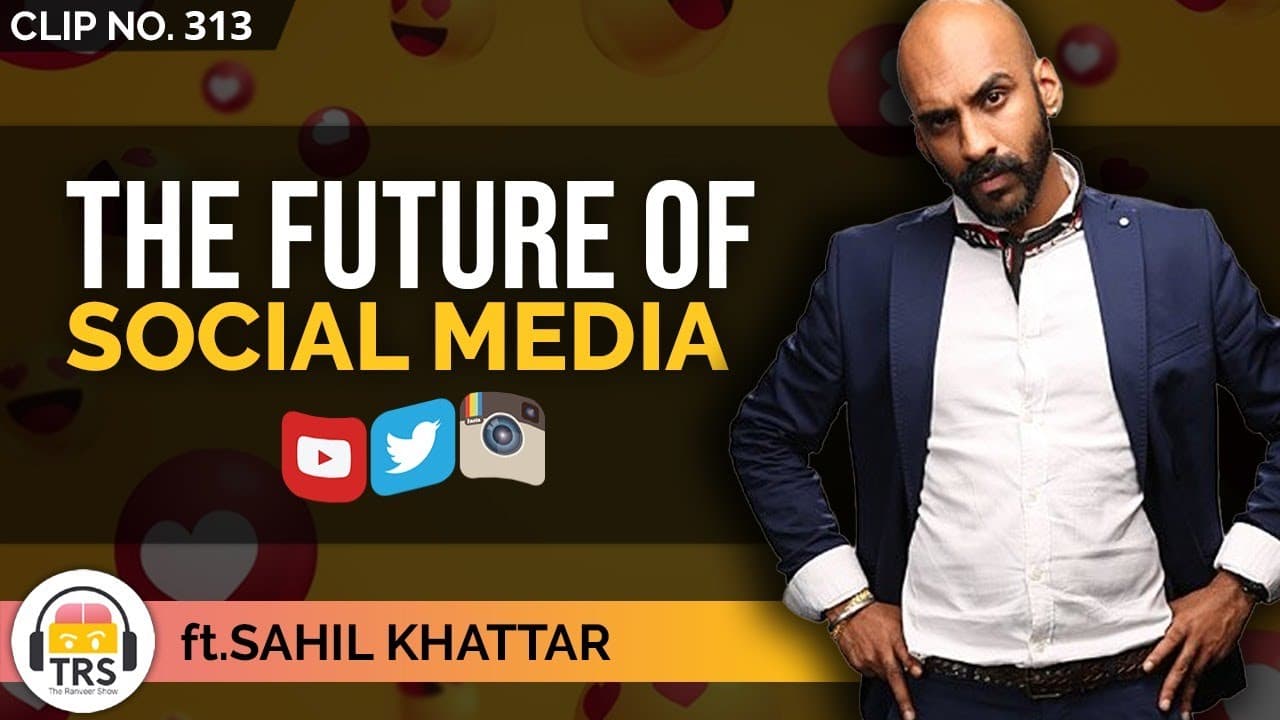
The Evolutionary Future Of Social Media Explained Simply ft. Sahil Khattar | TheRanveerShow Clips
TL;DR
Social media, television, and film will coexist and thrive in the coming years.
Transcript
but okay coming back to the social media space bro you are someone who's actually there before everyone else was that you and that first gen of YouTube in terms of money and in terms of cultural impact where do you see YouTube social media all this going forward in the next 10 20 years what's gonna happen because and I'm asking you because you've w... Read More
Key Insights
- 🔉 Social media and traditional entertainment will coexist, offering diverse consumption options for audiences.
- 💡 Cultural influences from the U.S. continue to shape Indian entertainment, reflecting a blend of ideas across borders.
- 💦 Hard work, along with talent, is crucial for success in the competitive entertainment realm.
- 🔉 Platforms like TikTok enhance but do not overshadow traditional media, showcasing the diversity of audience preferences.
- 💪 Engagement in live events is vital for creators to foster a strong fanbase and community.
- 😵 A cross-platform strategy can maximize visibility and deepen audience connections across various media.
- 🥹 Traditional media still holds relevance, adapting to changing consumer behaviors and preferences.
Install to Summarize YouTube Videos and Get Transcripts
Explore YouTube Video Summarizer or Get YouTube Transcript Extractor
Questions & Answers
Q: What factors contribute to the coexistence of social media and traditional entertainment?
The coexistence of social media, television, and film is influenced by the market's demand for diverse content. Each medium attracts different audiences and serves various purposes, from escapism to information sharing. As long as creators and businesses can adapt and respond to consumer preferences, all these forms will thrive together.
Q: How has the U.S. entertainment industry influenced entertainment in India?
The U.S. entertainment industry has a profound impact on Indian media, with many Indian shows and films drawing inspiration from American concepts and formats. Successful adaptations and the localization of popular U.S. properties in Indian culture demonstrate how global influences shape materials, leading to emerging trends in content consumption.
Q: What role does hard work play in succeeding within the entertainment industry?
Hard work is fundamental in the competitive landscape of the entertainment industry. Creators must not only rely on talent but also on diligence to stand out. Being proactive and demonstrating a strong work ethic often sets successful individuals apart, as they create more opportunities and navigate challenges effectively.
Q: Are social media platforms like TikTok really the future of entertainment?
While platforms like TikTok have gained immense popularity, they are components of a broader entertainment ecosystem. They cater to specific audiences and content types, creating opportunities for crossover with traditional media. Instead of signaling an end to other forms, they establish new avenues for creativity and audience engagement.
Q: How should content creators approach cross-platform strategies?
Content creators should embrace a cross-platform strategy that leverages the strengths of each medium. They can produce original content for social media while adapting successful formats for television or film. This multifaceted approach maximizes reach and engagement, ensuring relevance across different consumer landscapes.
Q: What is the significance of live events and fan engagement in the digital age?
Live events and fan engagement remain critical in the digital age, reinforcing the connection between creators and audiences. They facilitate tangible interactions and allow fans to express support, creating loyalty and community around content. This phenomenon enhances visibility and relevance in an increasingly crowded multimedia landscape.
Q: Will traditional media ever completely disappear due to the rise of social media?
Traditional media is unlikely to vanish completely, as it continues to offer established structures for storytelling and wide audience reach. Social media complements rather than replaces traditional media, providing creators with new platforms to experiment and reach audiences, thereby fostering a healthy competition that benefits all forms.
Q: What trends indicate the future of content consumption?
Trends indicate an increasing demand for diverse content that transcends platforms, with consumers engaging in binge-watching across both traditional television and streaming services. Cross-pollination of content, such as adaptations and collaborative projects, indicates a future where content consumption will be fluid, emphasizing quality and innovative approaches.
Summary & Key Takeaways
-
The future of social media is intertwined with traditional forms of entertainment, suggesting a coexisting ecosystem rather than a replacement of one by another.
-
The continued evolution of platforms like YouTube and TikTok indicates that all entertainment mediums, including films and television, will adapt to changes in consumer behavior and technology.
-
Insights from the U.S. entertainment industry illustrate the impact of cultural trends, emphasizing the importance of hard work and adaptability in achieving success across these mediums.
Read in Other Languages (beta)
Share This Summary 📚
Summarize YouTube Videos and Get Video Transcripts with 1-Click
Try YouTube Summary with ChatGPT & Claude or YouTube Transcript Generator
Explore More Summaries from TRS Clips 📚



Summarize YouTube Videos and Get Video Transcripts with 1-Click
Try YouTube Summary with ChatGPT & Claude or YouTube Transcript Generator