The Only Animal That Can't Breathe Oxygen
TL;DR
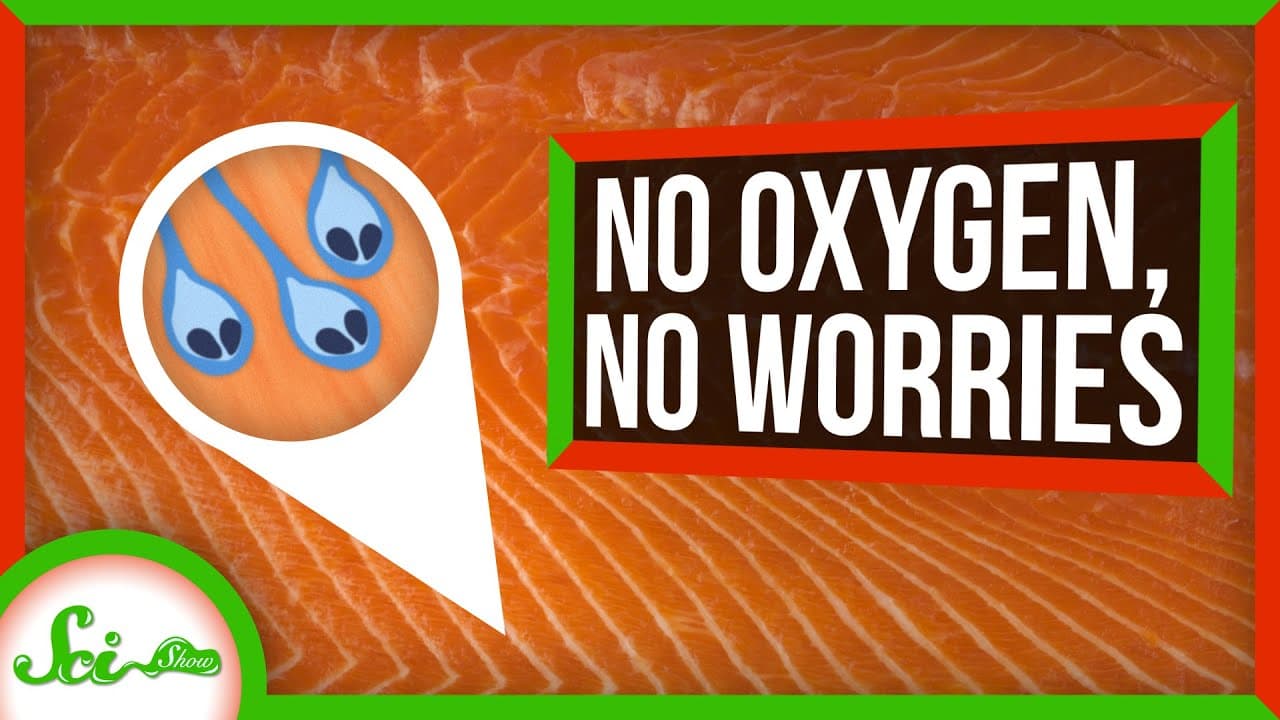
Scientists have discovered an animal called Henneguya salminicola that doesn't breathe oxygen, which is a unique characteristic among multicellular species.
Transcript
[♩INTRO] There are a few things in life that we, as animals, absolutely cannot live without. One of those things is oxygen. It’s so essential that every multicellular species we’ve ever studied has the ability to use oxygen to create energy. That is, every species except one. Because in 2020, biologists reported that they’d found an animal that not... Read More
Key Insights
- ❓ Henneguya salminicola is the first multicellular organism discovered that does not breathe oxygen.
- 🖤 This species lacks mitochondria, the cellular structures responsible for energy production in most animals.
- 🍳 H. salminicola has adapted to its oxygen-poor environment by utilizing alternative methods of energy production, such as breaking down sugars without oxygen.
- 😚 Losing the mitochondrial genome could be an evolutionary adaptation for H. salminicola to save energy.
- 🧑🌾 This discovery has practical implications for developing targeted drugs to combat the harmful effects of H. salminicola on salmon farms.
- 🤗 The research opens up new avenues for studying the evolution and adaptation of multicellular organisms to extreme environments.
- ❓ Understanding the mechanisms behind H. salminicola's unique energy production can contribute to our knowledge of cellular respiration and adaptations in organisms.
Install to Summarize YouTube Videos and Get Transcripts
Explore YouTube Video Summarizer or Get YouTube Transcript Extractor
Questions & Answers
Q: What is Henneguya salminicola, and how does it differ from other animals?
Henneguya salminicola is a myxozoan parasite that infects salmon. Unlike other animals, it does not have mitochondria, which are responsible for cellular respiration and energy production.
Q: How does H. salminicola produce energy without oxygen?
H. salminicola breaks down sugars without oxygen, which is a less efficient method of energy production compared to the oxygen-based respiration used by other animals.
Q: Why did H. salminicola lose its ability to use oxygen for respiration?
H. salminicola lives in oxygen-poor environments inside salmon. As a result, it evolved to obtain energy through oxygen-independent means to adapt to its environment.
Q: How can this discovery be useful in practical terms?
Understanding that H. salminicola does not breathe oxygen can help in developing more effective drugs to target and combat this parasitic infection, which poses a problem for salmon farmers.
Summary & Key Takeaways
-
Biologists have identified a species called Henneguya salminicola, a myxozoan parasite that infects salmon during its development stages.
-
Unlike other animals, H. salminicola does not have mitochondria, the cell's powerhouses responsible for converting sugars and oxygen into energy.
-
H. salminicola compensates for its lack of oxygen respiration by breaking down sugars without oxygen, a less efficient method of energy production.
Read in Other Languages (beta)
Share This Summary 📚
Summarize YouTube Videos and Get Video Transcripts with 1-Click
Try YouTube Summary with ChatGPT & Claude or YouTube Transcript Generator
Explore More Summaries from SciShow 📚


Summarize YouTube Videos and Get Video Transcripts with 1-Click
Try YouTube Summary with ChatGPT & Claude or YouTube Transcript Generator