What Is Sartre's Philosophy of Existentialism?
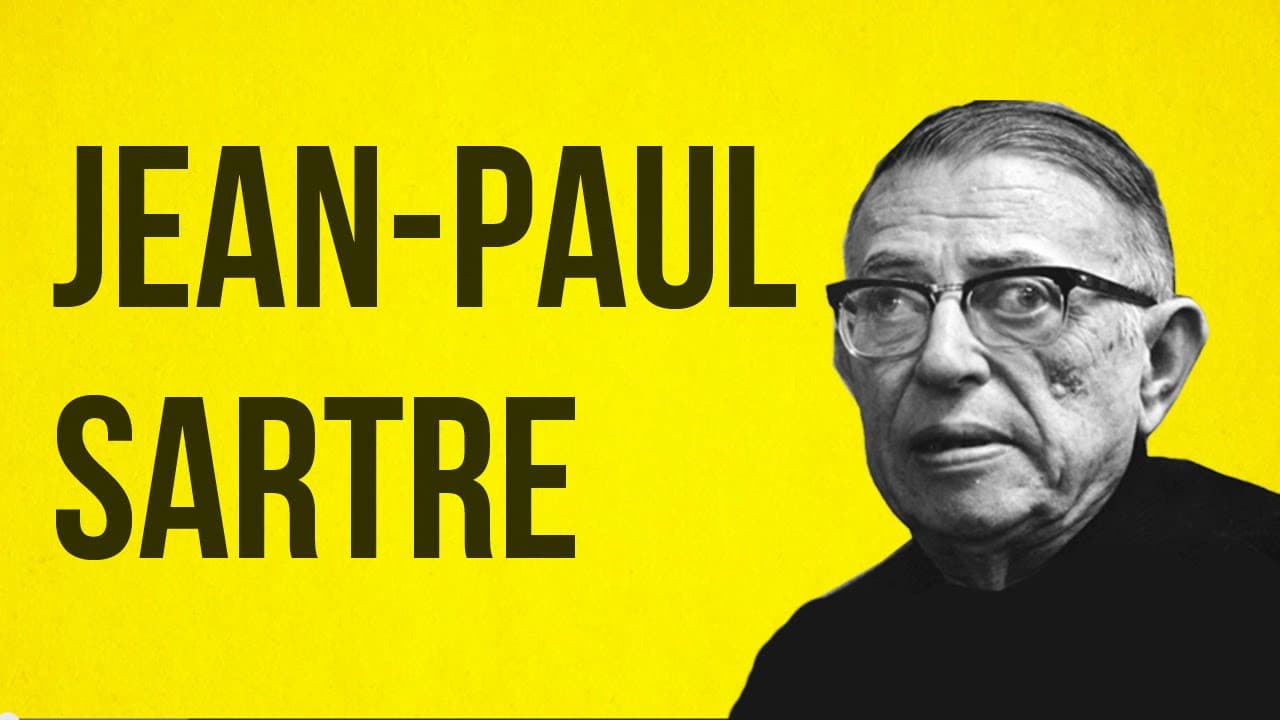
TL;DR
Sartre's existentialism emphasizes that existence is inherently absurd and rich in possibilities, urging individuals to embrace their freedom rather than conform to societal roles, which he termed 'bad faith'. He critiqued capitalism for limiting perceived choices and believed that individuals can reshape their lives, advocating for a more fluid existence and the creation of new social structures.
Transcript
Jean-Paul Sartre made thinking and philosophy glamorous. He was born in Paris in 1905. His father, a navy captain, died when he was a baby – and he grew up extremely close to his mother until she remarried, much to his regret, when he was twelve. Sartre spent most of his life in Paris, where he often went to cafes on the Left Bank. He had a strabis... Read More
Key Insights
- Jean-Paul Sartre, a prominent philosopher, made existentialism popular by highlighting the absurdity and strangeness of existence, encouraging individuals to question everyday assumptions.
- Sartre's novel 'Nausea' illustrates moments when ordinary objects become strange, revealing the world's inherent absurdity, a key element of his existential philosophy.
- Existentialism emphasizes human freedom, suggesting that life’s oddness offers rich possibilities, as nothing is predetermined, allowing individuals to shape their own paths.
- Sartre introduced the concept of 'bad faith,' where individuals deny their freedom by conforming to societal roles, exemplified by a waiter overly identifying with his job.
- Sartre critiqued capitalism for limiting perceived freedom by creating false necessities, advocating for Marxism to explore human potential beyond material constraints.
- Sartre's political activism, including support for Marxism and admiration for figures like Castro, reflected his belief in challenging the status quo to realize human freedom.
- Despite being awarded the Nobel Prize for Literature, Sartre refused it, criticizing the award as bourgeois, underscoring his disdain for capitalist structures.
- Sartre’s philosophy inspires individuals to embrace the fluidity of existence, urging the creation of new institutions and ideas to fulfill human potential.
Install to Summarize YouTube Videos and Get Transcripts
Explore YouTube Video Summarizer or Get YouTube Transcript Extractor
Questions & Answers
Q: What is the main theme of Sartre's existential philosophy?
The main theme of Sartre's existential philosophy is the exploration of human freedom and the inherent absurdity of existence. Sartre emphasizes that life lacks preordained meaning, allowing individuals to shape their own paths. This philosophy encourages questioning societal norms and embracing the fluidity of existence to realize human potential.
Q: How does Sartre illustrate the concept of absurdity in his works?
Sartre illustrates the concept of absurdity in his works, particularly in his novel 'Nausea,' by depicting moments where ordinary objects become strange and unfamiliar. These moments reveal the world's inherent strangeness, challenging the logic and assumptions we typically ascribe to our surroundings. Such depictions highlight the unsettling, yet liberating, nature of existence.
Q: What does Sartre mean by 'bad faith'?
Sartre's concept of 'bad faith' refers to the denial of one's freedom by conforming to societal roles and expectations. It involves convincing oneself that certain actions or identities are necessary, thereby ignoring other possibilities. Sartre exemplifies this with the image of a waiter who overly identifies with his job, neglecting his inherent freedom to choose a different path.
Q: Why did Sartre criticize capitalism?
Sartre criticized capitalism for creating a false sense of necessity that limits perceived freedom. He argued that capitalism encourages individuals to believe they must adhere to specific roles, work hours, and consumer behaviors. This mindset denies the freedom to explore alternative lifestyles, hindering personal and societal potential. Sartre advocated for Marxism as a means to challenge these constraints.
Q: How did Sartre's political beliefs influence his actions?
Sartre's political beliefs, rooted in his existential philosophy, led him to actively challenge the status quo. He supported Marxism, participated in protests, and admired revolutionary figures like Castro and Guevara. His activism reflected his commitment to exploring human freedom and potential beyond societal and material constraints, inspiring others to question and transform existing structures.
Q: Why did Sartre refuse the Nobel Prize for Literature?
Sartre refused the Nobel Prize for Literature because he viewed it as a symbol of capitalist and bourgeois values, which he opposed. His refusal underscored his belief that such awards perpetuate societal norms and structures he sought to challenge. Sartre's decision reflected his commitment to living authentically according to his philosophical principles, rejecting external validation.
Q: What impact did Sartre have on existentialism and philosophy?
Sartre had a significant impact on existentialism and philosophy by popularizing the exploration of human freedom and the absurdity of existence. His works, such as 'Being and Nothingness,' challenged traditional notions of identity and purpose, encouraging individuals to embrace their freedom and potential. Sartre's ideas influenced both philosophical discourse and cultural movements, inspiring generations to question societal norms.
Q: How does Sartre's philosophy inspire personal and societal change?
Sartre's philosophy inspires personal and societal change by emphasizing the fluidity of existence and the absence of predetermined meaning. He encourages individuals to question societal norms, embrace their freedom, and create new institutions and ideas. By highlighting the potential for transformation, Sartre's existentialism motivates people to explore their unfulfilled potential and challenge the status quo, fostering both personal growth and social progress.
Summary & Key Takeaways
-
Jean-Paul Sartre, a key figure in existentialism, emphasized the absurdity of existence and encouraged questioning societal norms. His works, such as 'Nausea,' illustrate moments where ordinary objects reveal the world's inherent strangeness, urging individuals to embrace freedom and reject preordained roles.
-
Sartre's concept of 'bad faith' describes individuals denying their freedom by conforming to societal roles. He critiqued capitalism for limiting freedom, advocating Marxism as a means to explore human potential beyond material constraints, reflecting his belief in challenging the status quo.
-
Sartre refused the Nobel Prize for Literature, criticizing it as bourgeois, highlighting his disdain for capitalist structures. His philosophy inspires embracing life's fluidity and creating new institutions to fulfill human potential, advocating for personal and societal transformation.
Read in Other Languages (beta)
Share This Summary 📚
Summarize YouTube Videos and Get Video Transcripts with 1-Click
Try YouTube Summary with ChatGPT & Claude or YouTube Transcript Generator