How Can Indonesia Achieve Better Critical Thinking by 2045?
TL;DR
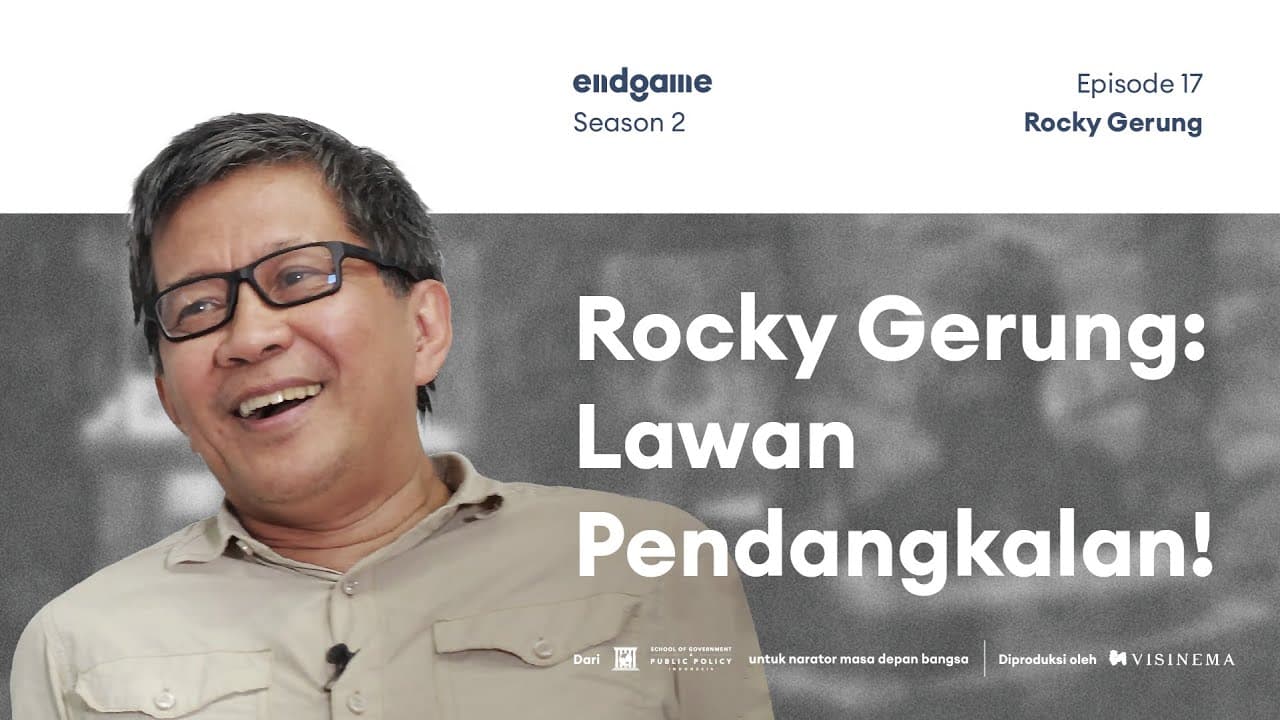
To enhance critical thinking in Indonesia by 2045, systemic reforms are essential to eliminate feudalistic structures in education and politics. Strong intellectual leadership and technological integration in curricula will foster an environment where critical thinking thrives, drawing inspiration from successful models in countries like South Korea and Singapore.
Transcript
We can't think conceptually. Let's imagine the rhetorical power of (first president) Soekarno, the logic of Sutan Sjahrir, intellectual of civilised knowledge from (Moch.) Hatta. Our position now is, if we give a 100 points, probably we're on minus 20 now compared to some series of variables. We can repeat it. But to repeat it, there should be s... Read More
Key Insights
- Rocky Gerung emphasizes the importance of critical thinking and intellectual leadership for Indonesia's future, suggesting that the nation's potential is hindered by feudalistic structures.
- He critiques the current state of Indonesian education, highlighting the need for systemic reform and the elimination of feudalism to foster intellectual growth.
- Gerung discusses the role of technology in education, advocating for its integration to enhance cognitive development while cautioning against ethical concerns.
- He draws comparisons between Indonesia and other countries like South Korea and Singapore, suggesting that strong leadership and educational investment can drive national progress.
- Rocky argues for the democratization of ideas, criticizing the current information flow that limits intellectual discourse and innovation.
- He highlights the disparity between Indonesia's natural resources and educational outcomes, using Indramayu as an example of underutilized potential.
- Gerung suggests that teacher quality is crucial for educational success, advocating for incentives to attract top graduates to the teaching profession.
- He discusses the impact of oligarchs on policy-making and economic inequality, calling for a balance that benefits public interest.
Install to Summarize YouTube Videos and Get Transcripts
Explore YouTube Video Summarizer or Get YouTube Transcript Extractor
Questions & Answers
Q: What is Rocky Gerung's view on Indonesia's educational system?
Rocky Gerung believes that Indonesia's educational system is hindered by feudalistic structures that prevent critical thinking and intellectual growth. He advocates for systemic reform to eliminate these barriers and suggests that educational success relies heavily on teacher quality and the democratization of ideas.
Q: How does Rocky Gerung view the role of technology in education?
Rocky Gerung views technology as a crucial component in enhancing educational outcomes and cognitive development. However, he cautions against ethical concerns and emphasizes the need for a curriculum that integrates technology responsibly, preparing students for a future where artificial intelligence plays a significant role.
Q: What comparisons does Rocky Gerung make between Indonesia and other countries?
Rocky Gerung compares Indonesia to countries like South Korea and Singapore, highlighting their strong leadership and educational investment as key factors in their national progress. He suggests that Indonesia can achieve similar success by focusing on educational reform and intellectual leadership.
Q: What are Rocky Gerung's thoughts on the democratization of ideas?
Rocky Gerung criticizes the current state of information flow in Indonesia, which he believes limits intellectual discourse and innovation. He argues for the democratization of ideas, suggesting that a broader exchange of thoughts and perspectives is essential for national development and progress.
Q: How does Rocky Gerung address the issue of economic inequality in Indonesia?
Rocky Gerung discusses the impact of oligarchs on policy-making and economic inequality, highlighting the need for a balance that benefits public interest. He suggests that oligarchs should play a functional role in redistributing wealth, rather than exploiting political power for personal gain.
Q: What is Rocky Gerung's perspective on teacher quality in Indonesia?
Rocky Gerung emphasizes the importance of teacher quality in achieving educational success. He advocates for incentives to attract top graduates to the teaching profession, suggesting that a focus on teacher quality can significantly improve educational outcomes and foster intellectual growth.
Q: What does Rocky Gerung suggest about Indonesia's natural resources and educational outcomes?
Rocky Gerung highlights the disparity between Indonesia's abundant natural resources and its educational outcomes, using Indramayu as an example of underutilized potential. He suggests that a lack of educational urgency and systemic issues contribute to this gap, calling for targeted reforms to harness the region's potential.
Q: What are Rocky Gerung's thoughts on Indonesia's future by 2045?
Rocky Gerung envisions a future where Indonesia is equipped to compete in a technologically advanced world. He emphasizes the need for intellectual leadership, educational reform, and the integration of technology to prepare for challenges like robotics and artificial intelligence, ensuring the nation is not left behind.
Summary & Key Takeaways
-
Rocky Gerung discusses the importance of intellectual leadership and critical thinking for Indonesia's future, emphasizing the need to overcome feudalistic structures in education and politics.
-
He highlights the role of technology in education, advocating for its integration to enhance learning while addressing ethical concerns. Comparisons are drawn with countries like South Korea and Singapore.
-
Gerung critiques the current state of Indonesian education and the influence of oligarchs on policy-making, calling for systemic reform and the democratization of ideas to drive national progress.
Read in Other Languages (beta)
Share This Summary 📚
Summarize YouTube Videos and Get Video Transcripts with 1-Click
Try YouTube Summary with ChatGPT & Claude or YouTube Transcript Generator
Explore More Summaries from Gita Wirjawan 📚
Summarize YouTube Videos and Get Video Transcripts with 1-Click
Try YouTube Summary with ChatGPT & Claude or YouTube Transcript Generator