What Does Manet's A Bar at the Folies-Bergère Reveal?
TL;DR
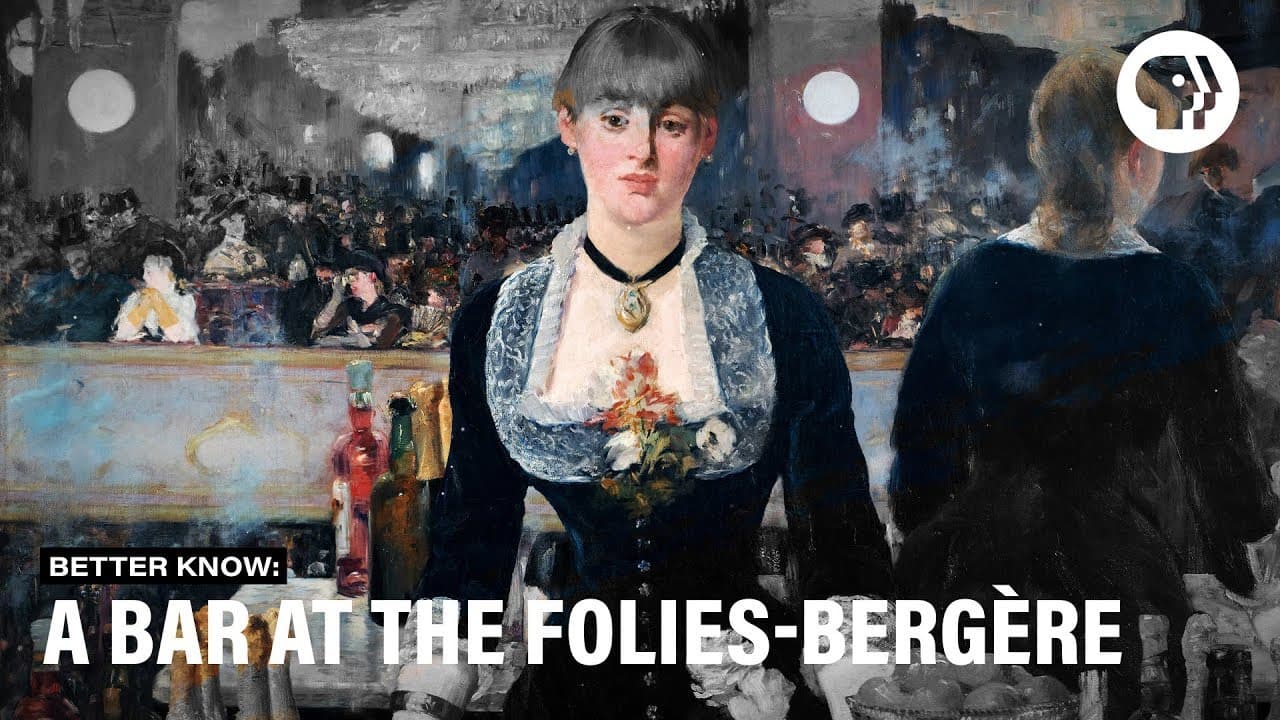
Manet's A Bar at the Folies-Bergère captures the essence of 19th-century Parisian life, depicting a barmaid amidst the vibrant social entertainment scene. The painting explores themes of alienation and the commodification of individuals, symbolized by the man in the mirror, creating a complex narrative about modern existence and identity.
Transcript
[MUSIC PLAYING] NARRATOR: Thanks to Wix for supporting PBS Digital Studios. This is a painting of a woman tending bar in Paris during the latter half of the 19th century. We know it was painted by French impressionist Edouard Manet in 1882 during the storied Belle Epoque, a time of relative stability in France after over a century of revolution and... Read More
Key Insights
- 🤢 Edouard Manet's painting "A Bar at the Folies Bergere" offers a window into 19th-century Parisian life, depicting the bustling entertainment scene of the time.
- 🤨 The painting raises questions about the role of women, the commodification of individuals, and the alienation of modern life.
- 🌍 Manet's focus on modernity and his unique style influenced the art world and established him as a key figure in art history.
- 👪 The painting reflects the shift in social dynamics, with cafes replacing the home as a center of socialization.
- 💅 The visual puzzle created by the man in the mirror adds to the painting's intrigue and invites interpretation.
- 🙂 The harsh and bright white light in the painting represents the newly electrified Paris of the time.
- 🛟 The painting's depiction of the Folies Bergere reflects the excitement and sadness of participating in the spectacle of modern life.
Install to Summarize YouTube Videos and Get Transcripts
Explore YouTube Video Summarizer or Get YouTube Transcript Extractor
Questions & Answers
Q: Why are there discrepancies in the positioning of the man in the mirror and his actual location in the painting?
The positioning of the man in the mirror creates a visual puzzle, contributing to the sense of ambiguity and mystery in the painting. It raises questions about the relationship between the woman and the man.
Q: What does the painting suggest about the role of women in 19th-century Parisian society?
The painting presents the woman as a central figure in the bustling entertainment scene, but also highlights the objectification and commodification of women during that time. It reflects the shifting dynamics of social life in Paris, with the home being replaced by cafes as the center of socialization.
Q: How does "A Bar at the Folies Bergere" reflect Manet's focus on modern life?
Manet was known for his portrayal of contemporary scenes and people. The painting captures the vibrancy and complexity of modern Parisian life, illustrating Manet's interest in capturing the essence of his time through his art.
Q: What was the reaction to the painting when it was first exhibited?
The painting received mixed reactions, with some criticizing it for its depiction of a common courtesan and others praising Manet's ability to capture the realities of modern life. The controversy surrounding the painting contributed to its significance in art history.
Summary & Key Takeaways
-
Edouard Manet's painting, "A Bar at the Folies Bergere," depicts a woman tending bar in Paris during the Belle Epoque.
-
The painting is set at the Folies Bergere, a popular Paris cafe concert, and showcases the bustling entertainment and social scene of the time.
-
The painting raises questions about the relationship between the woman, the man in the mirror, and the alienation of modern life.
Read in Other Languages (beta)
Share This Summary 📚
Summarize YouTube Videos and Get Video Transcripts with 1-Click
Try YouTube Summary with ChatGPT & Claude or YouTube Transcript Generator
Explore More Summaries from The Art Assignment 📚






Summarize YouTube Videos and Get Video Transcripts with 1-Click
Try YouTube Summary with ChatGPT & Claude or YouTube Transcript Generator