What Is NASA's Space Launch System and Its Purpose?
TL;DR
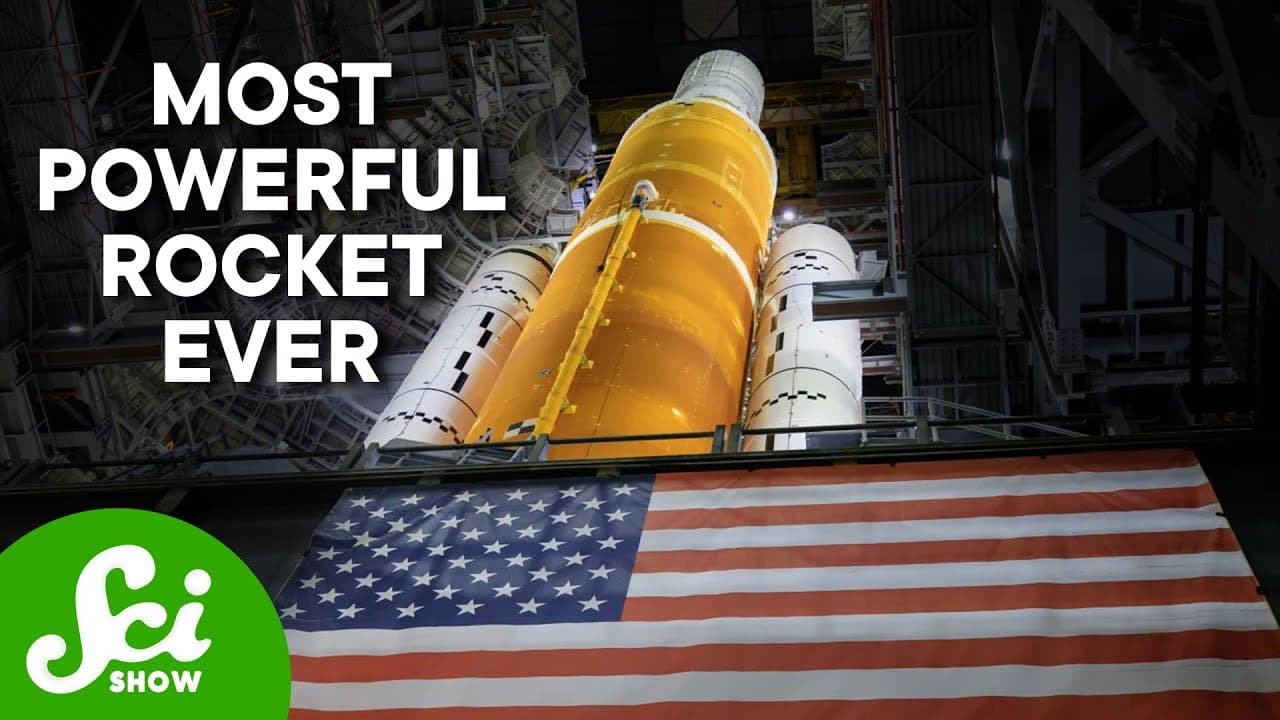
NASA's Space Launch System (SLS) is designed to be the most powerful rocket ever built, intended to send astronauts back to the Moon as part of the Artemis program. Utilizing components from the space shuttle, the SLS aims to leverage existing technology, although its development has been criticized for high costs and lack of reusability.
Transcript
If you want to get humans to the Moon, you're going toneed an absolute monster of a rocket. Over 50 years ago, we had the iconic Saturn V to get that job done. And its spiritual successor, NASA’s Space Launch System, is even more powerful. It’s currently scheduled to hurl its first astronauts around the moon in 2024. But the SLS isn’t a proverbial ... Read More
Key Insights
- 🛰️ The SLS is a powerful rocket designed to replace the space shuttle and enable human exploration beyond low Earth orbit.
- 👾 It leverages existing technology from the space shuttle, such as the main engines and solid rocket boosters, to reduce costs.
- 👾 The SLS is part of NASA's Artemis program, which aims to return humans to the Moon and pave the way for future deep-space missions.
- 😀 The SLS has faced controversy due to its high cost and lack of reusability compared to emerging rocket technologies.
Install to Summarize YouTube Videos and Get Transcripts
Explore YouTube Video Summarizer or Get YouTube Transcript Extractor
Questions & Answers
Q: How does the Space Launch System (SLS) compare to the Saturn V rocket?
The SLS is more powerful than the Saturn V and is designed to be modular, allowing for different configurations for different missions. It also utilizes cannibalized technology from the space shuttle, unlike the Saturn V.
Q: Why did NASA decide to use components from the space shuttle for the SLS?
NASA wanted to reduce costs and leverage existing technology, so they repurposed components from the space shuttle, such as the main engines and solid rocket boosters, for the SLS.
Q: What is the purpose of NASA's Artemis program?
The Artemis program aims to return humans to the Moon, conduct new scientific research, explore resources, and study the possibility of building a permanent base. The SLS plays a crucial role in this program.
Q: Is the SLS a reusable rocket?
No, unlike some emerging rocket technologies and the space shuttle, the SLS is not reusable. This is one of the reasons why the SLS has faced criticism for its high cost.
Summary & Key Takeaways
-
The SLS is a modular rocket with different configurations for different missions, including sending humans to the Moon and launching space probes.
-
The rocket uses components from the space shuttle, such as the main engines and solid rocket boosters, to reduce costs and leverage existing technology.
-
The SLS is part of NASA's Artemis program, which aims to return humans to the Moon and explore the possibility of building a permanent base.
Read in Other Languages (beta)
Share This Summary 📚
Summarize YouTube Videos and Get Video Transcripts with 1-Click
Try YouTube Summary with ChatGPT & Claude or YouTube Transcript Generator
Explore More Summaries from SciShow 📚


Summarize YouTube Videos and Get Video Transcripts with 1-Click
Try YouTube Summary with ChatGPT & Claude or YouTube Transcript Generator