How Did Hyperlinks Transform Communication and Information Access?
TL;DR
Hyperlinks revolutionized communication by allowing users to easily access interconnected information on the internet, replacing the need for physical library visits. Originating from concepts like Vannevar Bush's 'memex' to Tim Berners-Lee's World Wide Web, they have become a fundamental, democratic tool for connecting ideas and information globally.
Transcript
Transcriber: Camille Martínez Reviewer: Krystian Aparta I remember thinking to myself, "This is going to change everything about how we communicate." [Small thing.] [Big idea.] [Margaret Gould Stewart on the Hyperlink] A hyperlink is an interface element, and what I mean by that is, when you're using software on your phone or your computer, there's... Read More
Key Insights
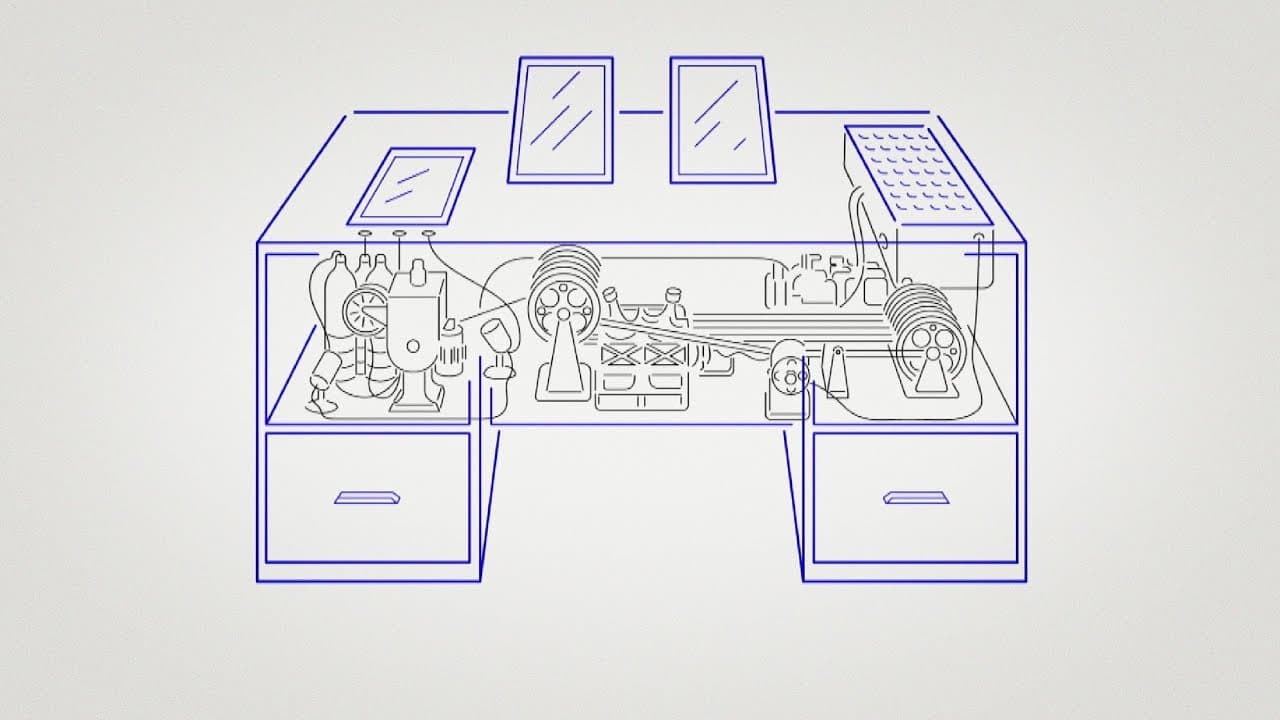
- 🔗 The hyperlink is an interface element that allows humans to interact with software by pressing on it to trigger an action. It uses HTML, a markup language, and is easy to learn and use.
- 📚 Hyperlinks revolutionized research by allowing people to easily access information on the internet instead of physically going to a library. They made information more readily available and reduced the time it takes to find references.
- 💡 The concept of connecting sources and ideas through hyperlinks has been around since the 1940s. Vannevar Bush introduced the idea of a personal library, while Ted Nelson envisioned a larger network of connected ideas.
- 🔵 HyperTIES, developed in 1982, was the first system to use text as link markers, and Apple's HyperCard in 1987 allowed for nonlinear storytelling by creating links between cards.
- 🌐 Tim Berners-Lee, the inventor of the World Wide Web, was inspired by these ideas and inventions. He saw the hyperlink as a basic building block that connects the complex web of information across the world.
- 🤝 Hyperlinks were designed to be used and created by many people, making them one of the most democratic designs ever created. They enable anyone to contribute to the interconnectedness of the internet.
- 💻 Designers today have a wide range of options when it comes to hyperlink design. They can play with colors, contrast, and placement to make hyperlinks more visually appealing and easy to spot. ⏳ The advent of hyperlinks changed how we communicate and access information, but over time, we have taken them for granted. It's important to appreciate the impact they continue to have on our daily lives.
Install to Summarize YouTube Videos and Get Transcripts
Explore YouTube Video Summarizer or Get YouTube Transcript Extractor
Questions & Answers
Q: What is a hyperlink and how does it function as an interface element in software?
A hyperlink is an interface element that allows users to interact with software. It is the part of the software that humans interact with, such as a button or link. When a user clicks on a hyperlink, it triggers an action or takes them to another location within the software.
Q: How do designers today have a wider range of options when it comes to hyperlinks?
Designers today have a wider range of options when it comes to hyperlinks because of the availability of different markup languages, such as HTML. With HTML, designers can easily create hyperlinks by adding a string of code and specifying the address of the location the hyperlink should send the user to. This flexibility allows designers to create visually appealing and functional hyperlinks.
Q: What was the initial purpose of hyperlinks and how have they evolved over time?
Initially, hyperlinks were created to connect information sources and enable individuals to easily access and organize vast amounts of information. Over time, hyperlinks have evolved to become more sophisticated and versatile. They have enabled nonlinear storytelling and given users the ability to influence narratives. Hyperlinks have become a fundamental building block of the World Wide Web, connecting a complex network of information and making it accessible to many people.
Q: How did the idea of hyperlinks originate and who were some key contributors to its development?
The idea of hyperlinks originated with Vannevar Bush in 1945 when he proposed the concept of the "memex," a personal library that would connect all the books and articles that an individual had access to. Ted Nelson expanded on this idea with Project Xanadu in the 1960s, envisioning a network of interconnected ideas. In 1982, researchers at the University of Maryland developed HyperTIES, which used text as link markers. Apple's HyperCard in 1987 further popularized and enhanced the concept of hyperlinks.
Q: How would you describe the significance of hyperlinks in terms of design and its impact on the accessibility of information?
Hyperlinks have significant design implications as they enable designers to create interactive and dynamic user experiences. The ability to create links between different content and locations allows for nonlinear storytelling and user-driven narratives. Moreover, hyperlinks have had a profound impact on the accessibility of information. They have made it significantly easier for people to access information, eliminating the need for physical research or waiting for weeks to access certain resources. Hyperlinks have become one of the most democratic and transformative design elements ever created.
Summary & Key Takeaways
-
The hyperlink is an interface element that allows users to interact with software and connect to information elsewhere on the internet.
-
The concept of hyperlinks has evolved over time, from simple text links to more complex and interactive systems like HyperCard and the World Wide Web.
-
The democratization of hyperlink creation has made it a fundamental and powerful tool for connecting ideas and information worldwide.
Read in Other Languages (beta)
Share This Summary 📚
Summarize YouTube Videos and Get Video Transcripts with 1-Click
Try YouTube Summary with ChatGPT & Claude or YouTube Transcript Generator
Explore More Summaries from TED 📚





Summarize YouTube Videos and Get Video Transcripts with 1-Click
Try YouTube Summary with ChatGPT & Claude or YouTube Transcript Generator