How Did Hans Holbein Succeed as a Painter in London?
TL;DR
Hans Holbein succeeded in London by leveraging his skills as a painter and designer, quickly earning a prestigious position at Henry VIII's court after arriving in 1526. Despite initial concerns about opportunities, Holbein's exceptional talent and strategic connections led to high-profile projects, establishing him as a leading portraitist in the royal court.
Transcript
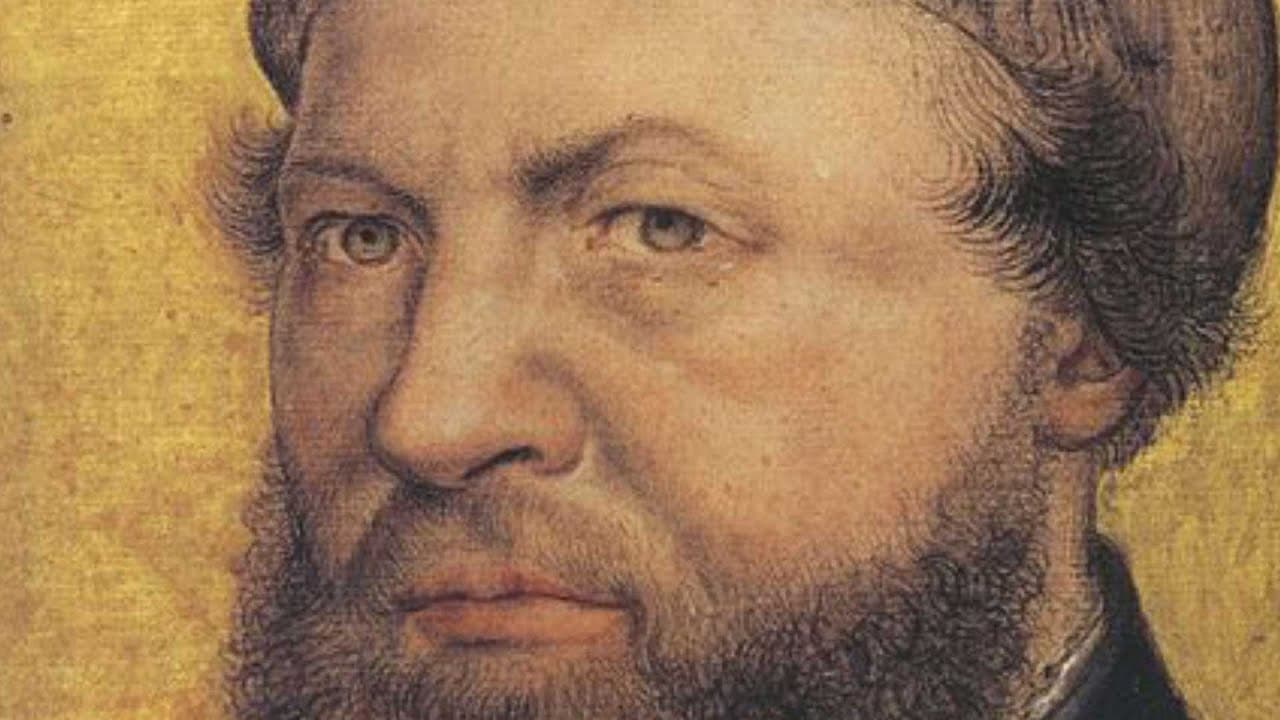
so here is the man himself a self-portrait made we think towards the end of his life which is today in the Uffizi in Florence but wind back a few years towards the end of 1526 a 28 year old German immigrant named Hans Holbein the younger arrived in London he was born in albs burg and he had spent the previous decade establishing a very successful c... Read More
Key Insights
- 💦 Holbein's move to London provided him with greater opportunities for work and recognition after the Reformation impacted artists in Germany.
- 👨🎨 His skills as a painter and designer made him highly sought after, particularly at the royal court.
- ❓ Holbein's meticulous attention to detail and ability to capture his subjects' personalities contributed to his success as a portraitist.
Install to Summarize YouTube Videos and Get Transcripts
Explore YouTube Video Summarizer or Get YouTube Transcript Extractor
Questions & Answers
Q: Why did Holbein immigrate to London?
Holbein immigrated to London because the Reformation was affecting artists in Germany and he was seeking better opportunities for work.
Q: What were some of Holbein's notable contributions in London?
Holbein worked on projects at Henry VIII's palace at Greenwich, including a painting of the Battle of Terra Juan and a painted ceiling for the theater. He also created portraits for the royal court, including those of Henry VIII and his family.
Q: How did Holbein's skills as a designer contribute to his success in London?
Holbein's design skills were highly valued at the royal court, where he created elaborate decorations and artifacts for court ceremonies and buildings.
Q: How did Holbein incorporate his subjects' personalities into his portraits?
Holbein used meticulous observation and skillful rendering to capture the likeness and character of his sitters, often making annotations and alterations to ensure accuracy.
Summary & Key Takeaways
-
Hans Holbein, a German immigrant, arrived in London in 1526 seeking work as a painter during a time when the Reformation was affecting artists in Germany.
-
He found success in London, working on projects at Henry VIII's palace at Greenwich and creating portraits for the royal court.
-
Holbein's skills as both a painter and a designer made him highly sought after, and his reputation grew rapidly.
Read in Other Languages (beta)
Share This Summary 📚
Summarize YouTube Videos and Get Video Transcripts with 1-Click
Try YouTube Summary with ChatGPT & Claude or YouTube Transcript Generator
Explore More Summaries from Gresham College 📚

Summarize YouTube Videos and Get Video Transcripts with 1-Click
Try YouTube Summary with ChatGPT & Claude or YouTube Transcript Generator