3 Great Discoveries of 2013
TL;DR
The three great discoveries highlighted from 2013 were confirmation of the Higgs boson, Curiosity’s evidence of abundant past and present water on Mars, and major advances in ancient-human genetics. CERN confirmed a particle with 126 times a proton’s mass, while Curiosity found soil containing 2% water by weight and researchers recovered DNA from remains as old as 400,000 years. Read on for how each finding reshaped key scientific questions.
Transcript
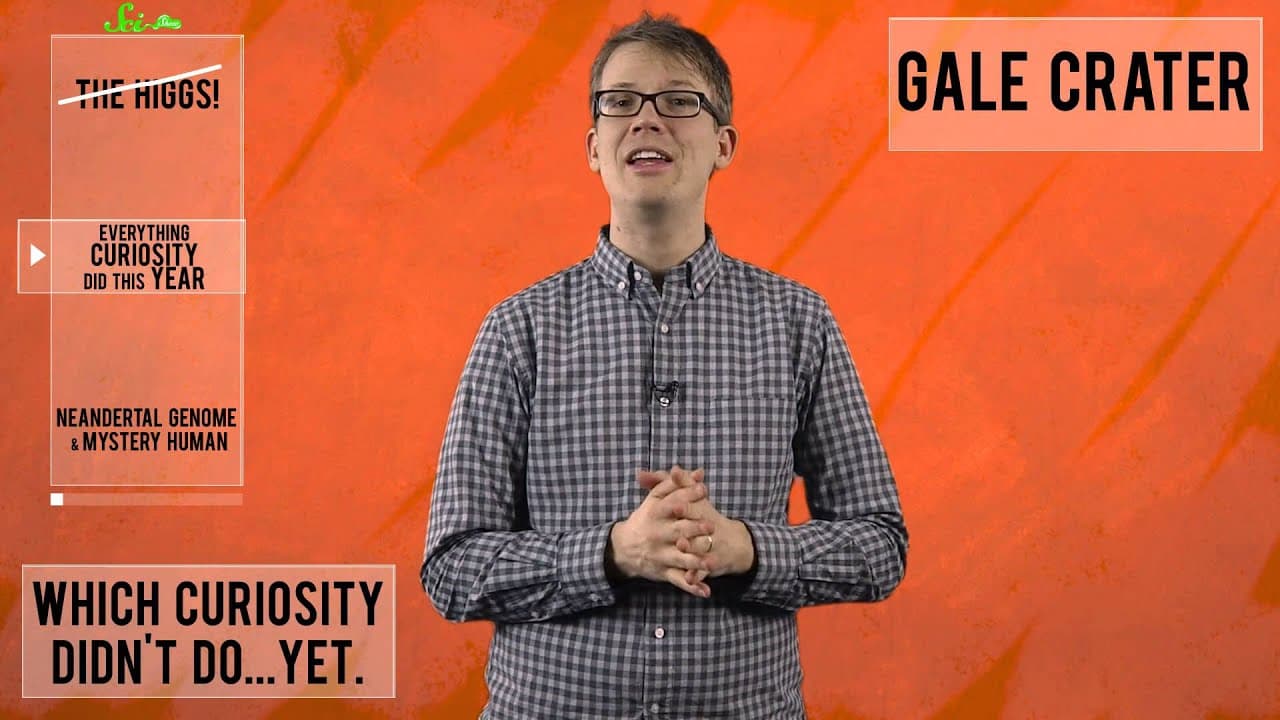
2013 has been an awesome year for science it began with one of the greatest discoveries ever made in physics and ended this month with a mind-blowing discovery about the history of the human species I'm Hank Green for S show news with three of the greatest discoveries of 2013 you know it's going to be a good year when it starts off with the discove... Read More
Key Insights
- 🏑 Confirmation of the Higgs boson discovery filled gaps in the standard model of physics and provided evidence for the existence of the Higgs field.
- 😐 Evidence of water on Mars suggests the planet once had a wet, nonsalty, neutral environment capable of sustaining life.
- 💄 Sequencing the Neanderthal genome provides insights into our genetic makeup and the changes that occurred during our evolutionary path.
Install to Summarize YouTube Videos and Get Transcripts
Explore YouTube Video Summarizer or Get YouTube Transcript Extractor
Questions & Answers
Q: What were three great scientific discoveries of 2013?
The discoveries were confirmation of the Higgs boson, Curiosity’s evidence of water on Mars, and breakthroughs involving ancient-human DNA. Those genetic breakthroughs included sequencing a Neanderthal genome and recovering mitochondrial DNA from 400,000-year-old human-like remains.
Q: Why was confirmation of the Higgs boson significant?
The Higgs boson provided physical evidence for the Higgs field, which theory says permeates the universe and gives rise to perceived mass when particles interact with it. Its confirmation also helped fill important gaps in the standard model of physics.
Q: How did CERN confirm the Higgs boson?
CERN physicists generated enough energy in a particle accelerator to produce a particle with the predicted mass, 126 times that of a proton. They then spent nine more months determining whether it decayed according to the predicted pattern, which it did.
Q: What evidence of water did Curiosity find on Mars?
Curiosity photographed ancient dried-up stream beds and examined mudstone, a rock formed in wet, nonsalty, pH-neutral environments. It also found soil containing 2% water by weight and later detected more water-formed features and mudstone at another location.
Q: What did Curiosity’s findings reveal about Gale Crater?
The prevalence of mudstone led researchers to conclude that Gale Crater was once a giant lake. The complexity of its formations suggested that the lake may have existed for hundreds of thousands of years.
Q: Could future Mars explorers obtain water from Martian soil?
NASA experts said future explorers could theoretically obtain all the water they need by heating Martian soil. That possibility followed Curiosity’s finding that a soil sample contained 2% water by weight.
Q: How was the Neanderthal genome sequenced?
Anthropologists from Germany’s Max Planck Institute sequenced the entire genome using material from a 280,000-year-old toe bone discovered in a Siberian cave. They planned to compare it with modern-human and other ancestral genomes to study changes along the human evolutionary path.
Q: Why were the 400,000-year-old remains important?
Their mitochondrial DNA was the oldest DNA recovered from a human-like species at the time described. Researchers were uncertain whether the remains belonged to Homo heidelbergensis or a Denisovan, leaving open questions about their place in human evolution.
Summary & Key Takeaways
-
Physicists confirmed the existence of the Higgs boson, providing evidence for the Higgs field and filling gaps in the standard model of physics.
-
The Mars Rover, Curiosity, discovered evidence of water on Mars through images of ancient stream beds and soil samples.
-
Anthropologists sequenced the entire genome of a Neanderthal and identified even older human remains, providing insights into our evolutionary history.
Read in Other Languages (beta)
Share This Summary 📚
Summarize YouTube Videos and Get Video Transcripts with 1-Click
Try YouTube Summary with ChatGPT & Claude or YouTube Transcript Generator
Explore More Summaries from SciShow 📚
Summarize YouTube Videos and Get Video Transcripts with 1-Click
Try YouTube Summary with ChatGPT & Claude or YouTube Transcript Generator