The 8 Most Painful Insect Stings on Earth
TL;DR
Insects belonging to the Hymenoptera order, such as ants, bees, and wasps, have evolved to have venom that causes intense pain. Studying their venom can help us understand how pain works.
Transcript
♪Intro♪ Now, I’m not a huge fan of pain, but it IS super important, biologically speaking. It’s how your body tells your brain something is wrong—that you’ve put your hand on a hot stove or broken your leg. It’s such a strong signal that lots of animals have evolved to hijack it, and one group is especially notorious for that: the insects in the or... Read More
Key Insights
- 🧑🏫 Venom from insects belonging to the Hymenoptera order, such as ants, bees, and wasps, can teach us about the mechanisms of pain.
- 🤰 Alkaloids in fire ant venom cause intense pain, especially when stung by hundreds of ants.
- 👨🎨 Peptides like melittin in honey bee venom and kinins in wasp and harvester ant venom turn on pain receptors, causing burning and unrelenting pain.
- 💪 Acetylcholine in tarantula hawk venom triggers pain and muscle clenching, but its effects are short-lived due to the body's ability to break it down.
Install to Summarize YouTube Videos and Get Transcripts
Explore YouTube Video Summarizer or Get YouTube Transcript Extractor
Questions & Answers
Q: Why do fire ant stings become more painful when hundreds of ants sting simultaneously?
Fire ant venom contains alkaloids that trigger immune signaling molecules, resulting in burning, itching pain and the formation of fluid-filled pustules. When hundreds of ants sting, the combined pain becomes more intense.
Q: How does melittin in honey bee venom cause a burning sensation?
Melittin turns on the same pain receptors as heat, triggering a burning sensation in the body. It is similar to capsaicin, the compound responsible for the heat in hot peppers.
Q: Why do yellow jacket stings hurt, and what compounds are responsible?
Yellow jacket venom contains amines, such as histamine and serotonin, which are involved in inflammation and pain. When injected into the skin and muscles, these compounds activate pain-sensing nerves and cause pain.
Q: What makes warrior wasp stings so excruciating and long-lasting?
Warrior wasp stings induce level 4 pain, described as akin to being chained in the flow of an active volcano. The exact composition of their venom is unknown, but it likely contains kinins or other pain-inducing molecules, causing prolonged pain lasting over two hours.
Summary & Key Takeaways
-
Entomologist Justin Schmidt has catalogued over 80 different species of stings on his pain scale, the Schmidt Pain Index, which ranges from 1 (mildly annoying) to 4 (agonizing torture).
-
Fire ants, known for their aggressive behavior and invasive nature, have mildly painful stings individually, but when hundreds of ants sting simultaneously, the pain becomes intense due to the alkaloids in their venom.
-
Honey bees, although not having the most painful stings, can be deadly due to allergic reactions. The burning pain from their stings is caused by the peptide melittin, which turns on pain receptors.
-
Yellow jackets, similar to bees, have venom composed mainly of amines, such as histamine and serotonin, which trigger inflammation and pain in the body.
-
Harvester ants have a painful sting of level 3, likely caused by the peptide barbatolysin in their venom, which is more effective at killing cells compared to bee venom.
-
Red-headed paper wasps, equipped with kinins that cause pain by acting on neurons, have a sting of level 3 and are more painful than average wasp stings due to the presence of these pain-inducing molecules.
-
Warrior wasps, with the highest pain rating of level 4, induce excruciating and long-lasting pain lasting over two hours. The exact composition of their venom is not well understood but likely contains kinins.
-
Tarantula hawks have large venom glands filled with acetylcholine, causing level 4 pain that resembles a running hairdryer dropped into a bath. The effects of the sting are short-lived due to the body's ability to break down acetylcholine.
-
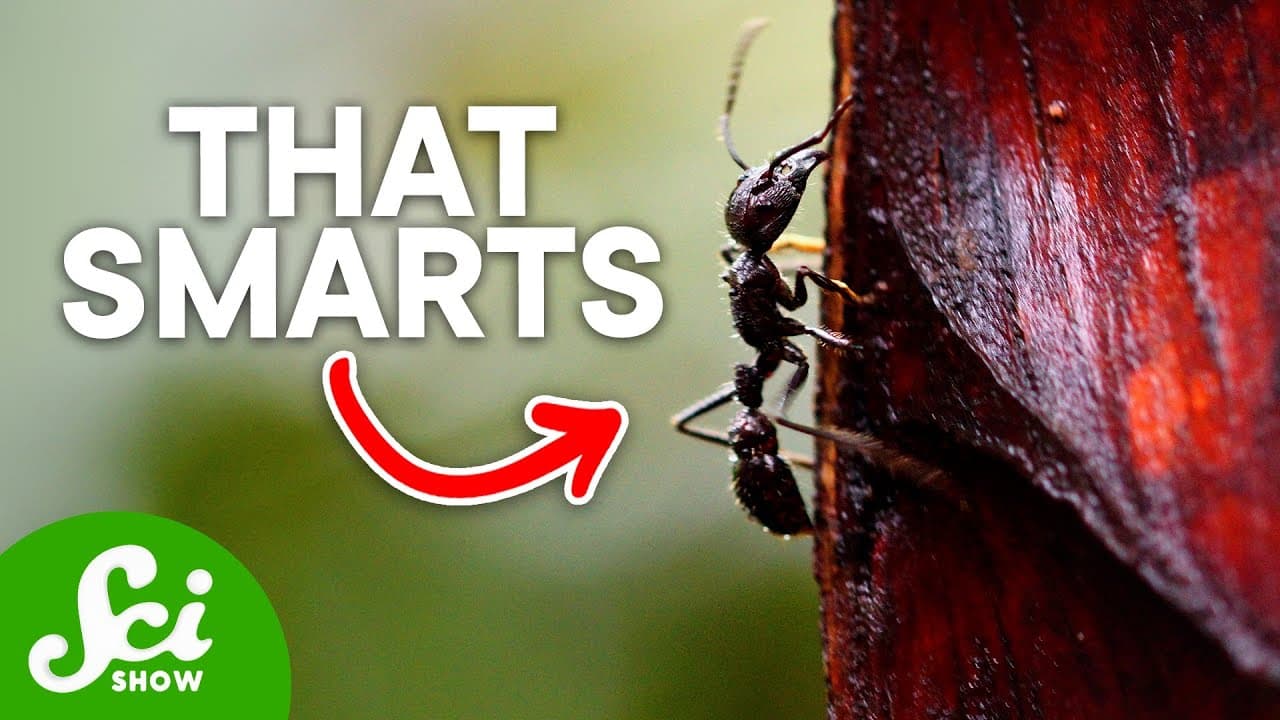
Bullet ants, known for their excruciating stings, have venom containing the powerful neurotoxin poneratoxin, which stimulates neurons repetitively, causing intense and prolonged pain.
Read in Other Languages (beta)
Share This Summary 📚
Summarize YouTube Videos and Get Video Transcripts with 1-Click
Try YouTube Summary with ChatGPT & Claude or YouTube Transcript Generator
Explore More Summaries from SciShow 📚

Summarize YouTube Videos and Get Video Transcripts with 1-Click
Try YouTube Summary with ChatGPT & Claude or YouTube Transcript Generator