Is Mark Zuckerberg’s Meta Taking Up to 50 Percent From People in the Metaverse?
TL;DR
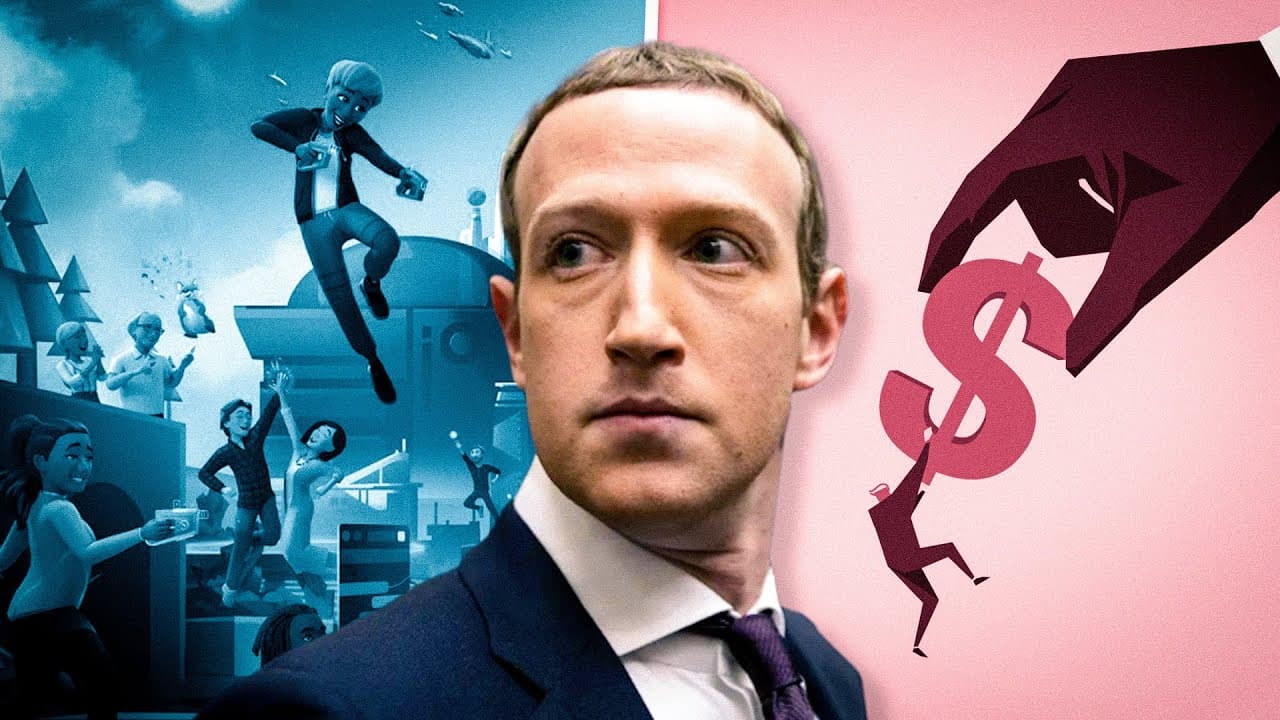
Meta could take up to 50 percent from some Horizon Worlds transactions through combined Quest Store and virtual-goods charges. The speaker argues that this fee would add friction when Meta must persuade a new group of users to buy headsets, learn unfamiliar technology and enter its digital world. The proposed economics, competitive context and possible consequences explain why the fee deserves closer examination.
Transcript
a few months ago facebook changed their name to meta why because they're gonna make a bet the company style investment in the metaverse they believe that this is where the whole world is going so we're gonna live in these digital worlds facebook created one called horizon worlds and in that they're going to allow their users to actually buy and sel... Read More
Key Insights
- Promises conflict with pricing: Facebook criticized Apple’s 30 percent App Store fee and told creators its own transaction fees would be lower. A 30 percent Quest Store fee plus another Horizon Worlds charge therefore creates a direct tension between Meta’s public criticism, its creator-focused promise and the economics under consideration.
- Two fee layers matter: The concern is not based on one charge alone. Meta plans a 30 percent transaction fee in the Quest Store, while a virtual good sold within Horizon Worlds could receive an additional charge of up to 25 percent, producing an effective take of up to 50 percent in some cases.
- Fifty percent is conditional: The speaker does not claim that every transaction will definitely lose half its value. The wording is that Meta could take up to 50 percent in some cases, and the underlying policy is still being debated, so the final structure may change before it is implemented.
- Meta needs new participants: Facebook’s existing dependence on returning users does not automatically give Horizon Worlds an established metaverse audience. The speaker says Meta must convince a brand new cohort to enter, while acknowledging that neither Meta nor anyone else currently has those users secured.
- Hardware adds adoption friction: Transaction charges would sit alongside other barriers rather than operating in isolation. People may need to buy a headset and learn technology with which they are unfamiliar. The speaker argues that combining those demands with high fees makes the transition into metaverse use substantially harder.
- Creator incentives affect supply: Meta has framed its approach as a way to help creators make more money, yet the proposed charges could remove a large portion of some transactions. That mismatch could weaken the financial appeal of producing and selling virtual goods within Horizon Worlds.
- Apple shapes Meta’s challenge: Apple pressures Facebook from two directions described in the transcript. Its privacy features make Facebook’s advertising business more difficult, while its 30 percent App Store fee supplies the benchmark that Facebook has publicly criticized but may match through the Quest Store.
- Commerce tests the strategy: Horizon Worlds is not presented only as a place for digital interaction. Its plan to support buying and selling virtual goods makes transaction economics part of the core experience. Whether creators and users accept those economics could influence whether Meta’s larger metaverse investment works.
- Lower fees could support adoption: The speaker’s proposed response is straightforward, reduce transaction fees instead of increasing them. Lower charges would remove one source of friction as Meta tries to persuade people to enter a new digital environment, transact there and return often enough to sustain the platform.
- Use cases remain selective: The speaker does not reject every possible metaverse application. Business training and certain digital experiences remain plausible, but virtual interaction does not automatically replace meeting friends in person. The value of each use case must therefore be strong enough to overcome both unfamiliarity and cost.
- Pushback could change policy: The fee structure is not treated as irreversible. The speaker suggests Meta might begin with a high initial charge and later lower it, or that strong negative feedback could persuade the company to revise the plan before it launches.
- Business risk follows user resistance: The speaker connects the fee debate to Meta’s broader dependence on participation. If high transaction costs discourage the new users Meta needs, its metaverse ambitions could suffer. He therefore sees a persistent 50 percent take as unrealistic and potentially dangerous to the business.
Install to Summarize YouTube Videos and Get Transcripts
Explore YouTube Video Summarizer or Get YouTube Transcript Extractor
Questions & Answers
Q: What transaction fees could Meta charge in Horizon Worlds?
Meta plans a 30 percent transaction fee inside the Quest Store. A virtual good sold within Horizon Worlds could also face an additional charge of up to 25 percent. According to the account cited in the transcript, these layers could let Meta take up to 50 percent from some transactions. The structure remains under debate, so it may change.
Q: Why does the speaker call Meta’s possible 50 percent fee absurd?
The fee would create another barrier when Meta is trying to attract an entirely new cohort of users. Those people may already need to buy a headset and learn unfamiliar technology before using Horizon Worlds. Taking up to half of some transactions would further reduce the appeal of participating and selling there. The speaker therefore doubts the rate could survive in a steady state.
Q: Why did Facebook change its name to Meta?
Facebook changed its name because it plans a company-level investment in the metaverse. It believes people may increasingly spend time in digital worlds. Horizon Worlds is Facebook’s own environment for that strategy, including commerce in virtual goods. The new name reflects how strongly the company is betting on that direction.
Q: How do Meta’s planned fees compare with Apple’s fees?
Apple charges a 30 percent transaction fee in its App Store, according to the transcript. Facebook has criticized that rate and promised that its fees would be lower. Meta nevertheless plans a matching 30 percent fee in the Quest Store, with a possible additional Horizon Worlds charge. That combination creates the criticism at the center of the discussion.
Q: How could high transaction fees hurt Horizon Worlds adoption?
High fees would add friction for both buyers and people selling virtual goods. Meta must persuade users to purchase a headset, become familiar with the technology and enter a digital world without an established user cohort. Another substantial cost makes that decision less attractive. The speaker argues that reducing friction is necessary if Meta wants broad adoption.
Q: What role does Apple’s privacy policy play in Meta’s metaverse strategy?
Apple’s privacy features make it harder for Facebook to conduct its advertising business inside the Facebook ecosystem. That pressure is occurring while Meta invests heavily in a different digital platform and commerce model. Apple is therefore both a competitive problem and the company whose 30 percent marketplace fee Facebook criticizes. The comparison makes Meta’s matching Quest Store charge especially notable.
Q: Could Meta change the proposed fee before Horizon Worlds launches it?
Yes, the speaker says the fee structure is still up for debate. Meta might treat the high rate as an initial transaction fee and reduce it later. Pushback and negative feedback could also cause the company to revise the charge before launch. His central prediction is that Meta will not roll out and permanently maintain a 50 percent take.
Q: What metaverse uses does the speaker consider plausible?
The speaker allows that the metaverse may have useful applications. He specifically mentions training for a business and having certain experiences through a digital virtual world. He does not see it as a substitute for every physical interaction, preferring dinner in person when friends are nearby. Even the plausible uses become unattractive to him with transaction fees reaching 50 percent.
Summary & Key Takeaways
-
Facebook becomes Meta: Facebook changed its name to Meta while preparing a company-level investment in the metaverse, which it believes could become a major destination for people. Its digital world, Horizon Worlds, is intended to let users buy and sell virtual goods. The speaker considers that concept potentially useful but remains uncertain about whether it will work, making adoption and the conditions surrounding virtual commerce central questions.
-
Pressure from Apple grows: Meta is making this investment while facing competitive pressure, particularly from Apple. Apple has introduced privacy features that make it harder for Facebook to operate its advertising business inside the Facebook ecosystem. At the same time, Facebook has criticized Apple’s 30 percent App Store transaction fee and has promised creators that its own fees would be lower and would help them earn more money.
-
The proposed fees emerge: The early math appears to conflict with those promises. Meta plans a 30 percent Quest Store transaction fee, matching Apple’s rate. A sale of a virtual good inside Horizon Worlds could then face an additional charge of up to 25 percent. According to the New York Post account cited by the speaker, the combined effect means Meta could take up to 50 percent from some transactions, although the policy remains under debate.
-
Adoption requires less friction: The speaker argues that Meta should reduce transaction fees because its business depends on users returning and because it must attract an entirely new cohort to the metaverse. Potential users would already need to buy a headset and become comfortable with unfamiliar technology. Adding a fee that could reach 50 percent would create another obstacle, making it harder for Horizon Worlds to gain the participation needed for Meta’s large investment to succeed.
-
The final outcome remains open: The speaker doubts that Meta can maintain a 50 percent transaction fee in a steady state. The charge might be an initial rate that later falls, or criticism and negative feedback might force a change before launch. Although the metaverse may support business training or other digital experiences, the speaker personally prefers meeting nearby friends for dinner and concludes that such experiences are not compelling with fees this high.
Read in Other Languages (beta)
Share This Summary 📚
Summarize YouTube Videos and Get Video Transcripts with 1-Click
Try YouTube Summary with ChatGPT & Claude or YouTube Transcript Generator
Explore More Summaries from Anthony Pompliano 📚

Summarize YouTube Videos and Get Video Transcripts with 1-Click
Try YouTube Summary with ChatGPT & Claude or YouTube Transcript Generator