What Is An Organ?
TL;DR
An organ has no universally accepted definition, though it is often understood as a structure made of different kinds of cells working together to perform a particular job. Researchers are reconsidering overlooked structures such as the tubarial glands, mesentery, and interstitium because of their possible roles in dysphagia, Crohn’s disease, and cancer spread. Read on to see how debates over classification can influence research and treatment.
Transcript
Nobody knows what organs are! I mean, you probably think you know what organs are. Your brain is an organ. Your lungs are organs. They’re structured blobs made of different kinds of cells, all working together to do a unique job in your body. Like, your lungs do the job of taking in oxygen. But, as it turns out, those characteristics don’t apply to... Read More
Key Insights
- ❓ Definitions of organs are variable and subject to ongoing debate in the scientific community.
- 🥳 Discoveries of overlooked body parts, like tubarial glands and the mesentery, have led to better understanding and treatment of certain health conditions.
- 😷 Expanding the definition of organs can help uncover new insights into human physiology and improve medical practices.
Install to Summarize YouTube Videos and Get Transcripts
Explore YouTube Video Summarizer or Get YouTube Transcript Extractor
Questions & Answers
Q: What is an organ?
An organ is often described as a structured collection of different kinds of cells that work together to perform a particular job in the body. However, experts do not agree on a definition that applies to every proposed organ, or even on how many organs humans have.
Q: Why is there no consensus on what counts as an organ?
The usual characteristics of an organ do not fit every body structure that researchers might classify as one. Questions about whether a structure is independent, continuous, or sufficiently distinct keep examples such as the tubarial glands, mesentery, and interstitium under debate.
Q: What are tubarial glands?
Tubarial glands are small clusters of cells located in the center of the head, under the brain and between the nose and spine. Doctors have known about them since 1837, but some researchers consider them part of a larger gland system rather than an independent structure.
Q: How are tubarial glands connected to dysphagia?
Tubarial glands are thought to lubricate the upper throat, so radiation damage to them can make swallowing difficult. A 2020 study confirmed that they serve a function in regulating dysphagia and proposed classifying them as “organs at risk” during radiotherapy.
Q: Is the mesentery an organ?
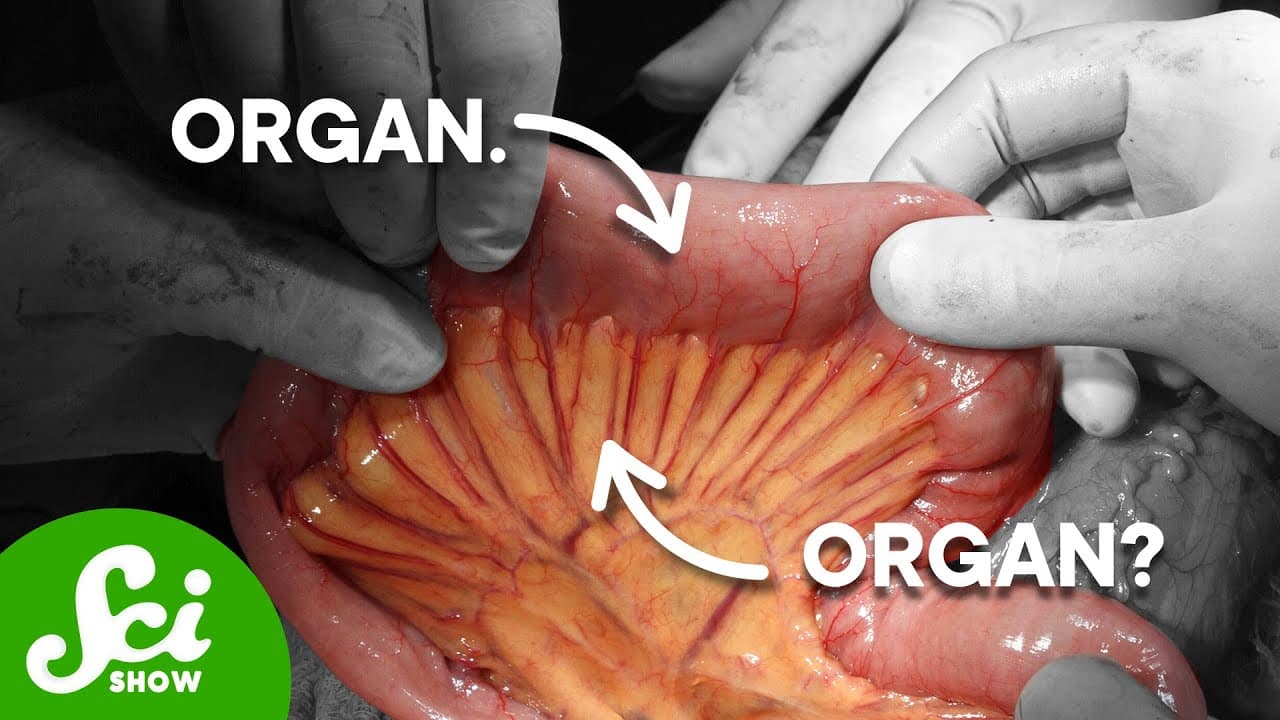
The mesentery has been debated because it was long depicted as three separate units rather than one distinct structure. It is now fairly well accepted as one continuous structure, bringing it closer to classification as an organ.
Q: How might the mesentery be involved in Crohn’s disease?
The mesentery runs alongside the intestines and influences how well the gut works. When it is not working properly, it becomes rigid and inflamed, which may be part of how Crohn’s disease works.
Q: What is the interstitium and what does it do?
The interstitium is a network of connected, fluid-filled sacs located in spaces between body parts. Researchers reported this structure in 2018, and it can act as a shock absorber that protects the body.
Q: Why can redefining organs matter for medical treatment?
Treating overlooked structures as organs can focus research and protective care on their roles in disease. For example, protecting tubarial glands during radiotherapy may help prevent swallowing difficulties, while studying the mesentery as a single organ may clarify its inflammation in Crohn’s disease.
Summary & Key Takeaways
-
There is no consensus among experts on what exactly constitutes an organ and how many organs humans have.
-
Tubarial glands, small clusters of cells in the head, have been overlooked but play a critical role in regulating dysphagia (trouble swallowing) after radiation exposure.
-
The mesentery, a structure that runs alongside the intestines, has been debated for centuries but is now considered to be one continuous unit and may be involved in Crohn's disease.
-
The interstitium, a network of fluid-filled sacs, acts as a shock absorber and may also serve as a pathway for cancer cells.
Read in Other Languages (beta)
Share This Summary 📚
Summarize YouTube Videos and Get Video Transcripts with 1-Click
Try YouTube Summary with ChatGPT & Claude or YouTube Transcript Generator
Explore More Summaries from SciShow 📚


Summarize YouTube Videos and Get Video Transcripts with 1-Click
Try YouTube Summary with ChatGPT & Claude or YouTube Transcript Generator