Which Human Skills Can AI Never Replace?
TL;DR
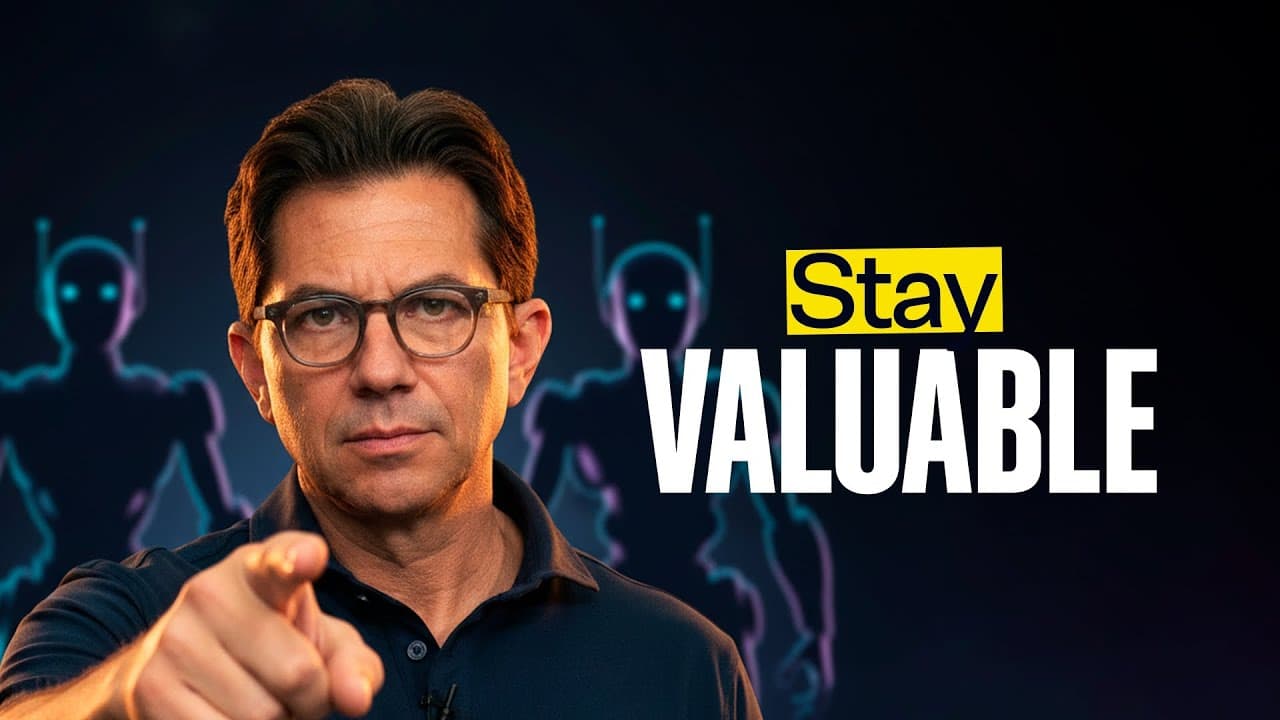
Resilience, resourcefulness, leadership, curiosity, and emotional intelligence remain essential because AI can support these abilities but cannot exercise them as humans do. By assigning repetitive work, scheduling, analysis, and idea generation to AI, people can devote more attention to purpose, creative execution, trust, empathy, innovation, and the human connections that drive success.
Transcript
I'm going to share five human skills that AI can't touch. That will not replace. In fact, done right. It will supercharge them. If you nail these, you'll be unstoppable in business, leadership, and life. AI isn't here to replace you. Well, I guess it could if you ignore it. It It just might. Listen, everyone's worried about what AI could take away ... Read More
Key Insights
- Resilience is the human capacity to continue through setbacks, rejection, failure, and periods without visible progress. AI can make work faster and remove friction, but people must supply the grit, purpose, and persistence required when plans break or results remain uncertain.
- A deep purpose is a foundation for resilience because a sufficiently strong reason for acting can outweigh fear, time pressure, and feelings of inadequacy. AI can handle repetitive tasks, creating more space for people to clarify their purpose and concentrate on meaningful work.
- Resourcefulness is the ability to ask useful questions, apply available answers creatively, and find a path to execution. AI provides abundant tools and ideas, but possessing resources alone does not guarantee progress unless a person experiments, adapts, and acts on them.
- Leadership is built on vision, trust, decisions, presence, and personal example. AI can manage projects, clarify information, and organize schedules, but it cannot personally rally a struggling team or understand every individual's desires, fears, abilities, and circumstances.
- Effective leadership is the practice of meeting people where they are. Leaders help others thrive by recognizing differences in personality, ability, struggles, goals, and fears, then entering conversations with an understanding of what each person is already thinking and experiencing.
- Curiosity is a competitive advantage because AI rewards people who ask better questions with better answers. Instead of chasing every new tool, curious users can study successful AI mindsets, examine practical strategies, and adopt useful applications one step at a time.
- An AI strategy is a deliberate choice about where the technology should create value. Curiosity can guide decisions about reducing repetitive work, saving money, removing constraints, analyzing operations, or supporting selected parts of an industry without becoming overwhelmed by numerous tools.
- Emotional intelligence is essential in business, sales, leadership, and relationships because sentiment analysis is not the same as connecting with a human heart. Combining AI efficiency with empathy can strengthen connection, creativity, personal style, values, innovation, and understanding of other people.
Install to Summarize YouTube Videos and Get Transcripts
Explore YouTube Video Summarizer or Get YouTube Transcript Extractor
Questions & Answers
Q: What human skills can AI not replace?
The five highlighted human skills are resilience, resourcefulness, leadership, curiosity, and emotional intelligence. AI can support each one by handling repetitive work, supplying ideas, managing projects, organizing schedules, or analyzing sentiment. However, people must still persist through failure, apply answers creatively, inspire others, ask meaningful questions, and form genuine connections based on empathy and understanding.
Q: How can AI strengthen human resilience?
AI can strengthen resilience indirectly by removing repetitive work, reducing friction, and helping tasks move faster. That gives people more time to clarify their purpose and focus on the work that requires persistence. AI cannot endure rejection or failure for someone, so the individual must still provide the courage, grit, and determination to continue when things go wrong.
Q: Why is purpose important for resilience?
Purpose provides a reason to keep acting when fear, rejection, uncertainty, or feelings of inadequacy appear. The transcript argues that when a person's purpose and underlying reason are strong enough, those forces become less controlling. By taking routine work off a person's plate, AI can create space to develop that deeper motivation and pursue meaningful goals with greater persistence.
Q: What is resourcefulness in the age of AI?
Resourcefulness is knowing how to ask the right questions, use available answers creatively, and find a practical route to execution. AI resembles a large toolbox filled with ideas and resources, but the user must decide what to test and how to apply it. Progress comes from experimenting, adopting a useful mindset, and moving forward one step at a time.
Q: How should leaders use AI without weakening leadership?
Leaders should use AI for clarity, schedules, project management, and repetitive tasks while preserving their own presence, judgment, vision, and example. Leadership requires understanding what team members desire, fear, and need. AI can assist operations, but the leader must personally build trust, make decisions, inspire people during difficult periods, and meet individuals where they are.
Q: Why does curiosity become more valuable with AI?
Curiosity becomes more valuable because the quality of an AI response depends heavily on the quality of the questions being asked. Curious people can investigate how successful users think about AI, identify practical strategies, and select tools that address real constraints. This approach treats AI as an amplifier of intellectual curiosity rather than as a substitute for independent thought.
Q: How can someone develop a practical AI strategy?
A practical AI strategy begins by examining where the technology can create a specific benefit. The transcript suggests considering whether AI should save money, remove repetitive work, reduce constraints, support analysis, or improve selected parts of an industry. Rather than pursuing numerous tools at once, users can remain curious, test simple applications, and expand their use gradually.
Q: Why is emotional intelligence still essential with AI?
Emotional intelligence remains essential because analyzing sentiment does not equal connecting with another person's heart. Empathy helps people understand others, meet them where they are, and build trust in business, sales, leadership, and relationships. When AI handles lower-value thinking and repetitive work, people can invest more attention in connection, creativity, innovation, personal values, and human understanding.
Summary & Key Takeaways
-
AI should function as an amplifier rather than a crutch. It can remove repetitive work, reduce friction, organize schedules, analyze sentiment, and generate ideas, but people must still respond to setbacks, execute creatively, inspire others, ask worthwhile questions, and build genuine emotional connections through their own judgment and effort.
-
Resilience and resourcefulness determine whether access to AI produces meaningful progress. A strong purpose helps people persist through fear, rejection, failure, and uncertain results. Resourcefulness turns AI's abundant ideas and tools into action by asking useful questions, testing practical applications, and advancing one manageable step at a time.
-
Leadership, curiosity, and emotional intelligence become more valuable as information and AI capabilities expand. Effective leaders meet people where they are, understand their goals and fears, and lead through presence and example. Curious people develop strategies and ask better questions, while emotionally intelligent people preserve empathy, trust, connection, and creativity.
Read in Other Languages (beta)
Share This Summary 📚
Summarize YouTube Videos and Get Video Transcripts with 1-Click
Try YouTube Summary with ChatGPT & Claude or YouTube Transcript Generator
Explore More Summaries from Dean Graziosi 📚





Summarize YouTube Videos and Get Video Transcripts with 1-Click
Try YouTube Summary with ChatGPT & Claude or YouTube Transcript Generator