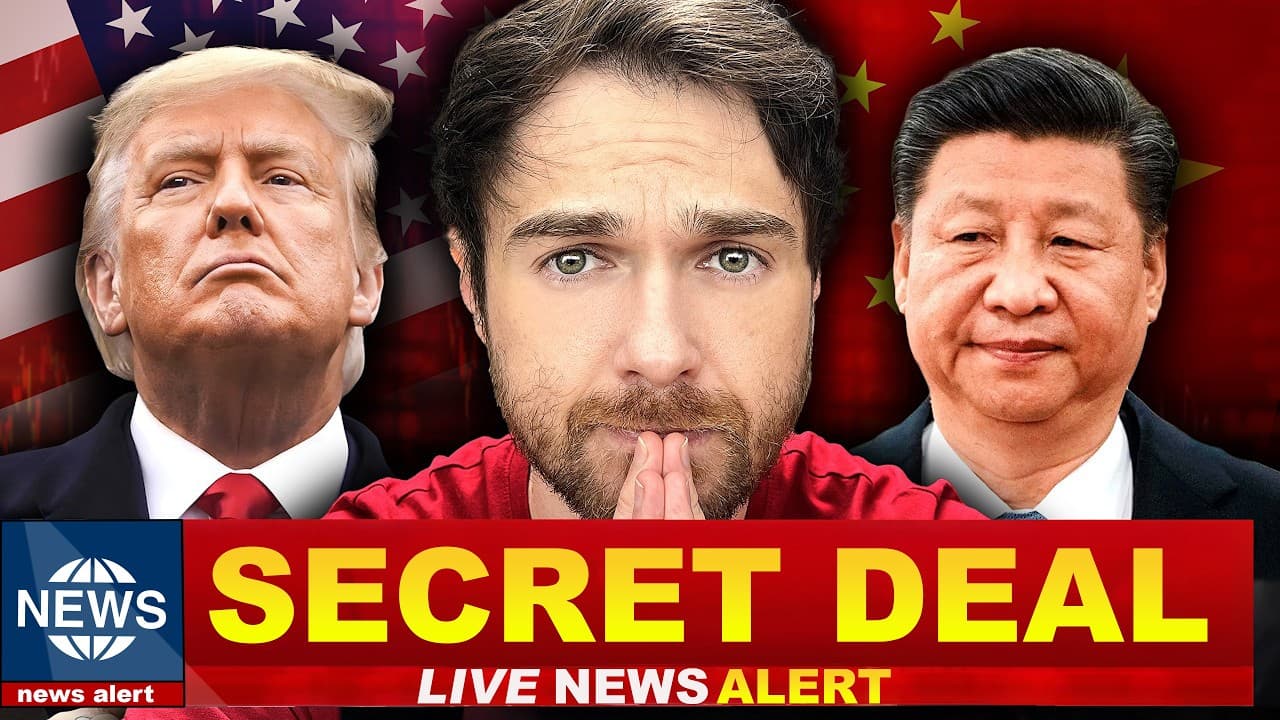
Why Did Trump Visit China with Top CEOs?
TL;DR
Trump's visit to China with 18 CEOs is theorized to be part of negotiations for a new global monetary order, potentially involving a gold-centric deal. This move aims to address global economic shifts, with China seeking to avoid the pitfalls Japan faced post-Plaza Accord. The implications could affect the dollar's value, inflation, and international trade dynamics.
Transcript
So there's a theory that I want to share with you about what actually happened when Trump went to China and brought with him 18 CEOs. Elon Musk, Tim Cook, Jensen Hang, Larry Frink from Black Rockck, the most powerful business leadership ever put together for a foreign trip in American history. The whole world is watching our meeting. Currently, tra... Read More
Key Insights
- Trump's trip to China with CEOs might be about negotiating a new monetary order.
- The post-World War II economic order is seen as breaking down, with China playing a significant role in the next phase.
- The Plaza Accord of 1985 restructured the global economy, benefiting the US but harming Japan.
- China may propose a deal involving gold to avoid direct currency revaluation, unlike Japan's experience.
- The closure of the Strait of Hormuz is causing global oil supply issues, affecting economic leverage.
- China's potential $1 trillion investment in the US could reshape manufacturing and trade relations.
- Gold exports from the US to China suggest a shift in economic power and monetary strategy.
- Inflation may be a tool used to manage unpayable debt, affecting asset values and economic classes differently.
Install to Summarize YouTube Videos and Get Transcripts
Explore YouTube Video Summarizer or Get YouTube Transcript Extractor
Questions & Answers
Q: Why did Trump visit China with 18 CEOs?
Trump's visit to China with 18 CEOs is theorized to be part of negotiations for a new global monetary order. This involves potentially reshaping economic relations and addressing global financial shifts, with a focus on avoiding the economic pitfalls that countries like Japan faced after the Plaza Accord. The visit underscores the significance of China's role in the emerging economic structure.
Q: What was the Plaza Accord and its impact?
The Plaza Accord was a 1985 agreement among the US, France, West Germany, Japan, and the UK to manipulate currency markets, weakening the US dollar against the Japanese yen. This made US goods cheaper globally, improving trade deficits. However, Japan's economy suffered from a rapid yen appreciation, leading to asset bubbles and decades of economic stagnation, known as the 'lost decades.'
Q: How might a new monetary order affect global economics?
A new monetary order could redefine economic power dynamics, potentially involving a shift from the dollar to a gold-centric system. This might stabilize international trade and address economic imbalances. Such changes could impact inflation, currency valuations, and international investments, reshaping how countries engage in global commerce and manage their economic strategies.
Q: What role does gold play in the proposed economic theory?
Gold is central to the proposed economic theory as a stabilizing asset in a new monetary order. Instead of revaluing currencies directly, the theory suggests allowing the dollar to weaken against gold, benefiting countries with large gold reserves like China. This approach could address debt burdens and reshape international economic relations, leveraging gold's historical role in global finance.
Q: Why is the Strait of Hormuz significant in this context?
The Strait of Hormuz is crucial as it controls around 20% of the world's oil flow. Its closure due to geopolitical tensions has caused global oil supply issues, impacting economic leverage. This situation pressures countries to negotiate economic deals to stabilize energy supplies and maintain economic stability, influencing global financial strategies and negotiations, such as those speculated in Trump's visit to China.
Q: What are the potential benefits of China's investment in the US?
China's proposed $1 trillion investment in the US could revitalize American manufacturing, creating jobs and infrastructure. This investment aims to secure market access for China, aligning with their export-driven economy. It also seeks to establish monetary legitimacy in a new global financial order, potentially leading to a revaluation of gold and a shift in economic power dynamics.
Q: How does inflation relate to the proposed economic changes?
Inflation is seen as a tool to manage unpayable debt in the proposed economic changes. By devaluing the dollar against assets like gold, debt burdens appear more manageable. This strategy could lead to asset value increases, benefiting those with investments, while negatively impacting those reliant on cash. Inflation thus plays a critical role in economic restructuring and wealth distribution.
Q: What is the significance of gold exports from the US to China?
The significant gold exports from the US to China suggest a shift in economic power and a potential restructuring of the global monetary system. This movement indicates China's strategic accumulation of gold reserves, positioning itself advantageously in a new economic order. Historically, countries importing gold gain economic leverage, hinting at China's growing influence in global financial markets.
Summary & Key Takeaways
-
Trump's visit to China with 18 CEOs is speculated to be about negotiating a new monetary order, possibly involving gold. This could reshape global economics, avoiding pitfalls like those Japan faced post-Plaza Accord. The deal might involve China's massive investment in US manufacturing, affecting inflation and trade dynamics.
-
The world faces an oil supply crisis due to the Strait of Hormuz closure, impacting economic leverage. China's potential investment in the US aims to secure market access and monetary legitimacy, while avoiding a direct yuan revaluation. This strategy mirrors Japan's post-Plaza Accord economic shift.
-
Gold exports from the US to China indicate a potential shift in economic power. Inflation might be used to manage debt, affecting asset values and economic classes. This theory suggests a coordinated dollar devaluation against gold, potentially reshaping the global financial landscape and affecting everyday economic conditions.
Read in Other Languages (beta)
Share This Summary 📚
Summarize YouTube Videos and Get Video Transcripts with 1-Click
Try YouTube Summary with ChatGPT & Claude or YouTube Transcript Generator
Explore More Summaries from Andrei Jikh 📚


Summarize YouTube Videos and Get Video Transcripts with 1-Click
Try YouTube Summary with ChatGPT & Claude or YouTube Transcript Generator