How Did Homo Sapiens Meet Other Human Groups?
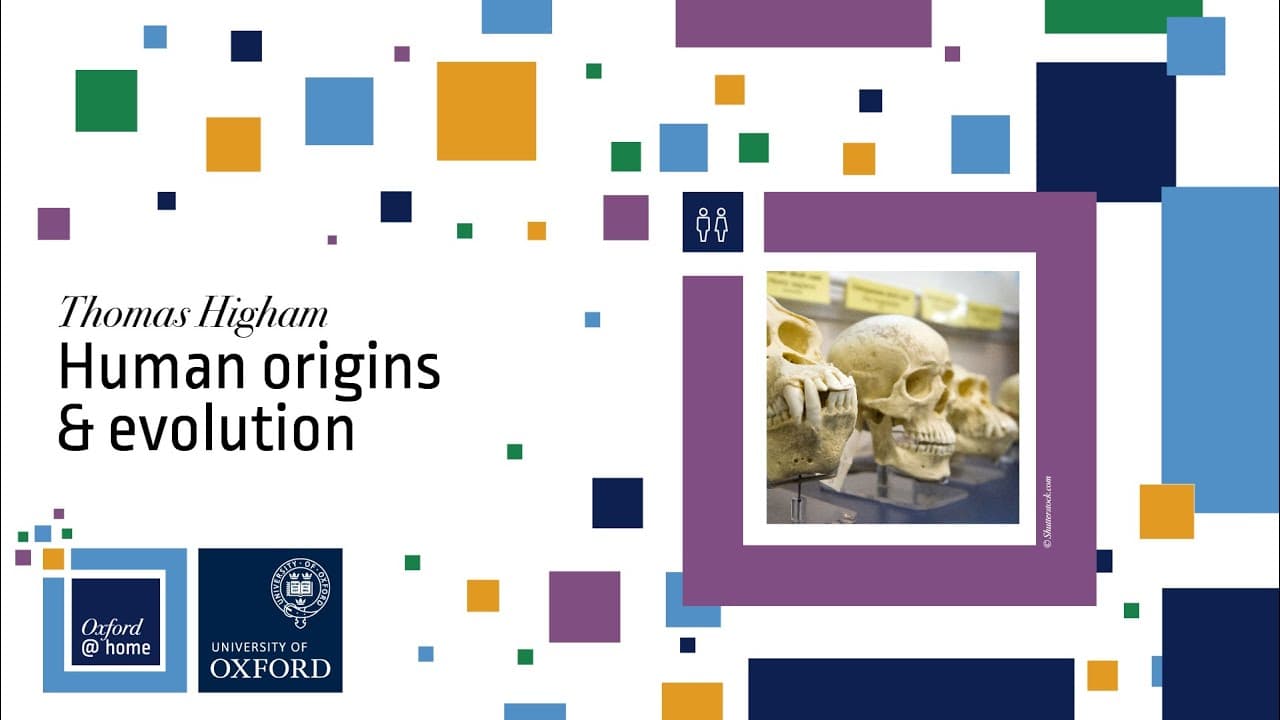
TL;DR
Homo sapiens encountered and interbred with other human groups after leaving Africa, including Neanderthals, whose DNA remains in living people. Ancient genomes, improved radiocarbon dating, and DNA recovered from bones and sediments are replacing a simple story of human succession with a complex history of overlapping populations, shared ancestry, interaction, and extinction.
Transcript
hello and welcome to the latest edition of oxford at home our online showcase for research teaching and ideas that are emerging at the university of oxford even while we're in the middle of the current uk lockdown and i don't know what things are like where you are but hope that as they are in this country things are slowly but surely we think begi... Read More
Key Insights
- Homo sapiens is an African species whose ancestors moved out of Africa during the last 150,000 years, perhaps in more than one dispersal. Outside Africa, they encountered human groups that had been evolutionarily isolated while still sharing a common ancestor from hundreds of thousands of years earlier.
- The human world around 50,000 years ago contained at least four groups besides Homo sapiens. These included Neanderthals, Denisovans, Homo floresiensis, and Homo luzonensis, while evidence also suggests that Homo erectus may have persisted in parts of island Southeast Asia until comparatively late.
- Denisovans were identified through genomic testing of a tiny finger bone from a young girl found at Denisova Cave in the Siberian Altai. A fragment weighing about as much as four or five grains of rice produced a high-coverage genome from a previously unknown human group.
- Denisovans are close evolutionary cousins of Neanderthals associated with eastern Eurasia. Because their known skeletal remains are highly fragmentary, researchers lack enough anatomical evidence to assign them a taxonomic name or confidently reconstruct their appearance, making them a genome in search of a fossil.
- Ancient DNA is recoverable from both skeletal remains and archaeological sediments. Extracting DNA directly from sediments allows researchers to detect ancient human groups even when excavations yield no sufficiently complete or recognizable bones, expanding the evidence available for reconstructing population histories.
- Neanderthals and Homo sapiens interbred, contrary to earlier interpretations based on archaeology and mitochondrial DNA. Nuclear DNA research published in 2010 demonstrated gene exchange, fundamentally changing the account of whether the two groups met after modern humans dispersed beyond Africa.
- Neanderthal ancestry comprises about 1.5 to 2.1 percent of the DNA in living people discussed in the talk. Combining different surviving Neanderthal DNA segments across modern humans would allow researchers to reconstruct about 20 percent of the Neanderthal genome.
- Reliable chronology is essential for establishing whether Neanderthals and Homo sapiens could have interacted. Improved radiocarbon methods remove contamination that distorted earlier dates, while hundreds of newly dated samples from more than 70 European sites provide a more refined picture of population overlap and Neanderthal disappearance.
Install to Summarize YouTube Videos and Get Transcripts
Explore YouTube Video Summarizer or Get YouTube Transcript Extractor
Questions & Answers
Q: How did Homo sapiens encounter other human groups?
Homo sapiens evolved in Africa and moved beyond the continent during the last 150,000 years, perhaps through more than one dispersal. They then entered regions occupied by other humans, including Neanderthals in western Eurasia and Denisovans in eastern Eurasia. These populations had been evolutionarily isolated but shared a common ancestor from hundreds of thousands of years earlier.
Q: What human groups lived alongside Homo sapiens?
The talk identifies at least four other human groups living during the broader period under discussion. Neanderthals occupied Europe, the Middle East, Central Asia, and other parts of western Eurasia, while Denisovans were associated with eastern Eurasia. Homo floresiensis lived on Flores, and Homo luzonensis lived on Luzon. Homo erectus may also have survived comparatively late in island Southeast Asia.
Q: How were the Denisovans discovered?
Denisovans were discovered through genomic analysis of a tiny finger bone excavated by Russian archaeologists at Denisova Cave in the Siberian Altai. A small portion weighing about as much as four or five grains of rice was sent to a laboratory in Leipzig. It yielded a high-coverage genome belonging to a previously unknown group closely related to Neanderthals.
Q: Why do scientists know so little about Denisovan appearance?
Scientists cannot confidently determine what Denisovans looked like because the known bones are extremely fragmentary and could fit in one person's hands. Their identity comes primarily from genomic evidence rather than a substantial skeleton. Researchers therefore lack enough anatomical material to give them a formal taxonomic name, describing them instead as a genome in search of a fossil.
Q: Did Neanderthals and Homo sapiens interbreed?
Neanderthals and Homo sapiens did interbreed. Earlier archaeological interpretations and mitochondrial DNA research had suggested that modern humans replaced Neanderthals with little or no gene exchange. Nuclear DNA analysis changed that conclusion in 2010 by demonstrating interbreeding. Living humans discussed in the talk retain about 1.5 to 2.1 percent Neanderthal ancestry.
Q: How much Neanderthal DNA survives in living humans?
The talk states that living people carry about 1.5 to 2.1 percent Neanderthal DNA, with very similar amounts found across Eurasia and other regions discussed. Africans carry smaller amounts, averaging about 0.3 percent. If researchers combined the different Neanderthal DNA segments preserved across modern living humans, they could assemble about 20 percent of the Neanderthal genome.
Q: How does radiocarbon dating clarify Neanderthal extinction?
Improved radiocarbon dating removes contamination that older methods could not eliminate, producing a more reliable chronology for late Neanderthal sites. Researchers can compare these dates with evidence for the first Homo sapiens in the same regions. If their dated occupations overlap, interaction was chronologically possible. The research described includes hundreds of samples from more than 70 archaeological sites across Europe.
Q: How can ancient DNA be recovered without human bones?
Ancient DNA can be extracted directly from sediments at archaeological sites, not only from bones such as mandibles or finger fragments. Sedimentary DNA can reveal the presence of ancient human populations even when recognizable skeletal remains are unavailable. Together with genomic testing of bones and improved chronological methods, this approach provides new evidence for reconstructing human occupations, relationships, and movements.
Summary & Key Takeaways
-
Between roughly 200,000 years ago and today, several human groups inhabited different regions. Homo sapiens evolved in Africa, while Neanderthals occupied western Eurasia and Denisovans lived in eastern Eurasia. Homo floresiensis, Homo luzonensis, and possibly late-surviving Homo erectus further demonstrate that our ancestors once inhabited a diverse human world.
-
Laboratory techniques have transformed research into human origins. Ancient genomic analysis can identify populations from extremely small bone fragments, while DNA recovered directly from archaeological sediments reveals past occupation without recognizable fossils. Improved radiocarbon methods remove contamination and establish more reliable dates for comparing the presence of Neanderthals and Homo sapiens across Europe.
-
The Neanderthal nuclear genome overturned the earlier view that modern humans replaced Neanderthals with little or no gene exchange. Researchers now know that the groups met and interbred. Dating more than 70 European archaeological sites helps determine where their populations overlapped, clarifying the timing of Homo sapiens dispersal and Neanderthal disappearance.
Read in Other Languages (beta)
Share This Summary 📚
Summarize YouTube Videos and Get Video Transcripts with 1-Click
Try YouTube Summary with ChatGPT & Claude or YouTube Transcript Generator