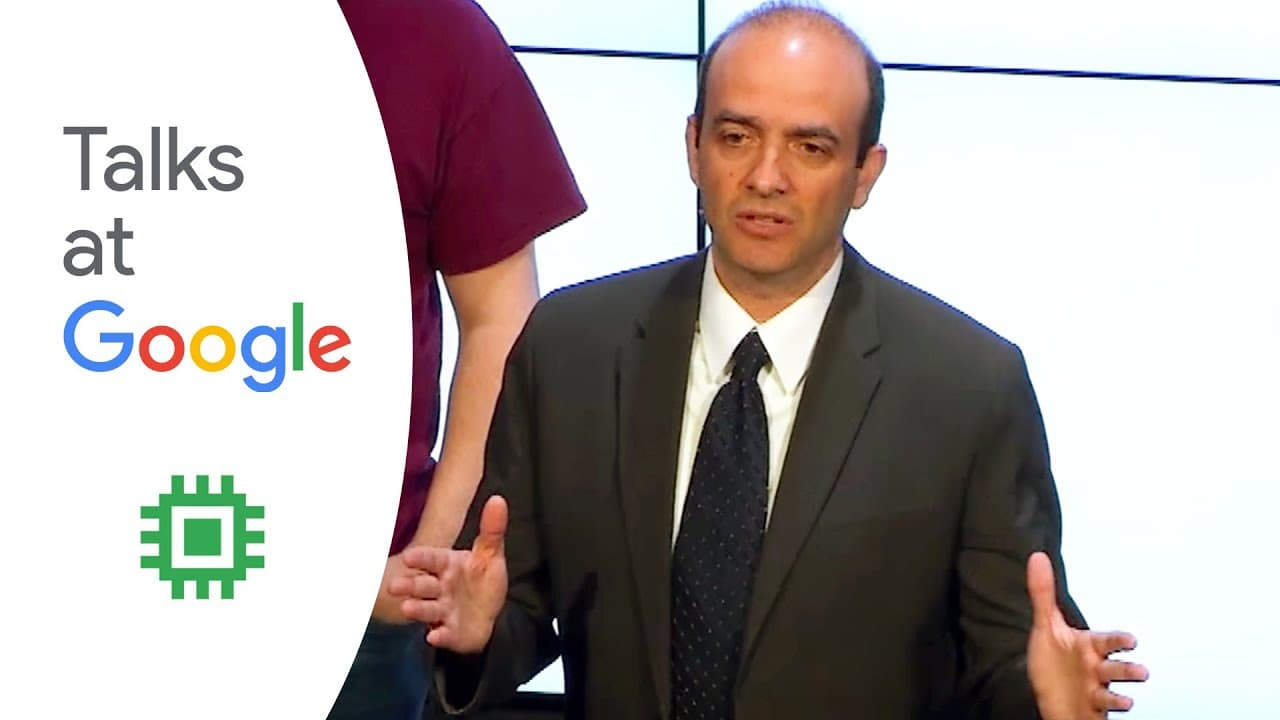
A Future With Innovation | Omar Hatamleh | Talks at Google
TL;DR
AI and advanced robotics could significantly reshape jobs, economies, and daily life by automating work that currently requires many people. Omar Hatamleh illustrates this transition with NASA mission control, where staffing declined as computational systems advanced, and calls for academia, government, and industry to prepare together. Read on for his forecasts, examples, and approach to innovation.
Transcript
[MUSIC PLAYING] OMAR HATAMLEH: So I'm going to give a talk today about probably 45 minutes, 50 minutes. I'll talk about the future, where we are headed, technologies. I'll talk about different aspects of innovation. And as well, I'll finish it up with my personal perspectives on innovation-- what I've gained from my personal experience, working abo... Read More
Key Insights
- 🌍 The world is experiencing exponential population growth and unprecedented technological advancements.
- 😮 The combination of population growth and exponential technology will have a significant impact on the job market, particularly with the rise of AI and advanced robotics.
- 🪡 Companies and individuals need to prepare for the future by embracing innovation, fostering creativity, and developing skills that cannot be easily replicated by automation.
- 🚨 Collaboration between academia, government, and industry is essential for addressing the challenges and opportunities presented by emerging technologies.
- 🥡 Innovation requires taking risks and embracing failure as a learning opportunity.
- 🥺 Benchmarking with other industries and learning from diverse perspectives can lead to new ideas and breakthrough innovations.
- 🤔 The future of work will require humans to focus on tasks that require creativity, critical thinking, and emotional intelligence, while automation takes over repetitive and routine tasks.
Install to Summarize YouTube Videos and Get Transcripts
Explore YouTube Video Summarizer or Get YouTube Transcript Extractor
Questions & Answers
Q: How will AI and advanced robotics affect the future of work?
Hatamleh expects AI and advanced robotics to significantly affect jobs, economies, and how people live. He does not predict an immediate change or a future containing only robots; instead, he describes a transition in which many jobs require fewer people as automation advances.
Q: Will new technology create jobs or eliminate them?
Hatamleh says new technologies typically create jobs, but AI combined with advanced robotics presents a different and more controversial situation. He describes expert opinion as approximately 50/50: one side expects more jobs, while the other anticipates fundamental effects on employment and the economy.
Q: What population growth does Omar Hatamleh forecast by 2050?
He says the global population grew from less than 1 billion around the 1800s to about 7.5 billion within 200 years. He expects it to reach about 10 billion by 2050, with Africa contributing significantly while growth in places such as Europe is stagnant or decreasing.
Q: How powerful could computers become in the coming decades?
Hatamleh says computational power is expected to become equivalent to one human brain around 2035. If that trend continues, he says a single computing system could match the combined brainpower of humanity around 2065 or 2070.
Q: How does NASA mission control illustrate automation's effect on jobs?
During the Apollo program, NASA mission control had back rooms containing hundreds of people who supported the front room. As computational systems advanced through the shuttle era and later generations, NASA needed progressively fewer people, illustrating Hatamleh's view that automation will change employment through a transition.
Q: How could artificial intelligence affect primary care physicians?
Hatamleh contrasts a physician's education and personal experience with an AI system that could access research papers, hospital case studies, and books. Such a system could combine that information with big data to detect diagnostic trends beyond an individual person's capacity, creating a major competitive challenge for primary care physicians.
Q: Which professions could be changed by intelligent systems?
Hatamleh names primary care physicians, lawyers, engineers, and pilots as examples of professions that could be affected. He acknowledges that many jobs will be difficult to replace, but argues that intelligent systems and automation will still have a significant overall impact.
Q: How should society prepare for AI and advanced robotics?
Hatamleh says preparation must begin today rather than after the effects arrive. Academic institutions, government, and industry need to work together, including addressing the disconnect between technologies being produced and those actually being used.
Summary & Key Takeaways
-
The world is experiencing exponential population growth, and technology is advancing at an unprecedented rate. By 2050, the global population is expected to reach 10 billion people.
-
The combination of population growth and exponential technology will have a profound impact on the job market, particularly with the rise of artificial intelligence and advanced robotics.
-
While new technologies typically create jobs, AI and advanced robotics have the potential to automate many jobs and change the way we live and work.
Read in Other Languages (beta)
Share This Summary 📚
Summarize YouTube Videos and Get Video Transcripts with 1-Click
Try YouTube Summary with ChatGPT & Claude or YouTube Transcript Generator
Explore More Summaries from Talks at Google 📚


Summarize YouTube Videos and Get Video Transcripts with 1-Click
Try YouTube Summary with ChatGPT & Claude or YouTube Transcript Generator