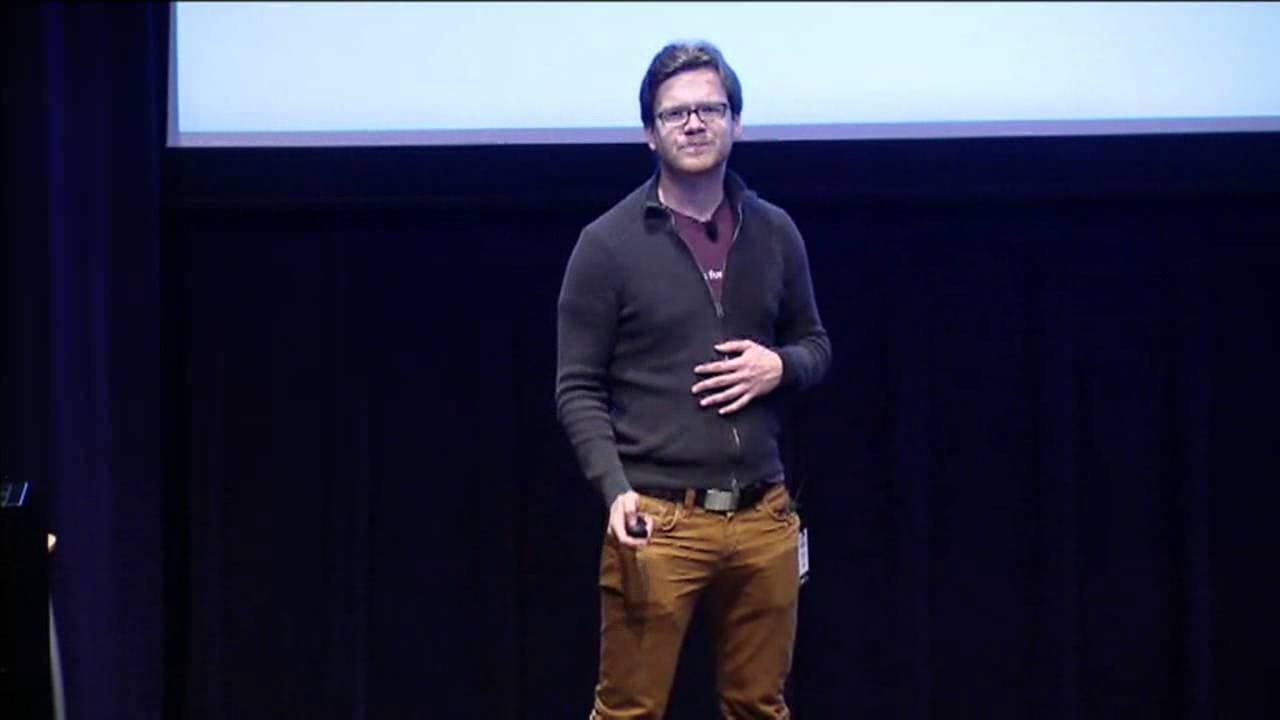
How Asana Engages an Entire Team: Andrew Watterson at unSEXY Conf 2013
TL;DR
Asana engages an entire team by combining a shared task list with communication, creating one source of truth for projects, tasks, ideas, and bugs. Andrew Watterson explains why complex software must accommodate multiple use cases, conflicting feedback, different roles, and every level of an organization. Read on to understand Asana’s product strategy and its approach to personality in enterprise software.
Transcript
well thank you um so like I said or like he said uh my name is Andrew Waterson and I work at a company called Asana um and today I'm going to be talking about sort of personality at Asana um and that sort of means two different things um so the first thing is that for any uh sort of software project that's sufficiently complex um you know you reall... Read More
Key Insights
- 🪡 Multiple perspectives and conflicting arguments need to be considered in software projects.
- 😀 Enterprise startups face challenges in designing for stakeholders and avoiding negative connotations.
- 👤 Asana focuses on true engagement and strives to create a product that is valuable to all users.
- ✊ Balancing simplicity and power in a user interface is essential for effective project management software.
Install to Summarize YouTube Videos and Get Transcripts
Explore YouTube Video Summarizer or Get YouTube Transcript Extractor
Questions & Answers
Q: How does Asana engage the whole team?
Asana gives people across different roles and levels a shared place to contribute to work-related conversations. The speaker describes customer support, product management, engineering, sales leadership, and an intern all using the same task and seeing its full context.
Q: What is Asana designed to be?
Asana is designed to be a shared task list for a team. It stores projects, tasks, ideas, bugs, and other information so anyone on the team can see what is happening.
Q: Why does Asana combine task management with communication?
The source of truth often emerges inside workplace communication, such as when someone commits to finishing work in a long email thread. Asana therefore places communication alongside tasks so the decision, context, and current status remain together.
Q: What does “single source of truth” mean for Asana?
It means team members can log into Asana and see exactly what is happening with their work. Instead of leaving an important commitment buried in a 15-person email thread, the relevant task and discussion can remain visible in one place.
Q: Why do complex software projects require multiple personalities or perspectives?
Complex software must solve multiple use cases and respond to conflicting arguments and feedback. The speaker uses “multiple personalities” to describe the need to account for these different perspectives when shaping a product.
Q: What problem does Asana’s shared context solve?
Shared context helps people understand an issue without asking others to repeat everything that has happened. In the example, a sales director can see that a customer problem was reported, who is handling it, and what progress has been discussed.
Q: Who can participate in an Asana task conversation?
The example includes a customer support worker, a product manager, an engineering lead, an intern, and a sales director. It illustrates participation across functions and every level of the hierarchy, including people who may not work on site.
Q: How does Andrew Watterson describe personality at Asana?
He presents personality in two senses: the multiple perspectives required by complex software and the brand personality of an enterprise startup. He also argues for designing for real users rather than distant executives, consultants, abstract stakeholders, or “stock photo people.”
Summary & Key Takeaways
-
Personality is important in software projects as multiple perspectives and conflicting arguments need to be addressed.
-
Enterprise startups face negative connotations and challenges when designing for stakeholders and stock photo people.
-
Asana aims to be a team task list and communication platform, providing a single source of truth for teams.
-
The company focuses on engaging the whole team and prioritizes true engagement over features or sales team size.
Read in Other Languages (beta)
Share This Summary 📚
Summarize YouTube Videos and Get Video Transcripts with 1-Click
Try YouTube Summary with ChatGPT & Claude or YouTube Transcript Generator
Explore More Summaries from 500 Global 📚
![[VC Unlocked] The Valuation Game, with UC Berkeley's Adam Sterling thumbnail](/_next/image?url=https%3A%2F%2Fi.ytimg.com%2Fvi%2F05r538Lm4zY%2Fhqdefault.jpg&w=750&q=75)

![[PreMoney SF 2016] What Should VCs Do to Prepare? Aileen Lee and Christine Tsai thumbnail](/_next/image?url=https%3A%2F%2Fi.ytimg.com%2Fvi%2F-9rJ2ty3P3E%2Fhqdefault.jpg&w=750&q=75)
Summarize YouTube Videos and Get Video Transcripts with 1-Click
Try YouTube Summary with ChatGPT & Claude or YouTube Transcript Generator