Indexes Start The Week Strong, But Will It Last? Meta, Ollie’s, FTAI In Focus | Stock Market Today
TL;DR
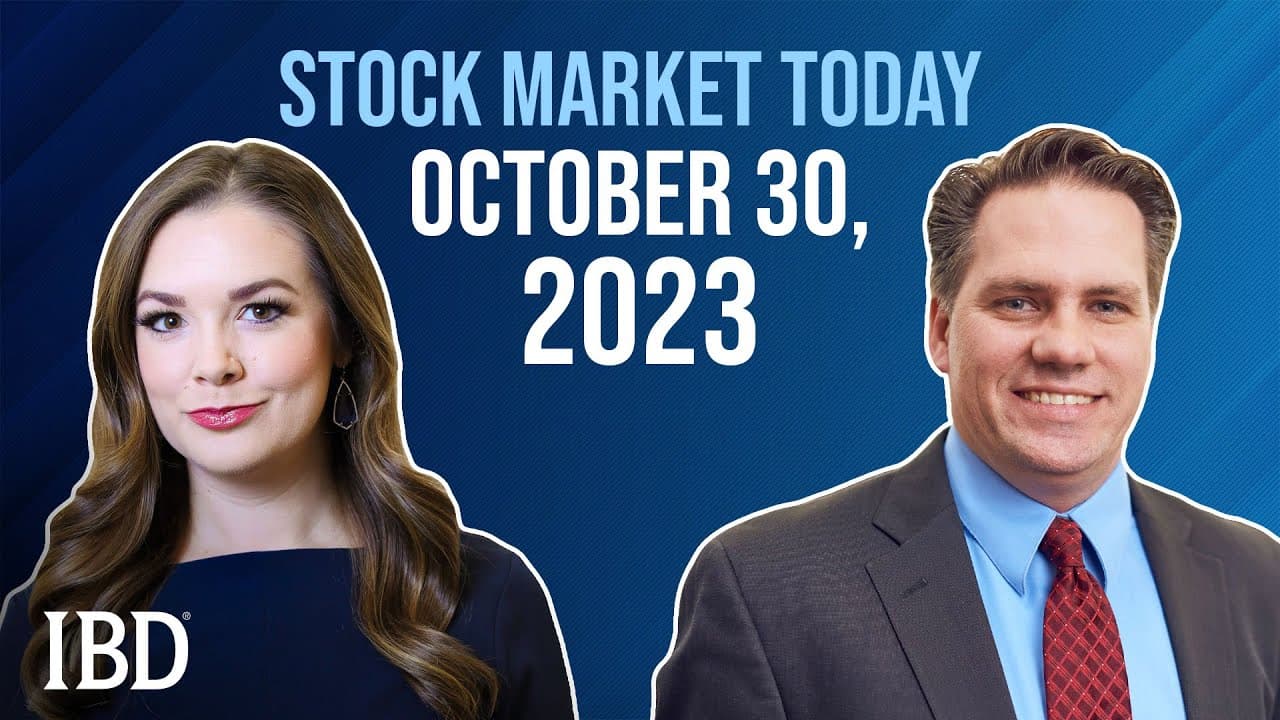
The indexes’ strong Monday gains did not yet confirm that the market had turned because the Nasdaq was only on day two of a rally attempt and remained below key levels. On October 30, the Nasdaq and S&P 500 each rose 1.2%, while the Dow gained 1.6%. Read on for the evidence Justin Nielsen and Ali Coram wanted before becoming aggressive, plus the levels and market-breadth signals they were watching.
Transcript
hey everyone it's Ali Corman Justin neelsen here with a look at the market for Monday October 30th where we saw a strong start to the week but we get too excited yet that's right uh we we've been here before right strong starts that don't finish but uh that doesn't mean this one can't yeah but we will Reserve our judgment uh for a little while uh M... Read More
Key Insights
- One session proves little: The hosts treat Monday’s gains as progress, not confirmation. Their caution comes from repeated strong starts, bounce attempts, rally attempts, and follow-through attempts that did not last. The distinction matters because a positive opening or close can improve the immediate picture without demonstrating that sustained institutional demand has returned.
- The rally count matters: The Nasdaq was only on day two of its rally attempt after Monday’s advance. That positioning meant the market had begun trying to recover, but the hosts were still waiting for a follow-through day. They wanted evidence of institutional support before treating the bounce as a durable change in direction.
- Closing position adds context: Although intraday gains faded, the indexes did not collapse into the close. Each finished in the upper half of its range, while the S&P 500 and Dow closed even higher within their ranges. This preserved some constructive evidence, but it did not outweigh the need to judge the full week and await confirmation.
- Gap-up Mondays require caution: The Nasdaq’s opening gap created immediate excitement, then started filling almost at once. Mike Webster’s concern about gap-up Mondays was specifically that apparent strength could fade rapidly. Monday followed part of that pattern, reinforcing the hosts’ decision to reserve judgment even though the Nasdaq never became negative.
- The 200-day line is pivotal: Trading below the Nasdaq Composite’s 200-day moving average was a central warning sign. Nielsen wanted the index to regain that level rather than merely approach or cross it briefly. Holding above it would provide stronger evidence of recovery than an intraday move that disappears before the close.
- Thursday’s high remains unfinished business: The Nasdaq rose above Thursday’s high during the day but could not close above it. Nielsen therefore did not regard that resistance as decisively cleared. A subsequent move that both exceeds and holds the level would represent more meaningful progress in the market’s attempt to recover.
- Nasdaq 13,000 marks progress: Beyond the 200-day line and Thursday’s high, Nielsen identified 13,000 as an important area for the Nasdaq Composite. Reaching it would show additional recovery from the index’s weakened position. The level was not presented as a reason to predict a bottom, but as another observable checkpoint for gathering evidence.
- QQQ shows relative resilience: QQQ held up better than the broader Nasdaq Composite because of its mega-cap technology weighting. Unlike the composite, it did not fall below its 200-day moving average. The hosts watched for a return toward 350, which had served as a low area in both August and September.
- Equal weighting exposes weakness: RSP, the equal-weighted S&P 500, looked dismal for part of Monday and appeared capable of falling to new lows. The hosts followed equal-weighted measures because they reveal breadth beyond heavyweight leadership. Weakness there showed why gains in the headline S&P 500 alone could provide an incomplete picture.
- Breadth improved but lacked power: Advancing stocks outnumbered decliners on both major exchanges, by slightly more than two to one on the New York Stock Exchange and slightly less than two to one on the Nasdaq. That was constructive, but the hosts still wanted greater power. Heavyweight leadership also limited how broadly reassuring the session could be.
- Upcoming events could shift direction: Large-company earnings remained ahead, giving the market several potential sources of movement before the week ended. The Federal Reserve was another catalyst, even though the hosts said little policy change was expected. They emphasized that wording from the press conference could still make a difference to market behavior.
- Leadership needs selective review: The episode identifies Meta Platforms, Ollie’s Bargain Outlet, and FTAI Aviation as individual stocks in focus while the broader market attempts to recover. The existing analysis also highlights ANF’s relative strength and shallow pullback despite general weakness in retail. This selective strength supports watching individual setups without treating the overall market as confirmed.
Install to Summarize YouTube Videos and Get Transcripts
Explore YouTube Video Summarizer or Get YouTube Transcript Extractor
Questions & Answers
Q: Will the indexes’ strong start to the week last?
The October 30 advance was not enough to determine whether the strength would last. The Nasdaq was only on day two of a rally attempt, and several earlier bounces and rally attempts had failed. The hosts wanted a follow-through day as evidence that institutions were returning to support the market. They also wanted to see how the week closed after major earnings and the Federal Reserve press conference had a chance to influence trading.
Q: How did the major indexes perform on Monday, October 30?
The Nasdaq and S&P 500 each rose 1.2% on Monday. The Dow gained 1.6%, while the Russell 2000 advanced six-tenths of a percent. The indexes closed in the upper half of their daily ranges, with the S&P 500 and Dow finishing especially high within their ranges. Even so, gains faded from the gap-up opening, so the hosts described the day as progress rather than confirmation.
Q: Why were Ali Coram and Justin Nielsen waiting for a follow-through day?
They wanted proof that institutional investors were returning and supporting the market. That evidence mattered because the market had already produced several failed follow-through attempts, bounces, and rally attempts. Waiting reduced the temptation to mistake an oversold bounce for a durable turn. Their goal was to follow the big money after sufficient evidence appeared, rather than become aggressive while confirmation was still missing.
Q: What Nasdaq Composite levels were important?
The first major reference was the 200-day moving average, because the Nasdaq had fallen below it. Nielsen also wanted the composite to regain and hold above Thursday’s high, which it exceeded intraday but not at the close. Beyond those barriers, he identified 13,000 as an important area for further progress. These checkpoints provided a way to evaluate recovery without trying to predict or catch the exact bottom.
Q: Why was QQQ holding up better than the Nasdaq Composite?
QQQ was holding up better because of its mega-cap technology weighting. It had not dropped below its 200-day moving average, while the Nasdaq Composite had. The hosts watched for QQQ to return toward 350, a level connected with lows reached in August and September. Its relative resilience was constructive, but it did not by itself confirm strength across the wider market.
Q: What did market breadth show during the advance?
Breadth was not too bad, but heavyweight stocks still led much of the move. Advancers beat decliners by a little more than two to one on the New York Stock Exchange and a little less than two to one on the Nasdaq. The hosts considered those figures constructive but wanted to see more power. RSP’s earlier weakness also showed why they continued monitoring equal-weighted indexes rather than relying only on headline gains.
Q: Why was the equal-weighted S&P 500 important?
The hosts used RSP, the equal-weighted S&P 500, to evaluate how broad market participation really was. It looked dismal for part of Monday and appeared at risk of falling to new lows. Because each constituent carries equal weight, its behavior helped reveal weakness that could be obscured when a few heavyweight stocks drove the standard index higher. That made RSP an important check on whether the rally was broadly supported.
Q: Which stocks and catalysts were in focus?
Meta Platforms, Ollie’s Bargain Outlet, and FTAI Aviation were the three named stocks in focus for the episode. The existing analysis also identifies ANF as notable within a generally weak retail group because of its strong relative strength line and shallow pullback. At the market level, large-company earnings could sway trading during the week. The Federal Reserve press conference also mattered because changes in wording could affect the market even if little policy change was expected.
Summary & Key Takeaways
-
Monday’s indexes advance: Ali Coram and Justin Nielsen open with the market action for Monday, October 30. The Nasdaq and S&P 500 each gained 1.2%, the Dow rose 1.6%, and the Russell 2000 advanced six-tenths of a percent. Although those results represented progress and a strong start to the week, the hosts immediately caution against getting too excited. Similar strong starts had failed before, so a single positive session could not establish that the market’s direction had changed.
-
Early strength begins fading: The Nasdaq opened with a gap up but almost immediately started filling that gap. It never turned negative, and the major indexes still closed in the upper half of their daily ranges. The S&P 500 and Dow finished even more strongly within their ranges, possibly in the upper quartile. Still, Nielsen recalls Mike Webster’s dislike of gap-up Mondays because their early excitement can fade quickly. Just as the hosts waited to evaluate Monday’s close, they wanted to see how the entire week finished.
-
Confirmation remains the priority: Monday placed the Nasdaq on day two of a rally attempt, but the hosts characterize the move as an oversold bounce rather than permission to become aggressive. They were waiting for a follow-through day showing that institutions were returning and supporting the market. Several previous follow-through attempts, bounces, and rally attempts had failed to stick. Their approach was therefore to collect enough evidence before committing heavily, follow the big money, and avoid trying to catch the exact market bottom.
-
Technical levels frame recovery: The Nasdaq Composite had fallen below its 200-day moving average, which Nielsen calls a negative condition. It moved above Thursday’s high during Monday’s session but failed to close there. He wanted the index to reclaim and hold those levels, then potentially return to 13,000. QQQ had held up better because of its mega-cap technology weighting and never fell below its 200-day line. Its next notable test was around 350, an area associated with lows in August and September.
-
Breadth and catalysts matter: The equal-weighted S&P 500, represented by RSP, looked weak during part of the session and appeared at risk of falling to new lows. Breadth ultimately was not too bad, even though heavyweight stocks led much of the advance. Advancers exceeded decliners by slightly more than two to one on the New York Stock Exchange and slightly less than two to one on the Nasdaq. Major earnings and the Federal Reserve press conference could still sway the market, while Meta Platforms, Ollie’s Bargain Outlet, and FTAI Aviation remained stocks in focus.
Read in Other Languages (beta)
Share This Summary 📚
Summarize YouTube Videos and Get Video Transcripts with 1-Click
Try YouTube Summary with ChatGPT & Claude or YouTube Transcript Generator
Explore More Summaries from Investor's Business Daily 📚

Summarize YouTube Videos and Get Video Transcripts with 1-Click
Try YouTube Summary with ChatGPT & Claude or YouTube Transcript Generator