How Can Microbes Protect Crops From Drought?
TL;DR
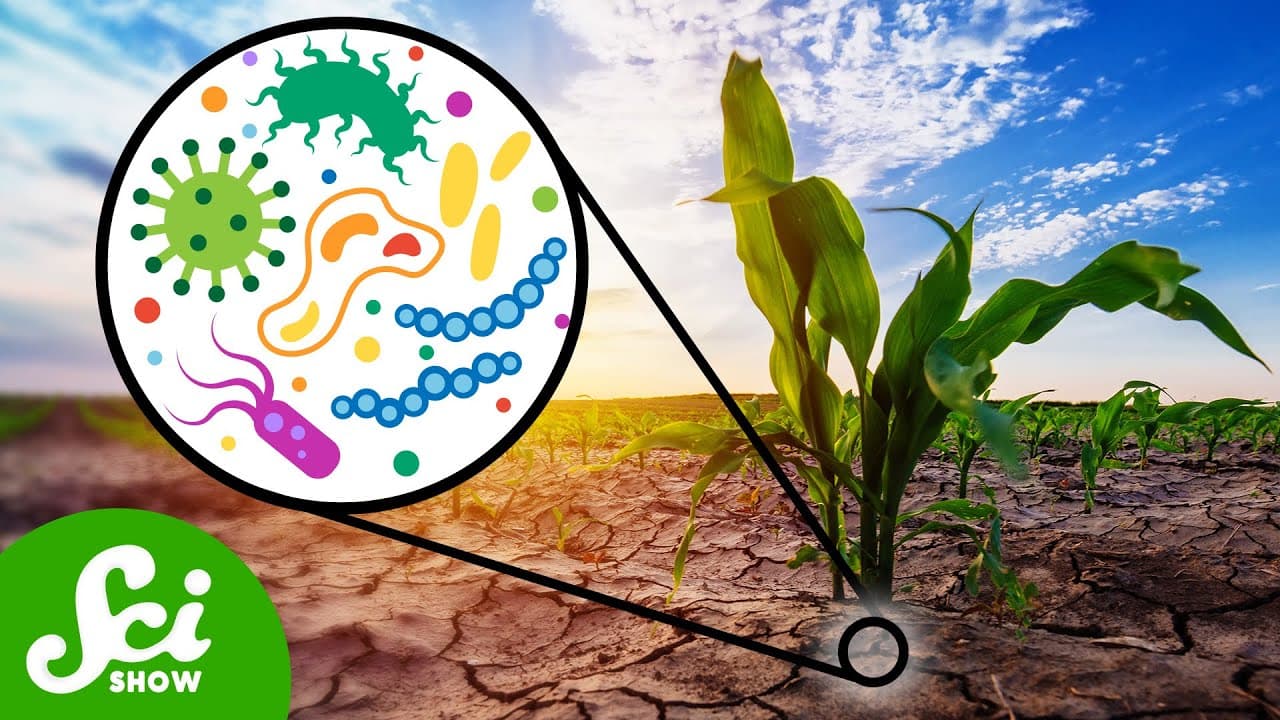
Microbes can protect crops from drought by releasing growth regulators, lowering stress-related ethylene, and producing exopolysaccharides that help roots retain water. In a 2017 experiment, wheat treated with bacteria from a drought-resistant desert plant developed longer roots and shoots, more chlorophyll and sugars, and greater total weight after water was withheld for a week. Read on to see how plant microbiomes could support drought-stressed farms.
Transcript
Climate change threatens to disrupt basically every aspect of our lives, including what’s on our dinner tables. Droughts in particular are looking like they’ll be a major threat to our food supply, especially since crops like maize, wheat and rice are particularly vulnerable to dry weather. Which is why researchers have been trying to make plant... Read More
Key Insights
- 🎙️ Droughts pose a significant threat to food security as they reduce crop yields, particularly for crops like maize, wheat, and rice.
- 🌱 Genetic modification has been one approach to enhance drought resistance, but harnessing plant microbiomes offers a natural and promising alternative.
- 🌱 Certain microbes in plant soil and on plants release molecules that promote plant growth and help plants survive drought conditions.
- 💟 Microbiomes could be added to fertilizer or soil, providing a cost-effective and eco-friendly solution to improve crop yields in drought-prone regions.
- ✊ Small-scale farmers and those in developing nations could benefit greatly from harnessing the power of microbiomes to enhance their livelihoods.
- 😣 Climate change-induced heatwaves and droughts have already caused a decline in grain harvests globally, with developing nations facing the most severe consequences.
- 👨🔬 Research into the potential of plant microbiomes is ongoing, and while large-scale implementation is not yet possible, it shows great promise for the future of agriculture.
Install to Summarize YouTube Videos and Get Transcripts
Explore YouTube Video Summarizer or Get YouTube Transcript Extractor
Questions & Answers
Q: How can microbes protect crops from drought?
Some microbes release plant growth regulators that affect energy metabolism, increase photosynthesis, and boost antioxidant systems. Others lower levels of the stress hormone ethylene or produce exopolysaccharides that form biofilms around roots and help prevent water loss.
Q: What is a plant microbiome?
A plant microbiome is the community of bacteria, fungi, algae, and other tiny organisms living inside or outside a plant and in the soil around its roots. These microbes can promote growth, convert nitrogen into forms plants can use, and collect nutrients for their host.
Q: How does drought cause lasting damage to crops?
During drought, plants struggle to obtain nutrients from the soil, their leaves shrink and provide less area for photosynthesis, and their cells cannot elongate normally. Some molecular, structural, and physiological changes reverse after rain returns, but physical damage may remain, leaving smaller plants with less edible mass.
Q: Do drought-protective microbes improve plant growth under normal conditions?
The helpful microbes described do not appear to do much for plant growth or crop yield under normal conditions. Their beneficial effects become apparent when drought begins, and not every plant naturally hosts these microbes.
Q: What happened when researchers treated wheat with bacteria from a drought-resistant desert plant?
In 2017, researchers in China added bacteria from the desert plant’s leaves to soil used for growing wheat. After allowing the bacteria to settle for a few days, they withheld water for a full week; treated wheat showed less leaf curling, longer roots and shoots, more chlorophyll and sugars, and higher total weight.
Q: Have drought-resistant microbiomes been tested on crops besides wheat?
Yes. In 2015, researchers in Milan inoculated pepper plants with bacteria taken from grapevine microbiomes and obtained similar results to the wheat experiment.
Q: How could beneficial microbes be applied to crops?
The proposed approach is to add drought-protective microbes directly to fertilizer or soil. Large-scale deployment is not yet available, but researchers consider the approach promising for improving yields on smaller farms and in developing regions.
Q: Why are drought-resistant crops important for the food supply?
Maize, wheat, and rice are particularly vulnerable to dry weather, and even a drought lasting one growing season can affect food supplies for years. In Europe, the share of grain made unharvestable by heatwaves and droughts rose from 2.2% in 1964–1990 to more than 7% in 1991–2015.
Summary & Key Takeaways
-
Droughts pose a significant threat to food supply, especially for crops vulnerable to dry weather such as maize, wheat, and rice.
-
Droughts cause long-term damage to plants by hindering nutrient absorption and reducing photosynthesis capacity, leading to smaller plants with lower yields.
-
Scientists have discovered that certain microbes in plant soil and on plants release molecules that promote plant growth and enhance drought resistance, offering a potential solution to improve crop yield in drought conditions.
Read in Other Languages (beta)
Share This Summary 📚
Summarize YouTube Videos and Get Video Transcripts with 1-Click
Try YouTube Summary with ChatGPT & Claude or YouTube Transcript Generator
Explore More Summaries from SciShow 📚


Summarize YouTube Videos and Get Video Transcripts with 1-Click
Try YouTube Summary with ChatGPT & Claude or YouTube Transcript Generator