How to Read and Take Notes Like a PhD with AI
TL;DR
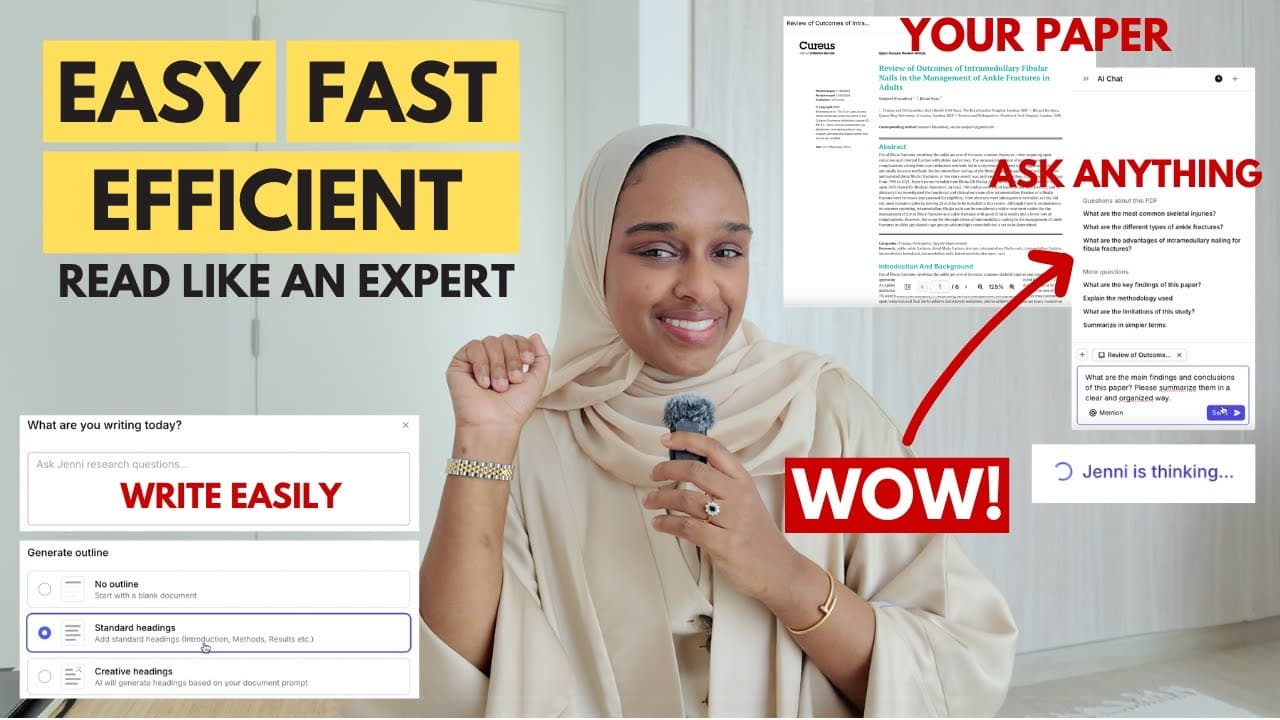
A four step method helps you read and take notes like a PhD. Start with pre reading by prioritizing, setting goals and skimming to grasp structure. Then practice active reading with purposeful highlighting and questioning, followed by concise note taking using a structured system and AI writing aid. Finally review and integrate notes for long term retention.
Transcript
As an ex-PhD student, I know that we are experts in reading, taking notes efficiently, and being able to retrieve them later on at any point, even 2, 3, four, 5 years later. And this is all in four parts. There's the pre-ereading strategy, there's active reading whilst you read and engaging with the text. There's efficient note takingaking, and the... Read More
Key Insights
- Reading like a PhD centers on a four stage process: pre reading, active reading, note taking, and reviewing.
- Pre reading involves prioritizing sections, setting a goal, and skimming to understand structure before deep reading.
- Active reading uses purpose driven highlighting, annotations, and reflective questions to engage with the text.
- Note taking relies on a good system, digital tools, and conciseness to capture essential ideas.
- AI tools can help by outlining, suggesting headings, and providing initial sentence starters for writing.
- Review and integration require revisiting notes, synthesizing with other materials, and applying insights to new work.
- AI assistance should be used to overcome writer's block while ensuring proper citations and references.
- The technique enables long term retention by linking new notes to existing knowledge and continually revising one's understanding.
Install to Summarize YouTube Videos and Get Transcripts
Explore YouTube Video Summarizer or Get YouTube Transcript Extractor
Questions & Answers
Q: What is the four stage method for reading like a PhD?
The four stage method consists of pre reading, active reading, note taking, and reviewing. Pre reading focuses on prioritizing sections, setting a clear goal, and skimming to grasp structure. Active reading involves highlighting with purpose, annotating, and asking questions to interact with the text. Note taking uses a structured system with digital tools to capture essential points concisely. Reviewing integrates and revises notes to ensure long term retention and applicability.
Q: How does pre reading help before deep reading?
Pre reading helps by identifying which sections matter most and clarifying the objective of reading. It uses a quick skim to map the structure and locate key figures, enabling a focused approach rather than a broad, unfocused read. This preparation accelerates comprehension and highlights gaps or questions to explore during active reading.
Q: What role does active reading play in this approach?
Active reading involves engaging with the material through purposeful highlighting, annotations, and reflective questions. This stage pushes the reader to interrogate the text, identify gaps or critiques, and generate targeted questions that guide deeper understanding. The process makes the subsequent note taking more precise and meaningful.
Q: What makes note taking effective in this method?
Note taking is effective when a reader uses a good system, digital tools, and concise entries. The method emphasizes capturing only essential points and organizing them with clear headings. AI writing aids can provide sentence starters and help maintain a consistent citation flow, making notes easier to revisit and synthesize later.
Q: How can AI assist during the note taking process?
AI assists by suggesting headings, generating outline structures, and offering initial sentence starters to overcome writer’s block. It can also help organize references and format citations, making the notes ready for later integration into drafts. The use of AI should augment thinking, not replace it, and should always maintain proper attribution.
Q: Why is reviewing and integrating notes important?
Reviewing and integrating notes is essential for long term retention and practical application. By revisiting the notes regularly, synthesizing information across sources, and applying insights to outlines and research questions, the learner builds a cohesive knowledge base. This step transforms isolated facts into usable understanding.
Q: What are key signs of a productive note system?
A productive note system clearly links new information to existing knowledge, uses consistent headings, and keeps references readily accessible. It should support quick retrieval, enable synthesis across topics, and facilitate applying notes to writing tasks. The system also adapts with digital tools to maintain organization over time.
Q: How should citations be handled in this framework?
Citations should be integrated at the point of writing and maintained in a consistent format. The framework supports in text narrative citations and bottom of document references. Proper citation ensures traceability of ideas and aligns with academic integrity while making it easier to compile a bibliography for future work.
Summary & Key Takeaways
-
This summary describes a four stage approach to reading and note taking used by PhD level researchers. It emphasizes pre reading analysis, active reading interaction, structured note taking, and regular review for integration into the broader knowledge base. The workflow is designed to maximize comprehension and retention.
-
The speaker demonstrates how an AI tool can assist with outlining, generating headings, and suggesting sentence starters. The method fosters efficient literature processing and organized note management, enabling readers to build a coherent knowledge base over time.
-
The video closes with practical tips for maintaining an ongoing research journal, citing sources properly, and applying notes to real writing tasks. The aim is sustainable study habits that scale with long term academic goals.
Read in Other Languages (beta)
Share This Summary 📚
Summarize YouTube Videos and Get Video Transcripts with 1-Click
Try YouTube Summary with ChatGPT & Claude or YouTube Transcript Generator
Explore More Summaries from Dr Amina Yonis 📚


Summarize YouTube Videos and Get Video Transcripts with 1-Click
Try YouTube Summary with ChatGPT & Claude or YouTube Transcript Generator