How Is a Vajra-Mushti Forged and Tested?
TL;DR
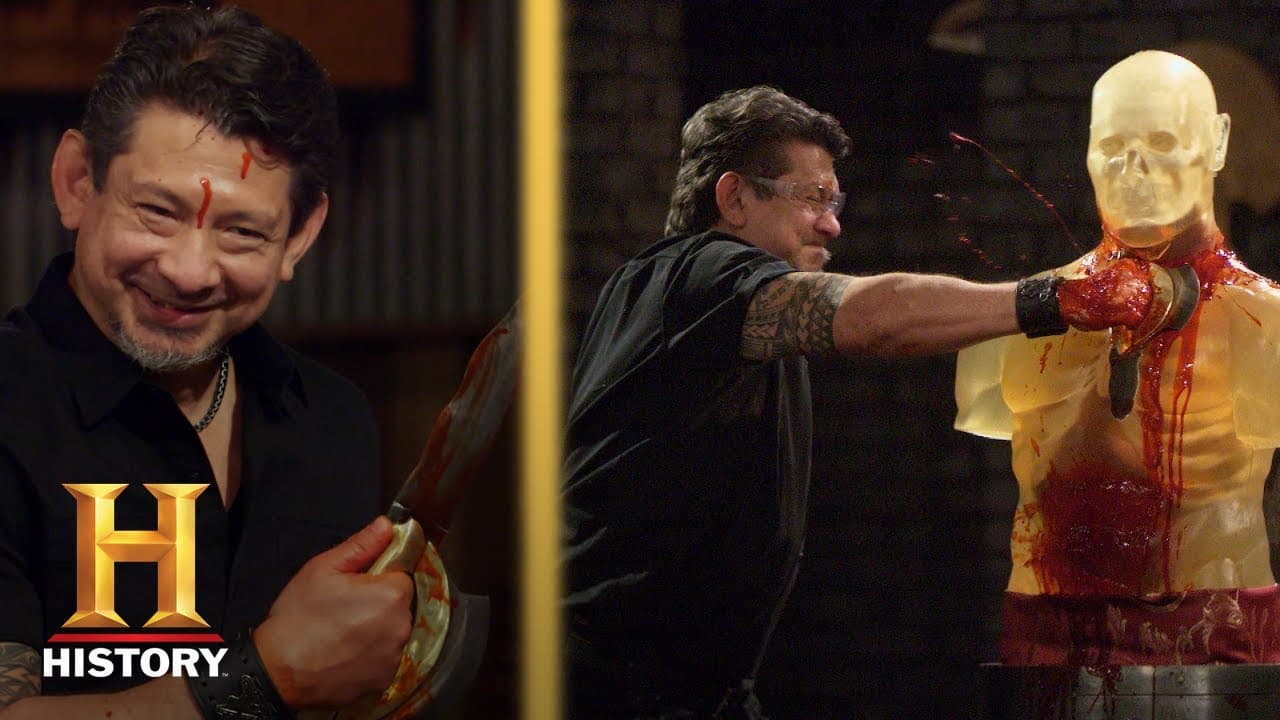
Kyle won the $10,000 Forged in Fire final because his Vajra-Mushti combined effective blades with a comfortable, secure handle. Both weapons killed, cut, and survived the strength test, but Ben's rough, sharp inner handle bruised and cut testers, while one of his blades suffered a major deflection and nearly cracked off.
Transcript
[MUSIC PLAYING] Kyle and Ben, congratulations. You guys are moving forward into round three. Only the man next to you stands between you, the title of "Forged in Fire" Champion, and that coveted check for $10,000. In round three we're going to send you guys back home to recreate an iconic weapon from history. That weapon is-- [MUSIC PLAYING] --the ... Read More
Key Insights
- The Vajra-Mushti is an Indian edged knuckle duster featuring sharpened blades on every side of its handle. Its design supports stabs, slashes, and punches, while the associated traditional martial art has a lineage dating back to the Middle Ages.
- The final challenge required Kyle and Ben to build Vajra-Mushtis at their home forges within four days. The winner would receive the Forged in Fire champion title and a $10,000 check after the weapons underwent lethal-damage, strength, and sharpness evaluations.
- Kyle's construction used 1084 carbon steel because it was familiar to him, while his handle was made from copper. He completed forging and heat treatment on the first day, then removed three pounds from a five-pound copper piece to form the handle.
- Ben's heat-treatment strategy used a torch because he wanted the blades and knuckle blade hardened without hardening the handle. He worried that the brittle steel could crack immediately after quenching, but his inspection revealed no visible cracks at that stage.
- Kyle's handle provided a comfortable and secure grip during the kill test. The finger wells caused no problems while punching, and the grip remained effective as the weapon became slippery, leading Doug Marcaida to call the finished weapon beautiful and lethal.
- Ben's handle was the decisive weakness because rough and sharp interior surfaces contacted the testers' hands. Repeated movement bruised Doug Marcaida and removed skin, while the strength-test judge struggled to position a finger safely inside the weapon.
- Kyle's center blade chipped against the chain during the strength test, and the exposed grain appeared larger than the judge preferred. His two longer blades nevertheless held up well, and the complete weapon remained functional through the test.
- Ben's substantial weapon mass supported its performance and helped produce deep cuts, but the middle blade developed a major deflection and crack. Although the weapon stayed in one piece, the judge warned that one more small hit could have broken the damaged section off.
Install to Summarize YouTube Videos and Get Transcripts
Explore YouTube Video Summarizer or Get YouTube Transcript Extractor
Questions & Answers
Q: What is a Vajra-Mushti weapon?
A Vajra-Mushti is an edged knuckle duster originating in India. Its distinctive handle has sharpened blades on every side, allowing trained users to perform stabs, slashes, and punches. The weapon is tied to the fist in a traditional Indian martial art associated with wrestlers. That practice dates back to the Middle Ages and continues with non-lethal knuckle dusters.
Q: How did Kyle forge his Vajra-Mushti?
Kyle chose 1084 carbon steel because he was familiar with the material. He forged the smaller blades and a large rectangular blade, then completed the heat treatment by the end of his first day. For the handle, he reduced a five-pound copper chunk by three pounds to create a workable piece before fitting the blades and finishing the weapon.
Q: How did Ben heat-treat his Vajra-Mushti?
Ben used a torch heat treatment because the handle did not need to be hard, while the blades and knuckle blade did. After quenching the first section, he feared that the newly hardened and brittle steel might crack from a small shock or impact. He found no visible cracks after inspection and continued with the build.
Q: How were the Vajra-Mushtis tested in the final?
The judges used three evaluations to compare the weapons. A kill test measured lethal damage through repeated blows against a ballistics dummy. A strength test involved stabbing and punching sheet metal and chain to examine durability and construction. A sharpness test used spice bags to evaluate how effectively each weapon could stab, slash, and cut.
Q: Why did Kyle win the Forged in Fire final?
Kyle won because his Vajra-Mushti paired lethal and cutting performance with a comfortable, reliable handle. Its finger wells did not interfere with punching, and the grip stayed secure when slippery. Although the center blade chipped and one area created a jagged cut, Ben's handle caused discomfort and injury to both testers, making ergonomics the deciding difference.
Q: What problems appeared in Kyle's Vajra-Mushti?
Kyle's center blade sustained chipping when it struck the chain during the strength test. The judge observed large grain in the chipped area and said greater refinement would have been preferable. During the sharpness test, a section missing some edges produced a jagged cut. Even so, the two longer blades held up well and the weapon remained comfortable.
Q: What problems appeared in Ben's Vajra-Mushti?
Ben's weapon had rough and sharp surfaces inside its handle, which bruised Doug Marcaida, removed skin, and made safe finger placement difficult. Its middle blade also experienced a major deflection and developed a crack during the strength test. The weapon stayed intact and cut deeply, but the handle continued rubbing the tester's hand during impacts.
Q: What happened after Kyle won the competition?
Kyle received the Forged in Fire champion title and a $10,000 check. He said his wife would be excited by the result and explained that they would probably use the money as a down payment on a house. Kyle also reflected that, 18 months earlier, he would never have imagined becoming a Forged in Fire champion.
Summary & Key Takeaways
-
Kyle and Ben received four days at their home forges to recreate the Vajra-Mushti, an Indian edged knuckle duster with sharpened blades around its handle. Kyle selected familiar 1084 carbon steel and shaped a copper handle, while Ben used a torch treatment to harden the blades without hardening the entire handle.
-
Both weapons delivered lethal damage to a ballistics dummy. Kyle's finger wells remained comfortable and secure even when the weapon became slippery. Ben produced very sharp edges, but sharp areas inside his handle bruised the tester and removed skin, revealing an ergonomic weakness that persisted throughout the remaining evaluations.
-
Kyle's weapon experienced chipping on its center blade and produced one jagged cut, but its overall comfort and performance secured the victory. Ben's heavier weapon made deep cuts, yet its rough handle affected both testers and its middle blade suffered major deflection. Kyle became champion and received the $10,000 prize.
Read in Other Languages (beta)
Share This Summary 📚
Summarize YouTube Videos and Get Video Transcripts with 1-Click
Try YouTube Summary with ChatGPT & Claude or YouTube Transcript Generator
Explore More Summaries from HISTORY 📚





Summarize YouTube Videos and Get Video Transcripts with 1-Click
Try YouTube Summary with ChatGPT & Claude or YouTube Transcript Generator