What Are the Different Types of Water and Their Uses?
TL;DR
Water exists in various forms, primarily salt water and fresh water, and can be found in oceans, lakes, rivers, and ponds. Treatment plants ensure safe drinking water, and precipitation contributes to the water cycle. Understanding these types of water is essential for recognizing their importance in our daily lives and the environment.
Transcript
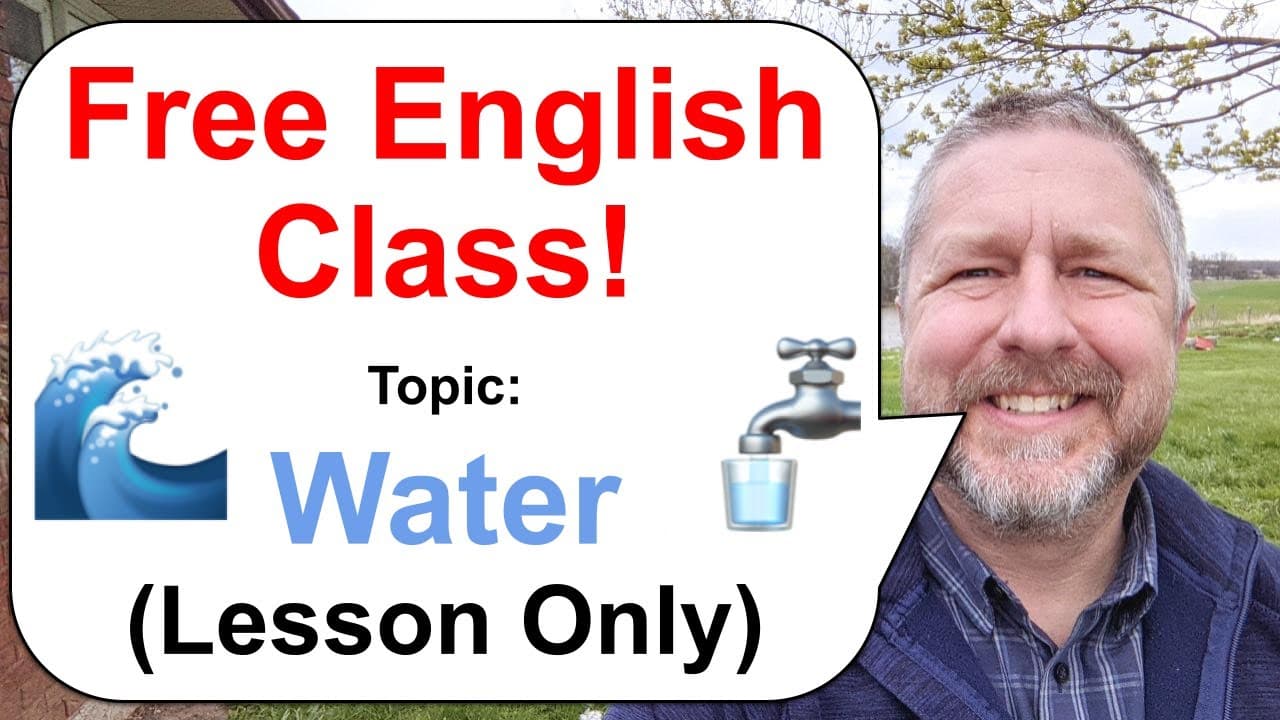
well hello everyone hello and welcome to this english lesson about water now you might think water is a very simple topic and maybe you know all the words associated with water but i was surprised when i was putting this lesson together how many words there were and how many phrases how many english phrases i can teach you when we go over these wor... Read More
Key Insights
- 💦 Water is vital for human life and exists in various forms, including molecules, liquid, and vapor.
- 🌊 Different bodies of water, such as oceans, lakes, rivers, and ponds, have different characteristics and applications.
- 💦 Water treatment is essential for providing safe drinking water to communities.
- 🤽 Precipitation, such as rain and snow, plays a vital role in the water cycle.
Install to Summarize YouTube Videos and Get Transcripts
Explore YouTube Video Summarizer or Get YouTube Transcript Extractor
Questions & Answers
Q: What is the scientific name for water?
The scientific name for water is H2O, representing two hydrogen atoms and one oxygen atom that form a molecule.
Q: What are the main differences between salt water and fresh water?
Salt water has a high salt content and is typically found in oceans, while fresh water has a low salt content and can be found in lakes, rivers, and ponds.
Q: What is the purpose of a water treatment plant?
A water treatment plant purifies water, making it safe to drink by removing impurities and ensuring it meets drinking water standards.
Q: What are some examples of precipitation?
Precipitation includes forms such as rain, snow, hail, sleet, and freezing rain, each occurring under specific weather conditions.
Q: How does water change from a liquid to a solid or vapor?
Water freezes into ice when the temperature goes below zero degrees Celsius, and it turns into a vapor or steam when heated or exposed to the sun.
Q: What are some common bodies of water?
Bodies of water include lakes, rivers, streams, creeks, canals, and oceans, each with distinct characteristics and purposes.
Q: What is the difference between a marsh and a swamp?
A marsh is a grassy wetland with small pools of water, while a swamp is a wetland that usually includes trees along with water.
Q: What are some popular water sports?
Water sports include surfing, jet skiing, water skiing, and boating, which are enjoyed by many people, especially in areas with abundant lakes and rivers.
Summary & Key Takeaways
-
Water is essential for life and exists in various forms, including H2O molecules, salt water, and fresh water.
-
Water can be found in bodies of water such as oceans, lakes, rivers, and ponds, each with its own characteristics.
-
Water treatment plants ensure the availability of safe drinking water, and precipitation in the form of rain and snow contributes to the water cycle.
Read in Other Languages (beta)
Share This Summary 📚
Summarize YouTube Videos and Get Video Transcripts with 1-Click
Try YouTube Summary with ChatGPT & Claude or YouTube Transcript Generator
Explore More Summaries from Learn English with Bob the Canadian 📚






Summarize YouTube Videos and Get Video Transcripts with 1-Click
Try YouTube Summary with ChatGPT & Claude or YouTube Transcript Generator