Why Are Analysts Cautiously Optimistic for 2026?

TL;DR
Faster earnings growth, expanding AI usage, and sector rotation support cautious optimism for markets in 2026, even as major indexes tread water and technology shares weaken. Investors should evaluate AI adoption, financing risks, fundamentals, thematic tailwinds, and technical support levels rather than treating every technology pullback as an automatic buying opportunity.
Transcript
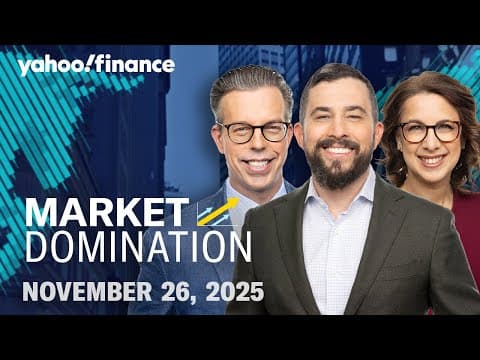
Hello and welcome to market domination. I'm Josh Lipton live from our New York headquarters that just now go to the closing bell and stocks. Well, let's take a look at the popular averages. The Dow, the S&P 500, they're both basically flat right here. Tech heavy NASDAQ in the red. It's down about 4/10en of a percent. Let's welcome in Jared Blickery... Read More
Key Insights
- Market performance was nearly flat across the major averages, with the Dow and S&P 500 close to unchanged while the Nasdaq fell about 0.4 percent. Technology weakness weighed on the market, but the equal-weighted S&P 500 gained and indicated broader participation beneath the headline indexes.
- Sector rotation is a constructive feature of the market because money was moving beyond the largest technology companies. Healthcare rose 1.33 percent and led the session, while consumer discretionary and utilities also gained. Energy and technology were the only declining S&P 500 large-cap sectors.
- Cautious optimism for 2026 is based on the prospect of superior earnings growth rather than market highs alone. Chris Versace focused on industries positioned to grow earnings faster than the S&P 500 because stronger growth can support multiple expansion and investment outperformance.
- AI's long-term opportunity depends on usage as well as adoption. The historical growth of internet data consumption suggests that new applications can continuously expand infrastructure needs, and AI's transition from text toward video could increase the amount of data created, transmitted, and processed.
- AI financing is a material risk because some companies are using debt to fund their ambitions. The dot-com period showed that compelling stories do not always produce successful businesses, so investors should examine funding, adoption, usage, and business durability before committing capital.
- Consumer AI adoption could accelerate when more capable assistants reach widely used devices. Versace expected a genuinely AI-enabled Siri to increase consumer usage and potentially provoke a competitive response from Samsung through its Gemini-powered offering, adding another source of demand beyond enterprise adoption.
- Broadcom's technical weakness delayed a potential investment despite its backlog and exposure to custom AI and cybersecurity. The shares failed to hold their 50-day moving average after a pullback, so the next observed level was the 100-day moving average before any gradual purchase.
- Welltower's investment case combines an aging population with an expected senior-housing shortage of roughly 350,000 to 500,000 units over the next few years. The position was increased after the shares pulled back, tested their 50-day moving average, and found support as anticipated.
Install to Summarize YouTube Videos and Get Transcripts
Explore YouTube Video Summarizer or Get YouTube Transcript Extractor
Questions & Answers
Q: Why was the analyst cautiously optimistic about markets in 2026?
Chris Versace was cautiously optimistic because the S&P 500 had recently reached new highs and several areas appeared capable of producing superior earnings growth. His approach was to identify companies growing faster than the broader index, especially within AI-related infrastructure. He nevertheless acknowledged financing concerns, uncertain adoption patterns, elevated market multiples, and the possibility that some promising companies may fail.
Q: How does sector rotation support the market outlook?
Sector rotation showed that market participation was not limited to the largest technology companies. Although the capitalization-weighted S&P 500 was nearly flat and the Nasdaq declined about 0.4 percent, the equal-weighted S&P 500 gained. Healthcare led with a 1.33 percent rise, while consumer discretionary and utilities also advanced, providing evidence of strength outside technology.
Q: Why is AI usage more important than adoption alone?
Adoption measures how many enterprises or consumers begin using AI, while usage reflects how intensively they rely on it and how much data they generate. Versace compared the trend with the internet, where expanding applications and streaming caused data consumption to keep growing. AI moving from text toward video could similarly increase demand for chips, networks, interconnects, and digital infrastructure.
Q: What risks come from companies using debt to finance AI?
Debt financing requires investors to consider whether future AI revenue and cash generation can justify current spending. Versace linked this concern to the dot-com period, when many companies had interesting stories but ultimately failed. He remained positive about enterprise and consumer adoption, but said financing must affect the assessment because not every company participating in a strong theme will succeed.
Q: Why did the analyst wait before buying Broadcom shares?
Broadcom's business exposure and backlog were attractive, particularly its positions in custom AI and cybersecurity, but the technical setup was not yet convincing. After the post-earnings pullback, the shares failed to hold support at their 50-day moving average. Versace therefore waited to see whether they would settle and hold near the 100-day moving average before gradually entering a position.
Q: Why did the portfolio add to its Welltower position?
Welltower benefited from a long-term demographic theme involving an aging population and a projected shortage of senior housing. The transcript cited an expected shortfall of about 350,000 to 500,000 units over the next few years. The portfolio added shares after the stock pulled back, tested its 50-day moving average, and found support, aligning fundamentals, themes, and technical analysis.
Q: What was the view on ServiceNow potentially acquiring Armis?
Versace liked the strategic logic because cybersecurity complements ServiceNow's existing business and represents a growth area. He was less certain about the reported $7 billion price and wanted more information about cross-marketing opportunities, cost reductions, and other synergies. He also viewed the possible transaction as part of a broader cybersecurity expansion that management would need to explain fully.
Q: What market indicators were investors waiting for?
Markets were largely treading water, with limited movement in major stock indexes, Treasury yields, and the US dollar index. The 10-year Treasury yield was down one basis point to 4.18 percent, while the 30-year yield fell one basis point to 4.85 percent. The discussion suggested that larger moves could follow the upcoming jobs report and CPI release.
Summary & Key Takeaways
-
Major US indexes were nearly flat, with the Nasdaq underperforming as technology stocks weakened. The equal-weighted S&P 500 gained, suggesting broader participation and sector rotation beneath the headline indexes. Healthcare led the session, while energy and technology were the only declining large-cap sectors, and bond yields changed very little.
-
Chris Versace described himself as cautiously optimistic about markets heading into 2026. His outlook centers on finding industries and companies capable of producing earnings growth faster than the S&P 500. AI remains attractive because adoption and usage could expand for years, increasing demand for digital infrastructure, networking, chips, and related services.
-
Individual investment decisions combined themes, fundamentals, and technical signals. Broadcom remained under review after failing to hold its 50-day moving average, while Welltower was added after finding support at that level. ServiceNow's potential Armis transaction appeared strategically complementary, although its reported price and expected synergies required further evaluation.
Read in Other Languages (beta)
Share This Summary 📚
Summarize YouTube Videos and Get Video Transcripts with 1-Click
Try YouTube Summary with ChatGPT & Claude or YouTube Transcript Generator
Explore More Summaries from Yahoo Finance 📚



Summarize YouTube Videos and Get Video Transcripts with 1-Click
Try YouTube Summary with ChatGPT & Claude or YouTube Transcript Generator