How to Ask and Answer Questions About Where You're From
TL;DR
To effectively discuss where you live in English, use simple questions like 'Where are you from?' and 'Where do you live?' For example, respond by stating your city and whether you live with family or alone. Engaging in this conversation helps improve your speaking skills while allowing you to connect with others.
Transcript
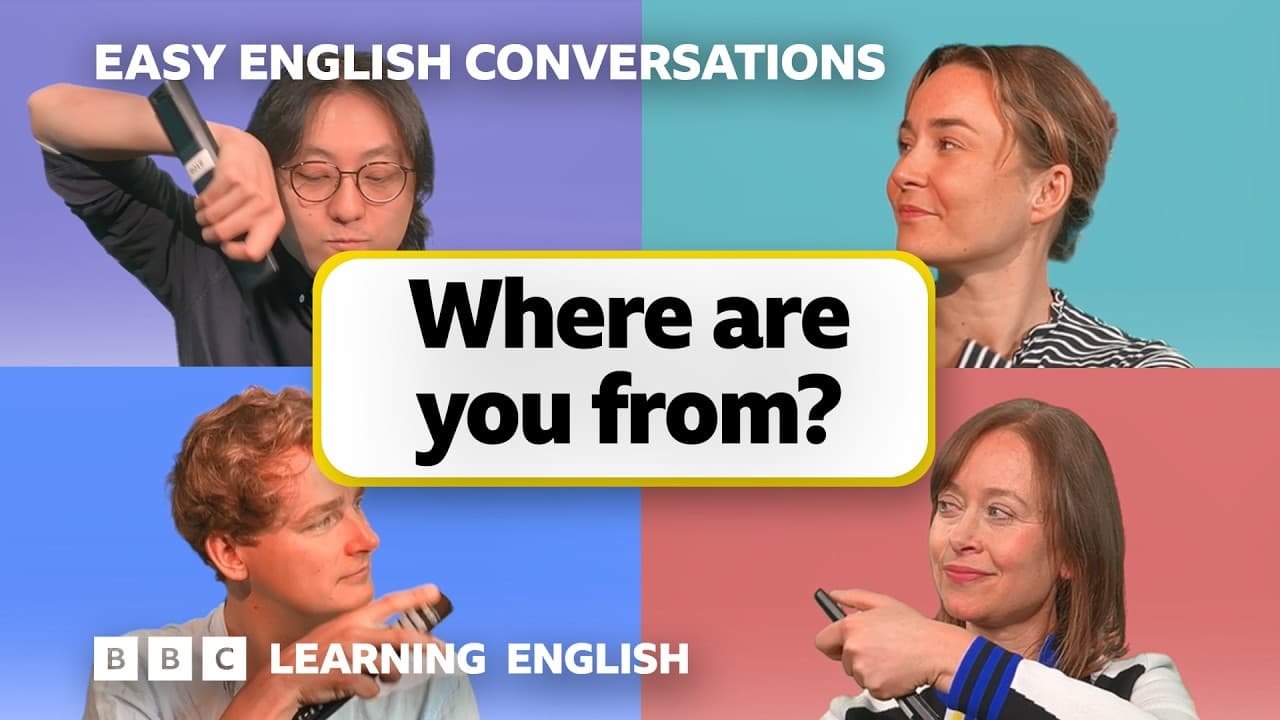
Easy English Conversations. Where are you from? Hi, I'm Tim. I'm from Oxford. Where are you from, Sian? I'm from Swansea. Hello! Where are you from, Buli? I'm from Beijing. Hi! Where are you from, Georgie? I'm from Petworth. Watch our next episode to find out what is in our hometowns. There are some cinemas and theatres. Who is from Swansea? Who is... Read More
Key Insights
- The video features a simple English conversation practice focused on asking and answering questions about origins and residences.
- Tim is from Oxford and lives in a house in London with housemates, highlighting common living arrangements.
- Sian, from Swansea, lives with her family in a house in Brighton, reflecting a typical family setup.
- Buli, from Beijing, lives alone in a flat in Cambridge, illustrating a solo living situation.
- Georgie, from Petworth, shares a flat in London with flatmates, emphasizing shared living spaces in urban areas.
- The video encourages viewers to practice English by commenting on their own living situations.
- The episode is part of a series aimed at beginner English learners, covering basic conversational topics.
- Additional resources, such as a free worksheet, are available to enhance learning and practice.
Install to Summarize YouTube Videos and Get Transcripts
Explore YouTube Video Summarizer or Get YouTube Transcript Extractor
Questions & Answers
Q: What is the main focus of this video episode?
The main focus of this video episode is to help beginner English learners practice asking and answering questions about where they are from and where they live. It features simple conversations between Tim, Sian, Buli, and Georgie, who discuss their origins and current living situations, providing a practical language learning experience.
Q: Who are the main participants in the video, and where are they from?
The main participants in the video are Tim, Sian, Buli, and Georgie. Tim is from Oxford, Sian is from Swansea, Buli is from Beijing, and Georgie is from Petworth. Each participant shares where they currently live, offering viewers a diverse range of examples of English conversation about personal backgrounds.
Q: What living arrangements do the participants have?
The participants in the video have various living arrangements. Tim lives in a house in London with housemates, Sian lives with her family in a house in Brighton, Buli lives alone in a flat in Cambridge, and Georgie shares a flat in London with flatmates. These examples illustrate different common living situations in English-speaking contexts.
Q: How does the video engage viewers in the learning process?
The video engages viewers by encouraging them to participate in the learning process through interactive elements. Viewers are invited to share their own information about where they are from and where they live in the comments section. This interaction helps reinforce learning and allows viewers to practice their English writing skills in a real-world context.
Q: What additional resources are offered alongside the video?
In addition to the video, BBC Learning English provides a free worksheet to complement the episode. This worksheet is designed to enhance the learning experience by offering structured practice exercises. Additionally, links to other episodes in the Easy English Conversations series are provided, allowing learners to explore a range of beginner-level conversational topics.
Q: What is the purpose of the Easy English Conversations series?
The purpose of the Easy English Conversations series is to provide beginner English learners with accessible and engaging content to practice their language skills. Each episode focuses on a different basic conversational topic, helping learners build foundational vocabulary and improve their ability to communicate effectively in everyday situations.
Q: How does the video demonstrate practical English usage?
The video demonstrates practical English usage by featuring real-life conversational scenarios where participants discuss their origins and living arrangements. This approach allows learners to see how English is used in everyday interactions, providing them with relevant examples to imitate and practice in their own conversations.
Q: What topics are covered in other episodes of the series?
Other episodes in the Easy English Conversations series cover a variety of basic conversational topics, including introductions, describing towns, daily activities, giving directions, discussing weather, and expressing preferences. Each episode is designed to help learners develop specific language skills relevant to common social interactions.
Summary & Key Takeaways
-
This episode of Easy English Conversations introduces viewers to basic questions and answers about where people are from and where they live. Tim, Sian, Buli, and Georgie share their backgrounds and living arrangements, providing a practical example of everyday English conversation.
-
The video is designed for beginner English learners, offering a simple and engaging way to practice speaking about personal information. It also invites viewers to participate by sharing their own details in the comments, fostering an interactive learning experience.
-
BBC Learning English provides additional resources, including a free worksheet and links to other episodes in the series. These materials aim to support learners in building foundational English skills through relatable and accessible content.
Read in Other Languages (beta)
Share This Summary 📚
Summarize YouTube Videos and Get Video Transcripts with 1-Click
Try YouTube Summary with ChatGPT & Claude or YouTube Transcript Generator
Explore More Summaries from BBC Learning English 📚
Summarize YouTube Videos and Get Video Transcripts with 1-Click
Try YouTube Summary with ChatGPT & Claude or YouTube Transcript Generator