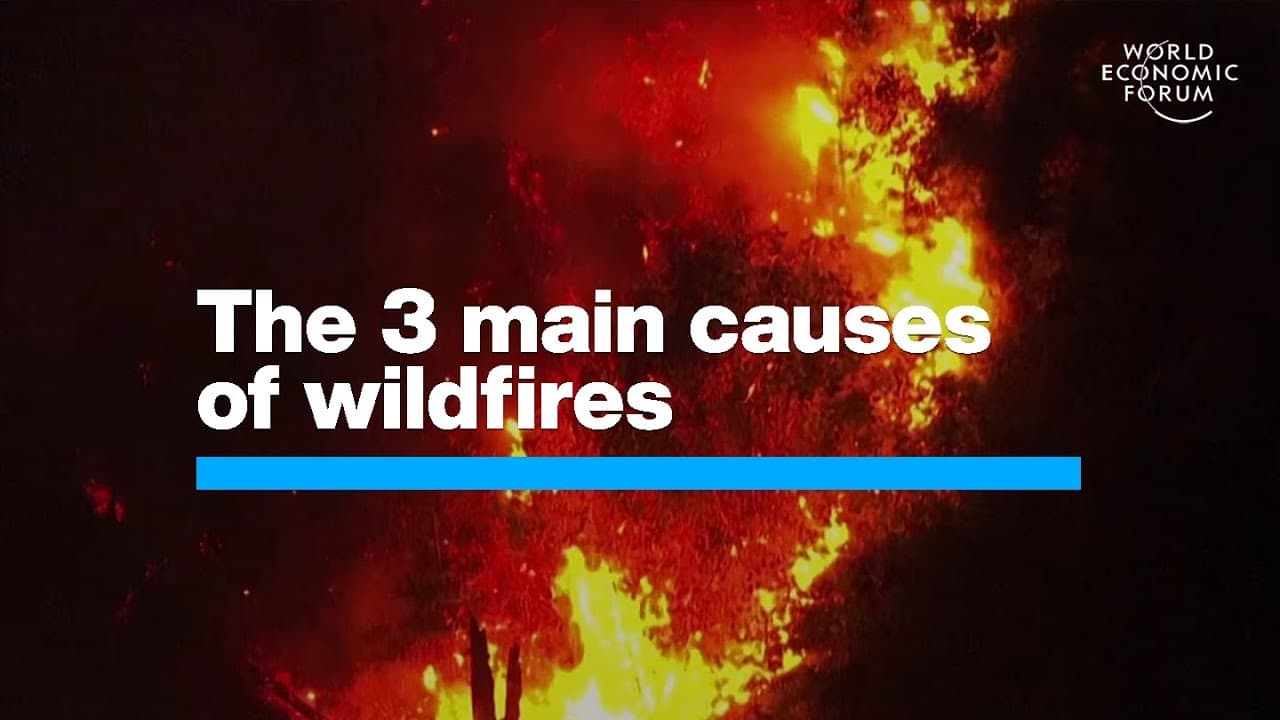
The 3 Main Causes of Wildfires & The 3 Main Solutions | Uplink | World Economic Forum
TL;DR
Climate change is causing a significant increase in wildfires, leading to larger and more frequent fires across the West coast states.
Transcript
and make no mistake climate change is driving this dramatic increase in wildfires and future wildfire risk that the commissioner france had just described an authoritative study published by national academy of sciences back in 2016 that found a doubling of the extent of wildfire since the mid 1980s directly tied to climate change so we can't solve... Read More
Key Insights
- 🪛 Climate change is directly driving the significant increase in wildfires, as confirmed by an authoritative study.
- 🎢 Wildfires are spreading over a larger geographical area, impacting not only California but also other West coast states.
- 🈷️ The fire season has extended from two months to nine months, with California experiencing wildfires throughout the year.
- 😅 Responding to wildfires with hot air and finger-pointing is counterproductive and increases the severity of the fires.
- 💱 Addressing climate change is crucial to effectively prevent and mitigate the impact of wildfires.
- 🪡 The financial cost of responding to wildfires is substantial, emphasizing the need for proactive measures.
- 🛟 The current trend of increasing wildfires poses significant risks to both human lives and natural ecosystems.
Install to Summarize YouTube Videos and Get Transcripts
Explore YouTube Video Summarizer or Get YouTube Transcript Extractor
Questions & Answers
Q: Is there concrete evidence linking climate change to the increase in wildfires?
Yes, an authoritative study published by the National Academy of Sciences in 2016 directly tied the doubling of wildfire extent since the mid-1980s to climate change. This evidence supports the claim that climate change is driving the increase in wildfires.
Q: How is the spread of wildfires changing over time?
Not only are wildfires becoming more frequent, but they are also spreading over a larger geographical area. This means that more areas, including the West coast states, are experiencing wildfires, causing greater destruction and risk.
Q: How has the fire season changed in recent years?
The fire season used to last for about two months of the year just 15 years ago. However, due to climate change, it has now extended to nine months of the year. In California, the fire season lasts the entire year, which highlights the severity and urgency of the situation.
Q: How is the current approach to wildfires ineffective?
Responding to wildfires with hot air and finger-pointing is not effective in addressing the issue. This approach only aggravates the fires and makes them larger. It is crucial to shift focus towards addressing the root cause, which is climate change.
Summary & Key Takeaways
-
A study from the National Academy of Sciences in 2016 found that the extent of wildfires has doubled since the mid-1980s, directly linked to climate change.
-
Wildfires are not only becoming more frequent, but they are also spreading over a larger geographical area and lasting for a longer period each year.
-
The current approach of responding to wildfires is costing a significant amount of money, and it is crucial to address climate change to solve this issue.
Read in Other Languages (beta)
Share This Summary 📚
Summarize YouTube Videos and Get Video Transcripts with 1-Click
Try YouTube Summary with ChatGPT & Claude or YouTube Transcript Generator
Explore More Summaries from World Economic Forum 📚

Summarize YouTube Videos and Get Video Transcripts with 1-Click
Try YouTube Summary with ChatGPT & Claude or YouTube Transcript Generator