How to Overcome Common Challenges in Learning English

TL;DR
Learning English can be difficult due to challenges like phrasal verbs, unpredictable spelling, and idiomatic expressions. To overcome these, immerse yourself in the language through reading, listening, and speaking, and consider working with an English tutor to clarify confusing aspects. These methods will enhance your understanding and retention of the language's peculiarities.
Transcript
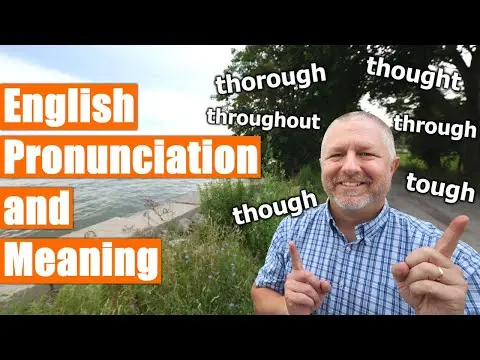
The more I teach English on YouTube, the more I realize how difficult it must be for you to learn this language. There are so many strange and weird things about English that must be really hard to understand. So in this English lesson, I'll talk about some of those things. And at the end, I'll give you a piece of advice. I'll let you know one or t... Read More
Key Insights
- ❓ Phrasal verbs in English can be challenging to comprehend as they have different meanings when combined with prepositions or adverbs.
- 🔇 Contractions and reductions are commonly used by native English speakers to speak faster, but they can be confusing for learners.
- 🥺 English spelling does not always match pronunciation, leading to difficulties in knowing how to say certain words.
- 😑 Idioms are expressions with figurative meanings that may not seem logical, but learning them is crucial for accurate comprehension.
- 📏 English rules often have numerous exceptions, which can be frustrating and require memorization.
- 🙊 Immersing oneself in English through reading, listening, watching, and speaking helps in learning the peculiarities of the language.
- 🍧 Having an English tutor who can explain the unusual aspects of the language is highly recommended.
Install to Summarize YouTube Videos and Get Transcripts
Explore YouTube Video Summarizer or Get YouTube Transcript Extractor
Questions & Answers
Q: What are phrasal verbs and why are they difficult?
Phrasal verbs are verbs combined with prepositions or adverbs, and they have completely different meanings. Learning them can be challenging because their meanings are not always intuitive and require looking them up.
Q: What are contractions and reductions in English?
Contractions are shortened forms of phrases, such as "I don't" instead of "I do not." Reductions, on the other hand, involve shortening phrases like "I want to" to "I wanna" or "I am going to" to "I'm gonna." These linguistic shortcuts are common in English due to the hurried speech of native speakers.
Q: Why is English spelling not always reflective of pronunciation?
English has words like "wind" and "wind" that are spelled the same but pronounced differently. Similarly, "live" and "live" have different pronunciations despite identical spelling. This discrepancy can make it challenging to know how to pronounce certain words based solely on their spelling.
Q: What are idioms and why are they confusing in English?
Idioms are expressions used to describe certain situations, but their literal meanings may not align with their actual usage. For example, "a piece of cake" means something is easy, and "under the weather" means feeling sick. Learning these idiomatic expressions is necessary to understand native speakers.
Q: Why are there many exceptions to English grammar rules?
English language rules are sometimes contradicted by numerous exceptions, like the plural of "house" being "houses" and "mouse" becoming "mice." This aspect of the language can be frustrating for learners as they have to memorize numerous exceptions along with the rules.
Q: How can one effectively learn the strange aspects of English?
To learn the peculiarities of English, it is essential to immerse oneself in the language by listening to music, watching TV shows, and reading books. The more input one gets, the better their understanding of these unique language features. Additionally, having an English tutor who can explain these nuances is highly beneficial.
Summary & Key Takeaways
-
English has many strange and difficult aspects, such as phrasal verbs that change the meaning of the verb, contractions and reductions for faster speech, spelling that doesn't always match pronunciation, and idioms that seem unrelated to their meanings.
-
English makes rules but also has many exceptions, leading to confusion for learners. Native speakers sometimes break the rules too.
-
To effectively learn these peculiarities, it is recommended to expose oneself to lots of English input through reading and listening. Having an English tutor to answer questions about these intricacies is also helpful.
Read in Other Languages (beta)
Share This Summary 📚
Summarize YouTube Videos and Get Video Transcripts with 1-Click
Try YouTube Summary with ChatGPT & Claude or YouTube Transcript Generator
Explore More Summaries from Learn English with Bob the Canadian 📚





Summarize YouTube Videos and Get Video Transcripts with 1-Click
Try YouTube Summary with ChatGPT & Claude or YouTube Transcript Generator