How Extreme Ownership May Be Holding You Back

TL;DR
Extreme ownership may hold leaders back when they accept responsibility but fail to set standards, address poor performance, and hold others accountable. The speaker argues that ownership is about maintaining control and finding ways to improve, not beating yourself up. Leaders must also communicate expectations and give clear, real-time feedback. Read on for the practical balance between personal responsibility and organizational accountability.
Transcript
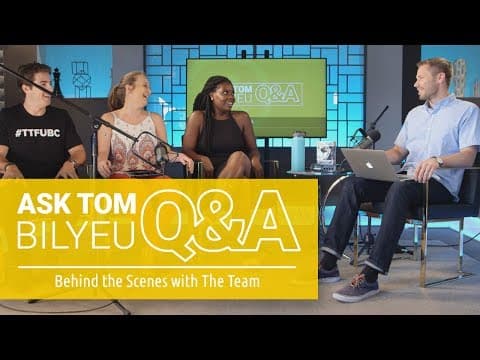
welcome to Facebook live I'm doing an amorite now let's get a little bit crazy we're gonna be talking at least off the bat about how extreme ownership may be holding you back can't believe that one but let's go deep on that but before we do that I want to announce that we have re launched or launched some new items in the store so go check it out w... Read More
Key Insights
- 🥺 Extreme ownership involves taking full responsibility for one's actions and outcomes, leading to personal growth and continuous improvement.
- 🔁 Habit loops can be used to establish positive routines and maximize productivity by identifying triggers and implementing rewarding behaviors.
- 🥅 Building a strong personal identity involves setting clear goals and consistently practicing behaviors that align with those goals.
- 💪 Development of a strong personal identity requires continuous reinforcement and accountability for one's actions and decisions.
- 👨💼 The process of developing a passion into a successful business involves consistent effort, practice, and seeking advice from successful individuals in similar industries.
Install to Summarize YouTube Videos and Get Transcripts
Explore YouTube Video Summarizer or Get YouTube Transcript Extractor
Questions & Answers
Q: How can extreme ownership hold you back?
Extreme ownership can hold you back when you focus only on your own fault and never hold other people to clear standards. The speaker says leaders must examine their responsibility while also addressing when others fail to meet expectations.
Q: Does extreme ownership mean everything is your fault?
It means starting by asking how you helped create the situation and what you can improve. It does not mean beating yourself up or ignoring other people's responsibilities.
Q: How do you balance extreme ownership with holding others accountable?
Look inward first and identify how your actions or environment contributed to the problem. Then communicate what is expected and clearly tell people, in real time, when they are not meeting those expectations.
Q: What is the purpose of taking responsibility?
Taking responsibility helps you maintain a sense of control over the situation. It keeps your attention on actions you can take to improve the outcome.
Q: Why must leaders communicate expectations clearly?
Clear expectations establish the standard people are expected to meet. Without them, leaders cannot effectively empower the organization or identify when performance falls short.
Q: Why does the speaker call extreme ownership a starting point?
Extreme ownership begins the process by directing attention toward your own contribution to a problem. Leadership must continue beyond that point through clear standards, accountability, and feedback.
Q: What happens when extreme ownership becomes dogma?
The speaker says rigid ideas prevent people from responding in a nuanced and flexible way. That rigidity can limit their impact and cause them to miss opportunities to improve the organization.
Q: How did Ray Dalio's company encourage real-time feedback?
According to the speaker, the company created software that let people evaluate one another's performance during meetings. Comments were not anonymous, names remained attached, and participants could see how others ranked them after the meeting.
Summary & Key Takeaways
-
Definition: Extreme ownership begins with examining how you created or contributed to a situation.
-
Definition: Ownership is about maintaining control and finding ways to improve, not beating yourself up.
-
Compare: Leaders must accept personal responsibility while also holding other people accountable to organizational standards.
-
Step 1: Look inward and identify how your actions or environment allowed the problem to occur.
-
Step 2: Communicate exactly what the organization expects from each person.
-
Step 3: Address unmet expectations clearly and in real time.
-
Compare: Flexible, nuanced thinking supports effective action, while rigid dogma can limit a leader's impact.
-
Who: Christy Ratliff asked how extreme ownership can coexist with holding others accountable.
-
Who: Ray Dalio was presented as a leader who wanted employees to challenge ideas and speak up.
-
Tool: Dalio's company used software for named, real-time performance feedback and post-meeting rankings.
Read in Other Languages (beta)
Share This Summary 📚
Summarize YouTube Videos and Get Video Transcripts with 1-Click
Try YouTube Summary with ChatGPT & Claude or YouTube Transcript Generator
Explore More Summaries from Tom Bilyeu AMA: Ask Me Anything 📚
Summarize YouTube Videos and Get Video Transcripts with 1-Click
Try YouTube Summary with ChatGPT & Claude or YouTube Transcript Generator