How Is NASA Science Live Engineering Human Tissue?
TL;DR
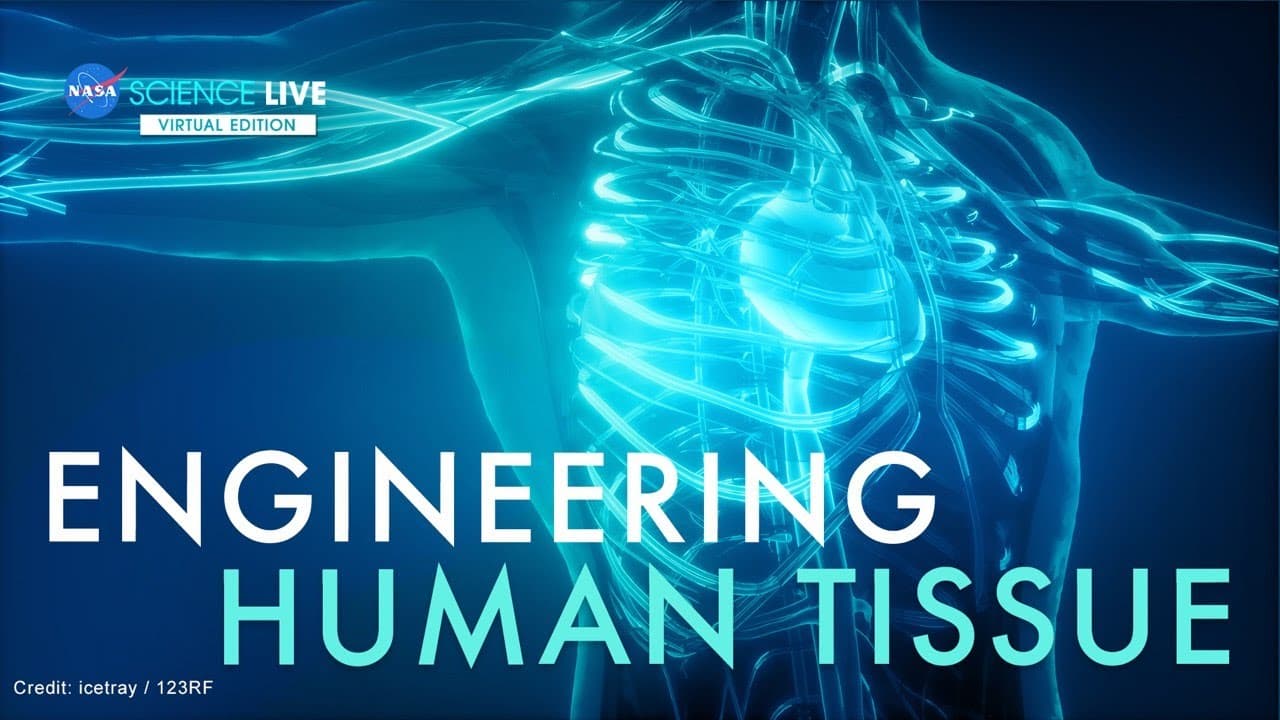
Scientists created thick, vascularized human organ tissue in a laboratory by engineering tissue with integrated blood vessels, an essential step toward 3D printing functional human organs. NASA’s Vascular Tissue Challenge rewarded Team Winston from the Wake Forest Institute for Regenerative Medicine with $300,000 for its innovation. The work could support organ research, radiation studies and astronaut health, and the remaining biological and scaling challenges make the details worth exploring.
Transcript
[Applause] so hello and welcome to another virtual episode of nasa science live i'm your host lauren ward and today we have some very exciting news for you scientists have created thick vascularized human organ tissue in a lab these are the first revolutionary steps to 3d printing functional human organs so you may be thinking what does nasa have t... Read More
Key Insights
- Blood vessels enable survival: Thick tissue needs an internal blood supply because cells require nutrients and produce waste. Without vessels distributed throughout the tissue, materials cannot move effectively through a complex structure. Vascularization is therefore not an optional enhancement. It is the infrastructure that allows engineered tissue to remain viable and perform the functions expected from organ tissue.
- Integration is the hard part: Researchers can make veins and arteries, but the challenge is combining them with organ tissue into a single functioning system. The blood vessels must be fully integrated throughout a composite tissue containing multiple cell types. This distinction explains why isolated vessel creation does not by itself solve the larger problem of growing complex tissues or whole organs.
- Function matters beyond appearance: The competition does not reward tissue merely for resembling part of an organ. NASA seeks thick, functional tissue whose vascular network can support living cells. Nutrient delivery and waste removal provide practical tests of that function. This emphasis moves tissue engineering from producing structures toward creating biological systems that can operate in a meaningful way.
- NASA uses prizes strategically: Centennial Challenges let NASA state a problem or technology gap and invite the public to propose solutions. The format can involve contributors who never expected to participate in a NASA mission or join a NASA group. In the Vascular Tissue Challenge, this wider participation is directed toward a problem relevant to organ development, astronaut health and commercial activity in space.
- Three teams could qualify: The Vascular Tissue Challenge prize was structured for the first three teams able to create vascularized tissue. This approach encouraged teams across the country to compete over multiple years. The objective was specific: develop thick, functional tissue from major human organs with its own blood vessels. Team Winston ultimately became the official winner identified on the program.
- The station offers near-term value: One short-term goal is to help incentivize commercialization of the International Space Station. Companies could potentially use the station to create tissues intended for people on Earth whose organs are not functioning fully. This connects a space-based commercial opportunity with an Earth-based medical need, rather than treating engineered tissue solely as preparation for distant exploration missions.
- Tissue can model radiation: NASA is interested in using engineered tissue to understand how radiation affects the human body without conducting the work on human bodies. Vascularized models could better represent bodily tissue because blood vessels are present throughout natural human tissues. This application links the challenge’s biological realism to a specific concern associated with human space exploration.
- Mars motivates longer-term development: Beyond station commercialization and radiation research, NASA views tissue technologies as a possible way to maintain crew health during missions to Mars and beyond. The program does not present laboratory tissue as an immediate organ solution for astronauts. Instead, it places today’s vascularization work within a longer sequence of developments needed for extended missions.
- Cell signals guide vessel formation: Researchers are beginning to understand the signals needed to switch on cells so that they become blood vessels. That progress is important because a vascular network must develop as part of engineered tissue, not remain separate from it. Understanding these signals is one component of the larger task of combining multiple cell types into functional tissue.
- Whole organs remain the goal: The program describes vascularized tissue as an essential step toward creating whole organs. If blood vessels can be engineered throughout tissue, researchers can address the nutrient and waste transport that complex organs require. Yet whole-organ development still depends on further advances that bring all necessary technologies and biological components together into one functioning structure.
- Scale creates another barrier: Creating an experimental piece of vascularized tissue is not the same as manufacturing an organ. Organ creation may require scaling production to billions of cells while preserving the conditions those cells need to grow and function. This makes cell quantity, growth environment and biological organization connected problems rather than separate engineering tasks.
- Earth and space benefits converge: The same vascularized-tissue capability could advance organ transplantation and tissue regeneration on Earth while supporting NASA’s long-term exploration goals. Earth applications include understanding disease, developing therapies and potentially replacing damaged or diseased organs. Space applications include station commercialization, radiation studies and future crew health, giving the challenge a shared scientific foundation across both settings.
Install to Summarize YouTube Videos and Get Transcripts
Explore YouTube Video Summarizer or Get YouTube Transcript Extractor
Questions & Answers
Q: What is NASA’s Vascular Tissue Challenge?
NASA’s Vascular Tissue Challenge is a Centennial Challenges prize competition focused on creating thick, functional tissue from major human organs. The engineered tissue must have its own blood vessels so nutrients can enter and waste products can leave. The prize was designed for the first three teams able to create qualifying vascularized tissue. NASA uses this challenge format to identify technology gaps and invite the public to contribute solutions that could support organ development, medicine and spaceflight.
Q: Who won NASA’s Vascular Tissue Challenge?
Team Winston from the Wake Forest Institute for Regenerative Medicine won NASA’s Vascular Tissue Challenge. The team received a $300,000 prize for its innovation. Its work demonstrated the successful creation of functional, vascularized tissue in the laboratory. The result matters because integrated blood vessels are necessary for sustaining thick tissue and advancing toward more complex tissues and whole organs.
Q: What is vascularized human tissue?
Vascularized human tissue is tissue that contains blood vessels. It is a composite structure with more than one type of cell, and its vessels must be integrated throughout the organ tissue. The vessels deliver nutrients and help remove waste, which allows thick tissue to function. Researchers engineer this kind of tissue outside the body because natural human tissues also contain many blood vessels.
Q: Why is vascularization necessary for growing human organs?
Vascularization supplies tissue with the materials its cells need while carrying away waste products. Thick, complex tissue cannot function properly without a blood supply distributed throughout it. Although researchers can make veins and arteries, they must integrate those vessels with multiple cell types and the surrounding organ tissue. Solving that integration problem is essential because whole organs require living, functional tissue rather than disconnected biological parts.
Q: Why is NASA interested in engineered human tissue?
NASA sees short-term, long-term and much longer-term uses for engineered tissue. Companies might create tissue on the International Space Station for people on Earth with organs that are not functioning completely, supporting station commercialization. Researchers could also use tissue to study radiation’s effects on the human body without using human bodies. Eventually, related technologies might help NASA maintain crew health on missions to Mars and beyond.
Q: How could vascularized tissue affect medicine on Earth?
Vascularized tissue could improve how researchers study human function, disease and possible therapies. Because it includes engineered blood vessels, it can more closely represent the structure found throughout tissues in the body. Continued progress could support tissue regeneration and organ transplantation, including the eventual replacement of damaged or diseased organs. The challenge is significant because laboratory tissue must remain functional, scale to enormous cell quantities and ultimately integrate with the body.
Q: What obstacles remain before whole organs can be engineered?
Researchers must create an environment that supports cell growth and keeps thick tissue functional. They also need to integrate blood vessels throughout tissue and eventually integrate engineered tissue into the body. Scaling is another major obstacle because organ creation requires billions of cells. These problems must be solved together, since a large tissue structure is useful only if its cells receive nutrients, eliminate waste and perform the required organ functions.
Q: How do NASA Centennial Challenges support innovation?
Centennial Challenges allow NASA to present its problems, issues and technology gaps to the public. People and teams can then show how their technologies might address those needs. The approach expands participation to contributors who may never have imagined working with NASA or supporting a NASA mission. For vascularized tissue, that broader competition directed years of work toward a defined goal with potential benefits for astronauts and people on Earth.
Summary & Key Takeaways
-
Defining the central breakthrough: Host Lauren Ward introduces the creation of thick, vascularized human organ tissue in a laboratory as a revolutionary first step toward 3D printing functional human organs. The essential advance is not simply producing veins or arteries, but integrating blood vessels throughout complex tissue. Those vessels must deliver nutrients and remove waste so the engineered tissue can remain alive and function. Achieving this capability could transform tissue regeneration, organ transplantation and medicine for people on Earth.
-
Launching a public challenge: NASA’s Vascular Tissue Challenge is a Centennial Challenges prize competition designed to solve a fundamental tissue-engineering problem. It incentivizes members of the public to develop thick, functional tissue from major human organs, complete with its own blood vessels. The prize is intended for the first three teams able to meet that goal. Program manager Monsi Roman explains that challenges expose NASA’s problems, technology gaps and needs, then invite people outside traditional NASA groups to contribute their technologies and ideas.
-
Connecting tissue research to space: NASA sees several uses for engineered human tissue across different time horizons. In the short term, companies might produce tissue aboard the International Space Station for people on Earth whose organs are not functioning completely. Longer term, researchers could expose laboratory tissue to radiation to study its effects on the human body without using human bodies. In the much longer term, related technologies might help maintain crew health during missions to Mars and destinations beyond it.
-
Explaining vascularized human tissue: Vascularized tissue contains blood vessels and more than one type of cell, reflecting the complexity of tissues inside the human body. Dr. Arun Sharma, a challenge judge and research fellow at Cedars-Sinai Medical Center, explains that human tissues contain many blood vessels. Engineered tissues outside the body therefore need engineered vessels if researchers want models that better represent human function. Scientists are beginning to understand the signals that cause cells to become blood vessels, but fully combining all required components remains difficult.
-
Recognizing progress and remaining barriers: Team Winston from the Wake Forest Institute for Regenerative Medicine won NASA’s Vascular Tissue Challenge and received a $300,000 prize for its innovation. Its creation of functional, vascularized tissue demonstrates concrete progress toward more complex engineered tissues and, eventually, whole organs. However, the field still must create supportive growth environments, integrate engineered tissues into the body and scale production to the billions of cells needed for organs. Further development is essential before laboratory achievements can become functional replacement organs.
Read in Other Languages (beta)
Share This Summary 📚
Summarize YouTube Videos and Get Video Transcripts with 1-Click
Try YouTube Summary with ChatGPT & Claude or YouTube Transcript Generator
Explore More Summaries from NASA 📚
Summarize YouTube Videos and Get Video Transcripts with 1-Click
Try YouTube Summary with ChatGPT & Claude or YouTube Transcript Generator